Eight students will be presenting the summer work at the Ocean Sciences Meeting in March 2022!
Matthew Behum, Colgate University

Class Year:
2001Mentor:
Thomas Miller, Ph.D.Project Title:
The effect of Small-Scale Turbulence on the Feeding Success of the Non-Visual Predator, Mnemiopsis leidyi
Abstract:
To fully understand interannual variations in the sizes of fish populations, the relationship between abiotic (density-independent) and biotic (density-dependent) factors must be analyzed. Moreover, particular attention must be given to the influences of physical factors in the field, and how it influences fish behavior, and ultimately larval recruitment. Small-scale turbulence in the field has been found to increase prey encounter with planktonic predators. Feeding success, however, is limited to a certain threshold of turbulence for visual predators, where the probability of successful seizure of prey eventually decreases with increasing turbulence. The effects of turbulence on non-visual predators is not investigated as fully as the effects of turbulence on visual predators, but is a worthy topic to completely understand microscale turbulence effects on an entire food web. The purpose of this investigation is to analyze the effects of varying amounts of small-scale turbulence on the feeding success of the non-visual ctenophore predator, Mnemiopsis leidyi. Small ctenophores were exposed to varying amounts of turbulence in a novel turbulence chamber apparatus while being fed an identical Artemia salinia nauplii concentration for each turbulence condition. Ingestion rates were analyzed as the mean naupllii/gut, and standard error bars were used to compare ingestion rates among all tested turbulences (0 mm/s- 26.2 mm/s). It was observed that no significant effect of turbulence on ingestion rate existed, as a non-linear relationship was discovered. This counters expectations as non-visual predators were proposed to encounter continually increasing feeding success with increasing turbulence due to ingestion based on contact, not visual pursuit. Further turbulence investigations concerning other non-visual predators should be undertaken to confirm these findings.
Location:
Chesapeake Biological LaboratoryRECENT REU FELLOWS
-
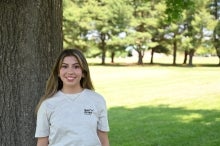 University: Florida International UniversityClass Year: 2024
 -
 University: University of Georgia AthensClass Year: 2015
 -
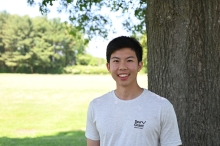 University: University of ConnecticutClass Year: 2024
 -
 University: University of MichiganClass Year: 2024
 -
 University: Case Western Reserve UniversityClass Year: 2024
 -
 University: Gustavus Adolphus CollegeClass Year: 2024
 -
 University: Pitzer CollegeClass Year: 2024
 -
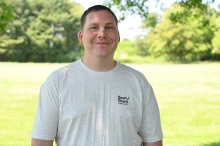 University: Eckerd CollegeClass Year: 2024
 -
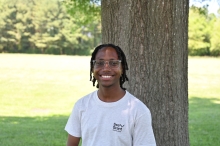 University: The College of WoosterClass Year: 2024
 -
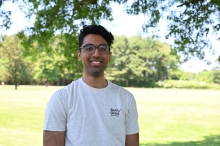 University: Haverford CollegeClass Year: 2024
 -
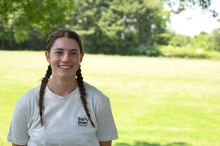 University: Whitman CollegeClass Year: 2024
 -
 University: Washington CollegeClass Year: 2024
 -
 University: Panola CollegeClass Year: 2024
 -
 University: University of Puerto Rico HumacaoClass Year: 2024
REU NEWS
-
-
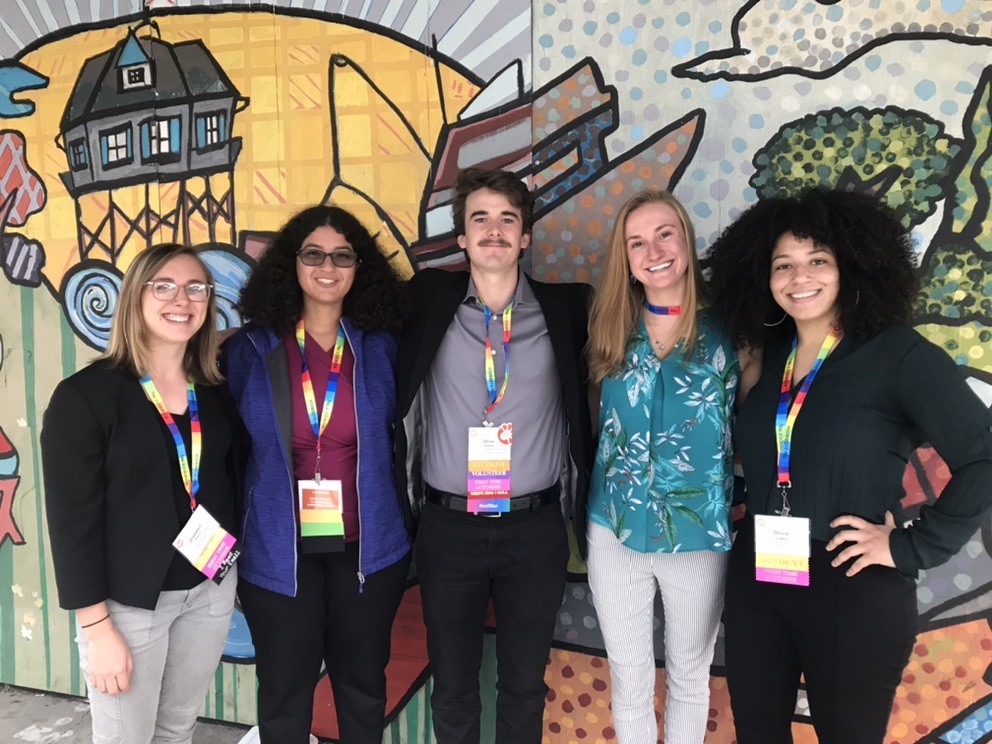
2019 REUs presented at the CERF Conference in Mobile, AL -
Olivia Saliger won a student presentation awards for talk at the 2019 Coastal Estuarine Research Federation Meeting. Her REU mentor was Judy O'Neil.
-
Congratulations to 2015 REU Alison Aceves for being selected as an honorable mention in the 2015 NSF Graduate Research Fellowship Program competition.
-
In February 2016, seven REUs from the 2015 cohort presented their research findings at the Ocean Sciences Meeting in New Orleans, Louisiana.
-
Congratulations to 2015 REU Hope Ianiri on receiving the NSF Graduate Research Fellowship (2016)!
-
Jeanette Davis, Ph.D. (REU '06) published a children's book, Science is Everywhere.
-
Like us on Facebook!