Eight students will be presenting the summer work at the Ocean Sciences Meeting in March 2022!
Students Research Publications: Cryptophyte algae are robbed of their organelles by the marine ciliate Mesodinium rubrum
Year:
2000Authors:
Gustafson, D. E., D. K. Stoecker, M. D. Johnson, W. F. Van Heukelem, and K. Sneider*Source:
Nature 405:1049-1052
Abstract:
Mesodinium rubrum (Lohmann 1908) Jankowski 1976 (= Myrionecta rubra) is a common photosynthetic marine planktonic ciliate which can form coastal red-tides. It may represent a 'species complex'(4,5) and since Darwin's voyage on the Beagle, it has been of great cytological, physiological and evolutionary interest. It is considered to be functionally a phytoplankter because it was thought to have lost the capacity to feed and possesses a highly modified algal endosymbiont. Whether M. rubrum is the result of a permanent endosymbiosis or a transient association between a ciliate and an alga is controversial. We conducted 'feeding' experiments to determine how exposure to a cryptophyte alga affects M. rubrum. Here we show that although M. rubrum lacks a cytostome (oral cavity)(8), it ingests cryptophytes and steals their organelles, and may not maintain a permanent endosymbiont. M. rubrum does not fall into recognized cellular or functional categories, but may be a chimaera partially supported by organelle robbery.
Mentors:
Diane Stoecker Ph.D.Students:
Kerri Sneider, Southampton CollegeRECENT REU FELLOWS
-
 University: Florida International UniversityClass Year: 2024
 -
 University: University of Georgia AthensClass Year: 2015
 -
 University: Panola CollegeClass Year: 2024
 -
 University: University of Puerto Rico HumacaoClass Year: 2024
 -
 University: University of Wisconsin-MadisonClass Year: 2024
 -
 University: University of ConnecticutClass Year: 2024
 -
 University: University of MichiganClass Year: 2024
 -
 University: Case Western Reserve UniversityClass Year: 2024
 -
 University: Gustavus Adolphus CollegeClass Year: 2024
 -
 University: Pitzer CollegeClass Year: 2024
 -
 University: Eckerd CollegeClass Year: 2024
 -
 University: The College of WoosterClass Year: 2024
 -
 University: Haverford CollegeClass Year: 2024
 -
 University: Whitman CollegeClass Year: 2024
REU NEWS
-
-
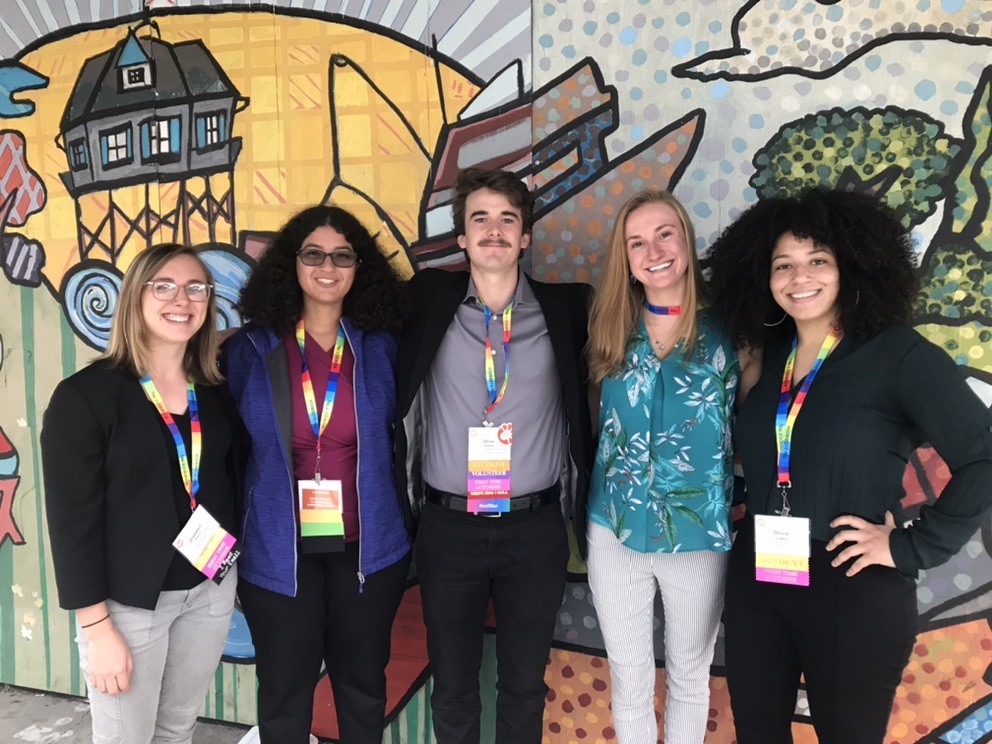
2019 REUs presented at the CERF Conference in Mobile, AL -
Olivia Saliger won a student presentation awards for talk at the 2019 Coastal Estuarine Research Federation Meeting. Her REU mentor was Judy O'Neil.
-
Congratulations to 2015 REU Alison Aceves for being selected as an honorable mention in the 2015 NSF Graduate Research Fellowship Program competition.
-
In February 2016, seven REUs from the 2015 cohort presented their research findings at the Ocean Sciences Meeting in New Orleans, Louisiana.
-
Congratulations to 2015 REU Hope Ianiri on receiving the NSF Graduate Research Fellowship (2016)!
-
Jeanette Davis, Ph.D. (REU '06) published a children's book, Science is Everywhere.
-
Like us on Facebook!