Nina Santos is a Ph.D. student at the Chesapeake Biological Laboratory at the University of Maryland Center for Environmental Science. For her dissertation, she is focused on small shrimp-like crustaceans called mysids – an understudied yet important part of many estuarine and coastal food webs.
Fellowship Experiences
A blog by and about students supported by Maryland Sea Grant
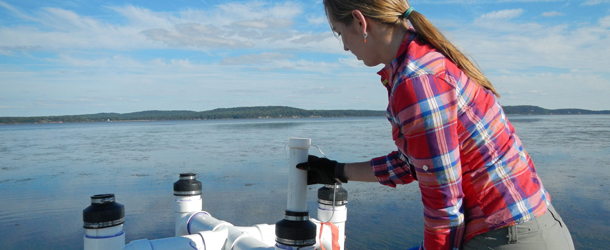
Photo, Debbie Hinkle
A Living Kaleidoscope Under a Microscope
Shayna Keller •
Fitting six months of training into two weeks was a grueling but incredible opportunity for Graduate Fellow Shayna Keller. Read more...
Applying New Skills for National Science Collaboration
Hannah Cooper •
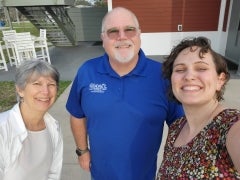
The science management and policy internship at Maryland Sea Grant was the perfect opportunity to place myself exactly where I wanted to be: at the intersection of science and real-world application. Read more...
A Place for Creativity in Science Writing
Grace O'Hara •
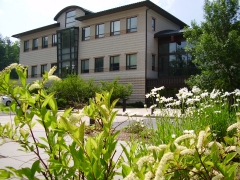
My lab mates and I wanted to gain a deeper understanding of the concepts so widely used across the field of ecology today. What we uncovered in the book was unexpected: not just the roots of ecology, but the trove of wonderful descriptions that jump-started the scientific field of ecology. Read more...
Sediment Coring 101
Erika Koontz •
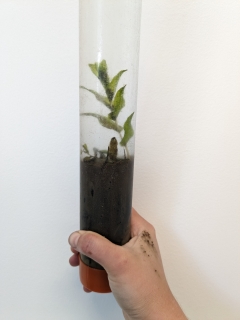
Sediment cores are time capsules of information. Coring is a powerful tool that is commonly used in environmental science and geology. Read more...
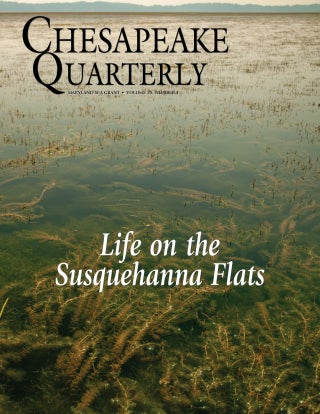
Solving the Mystery of the Susquehanna Schmutz
Shayna Keller •
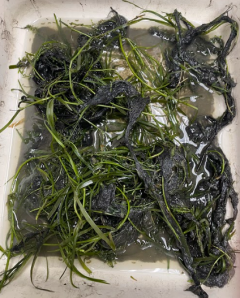
When conducting science experiments, new mysteries tend to appear, and we now have a new mystery on our hands. Read more...