Nina Santos is a Ph.D. student at the Chesapeake Biological Laboratory at the University of Maryland Center for Environmental Science. For her dissertation, she is focused on small shrimp-like crustaceans called mysids – an understudied yet important part of many estuarine and coastal food webs.
Fellowship Experiences
A blog by and about students supported by Maryland Sea Grant
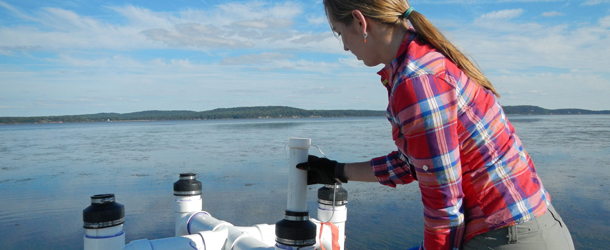
Photo, Debbie Hinkle
Stories Around an Oyster Farm
Michael Kalinowski •
This summer, I maintained a portion of an oyster demonstration farm at Horn Point Laboratory and had many memorable (and unexpected) wildlife encounters along the way. Read more...
Breathing Life Into the Bay
Michael Macon •
Did you know that cleaning up the air we breathe also cleans up the Chesapeake Bay?
Read more...
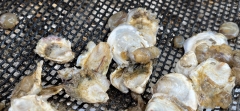
What Goes on Beneath an Oyster Cage?
Michael Kalinowski •
Oysters are amazing filter feeders that slurp up algae and improve water quality in the Chesapeake Bay. After they digest algae, they expel their waste onto the Chesapeake Bay floor. On the Bay floor, bacteria love oyster waste, and naturally break down these particles. Read more...
Putting PFAS Regulations in Perspective
Kai Hardy •
One of my roles as a Sea Grant Legal Fellow is to help agencies, industries, and communities understand the laws and policies governing often complex scientific topics. PFAS are a prime example of scientific and regulatory complexity. Read more...
The Ripple Effect: How a Love for Water Led Me to a PhD
Allison Dreiss •
Allison Dreiss knew she wanted to continue to a PhD program someday. In January, she got that opportunity. Read more...