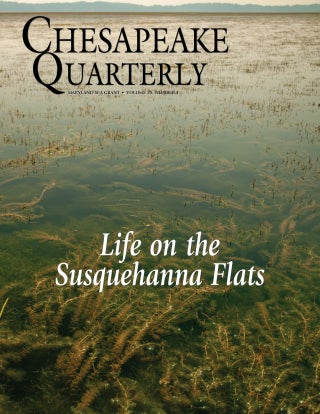
Nina Santos is a Ph.D. student at the Chesapeake Biological Laboratory at the University of Maryland Center for Environmental Science. For her dissertation, she is focused on small shrimp-like crustaceans called mysids – an understudied yet important part of many estuarine and coastal food webs.
Fellowship Experiences
A blog by and about students supported by Maryland Sea Grant
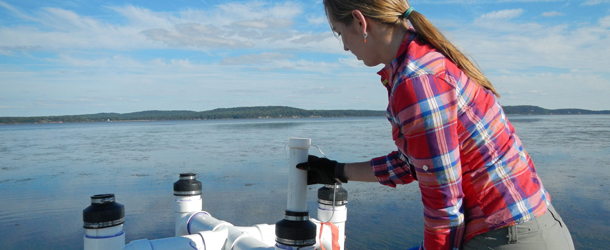
Photo, Debbie Hinkle
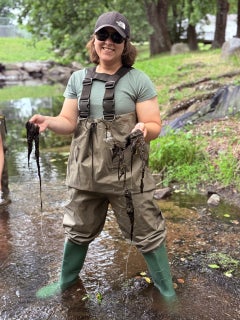
Science Illustration and Its Role in Science Communication
Julia Devine •
At its core, science illustration uses visual media to communicate complex topics in compelling ways. I’ve always been inspired by the ways science illustration can bring what some might call “boring science” to life and create a story that both teaches and leaves an emotional impact. Read more...

The Chesapeake Bay Legacy Act’s Impacts on Aquaculture and Commercial Fisheries
Kerry McClaughry •
In May 2025, the Maryland General Assembly took another step in Chesapeake Bay restoration efforts with the passing of the Chesapeake Bay Legacy Act. Aspects of this legislation impact Maryland's aquaculture and commercial fisheries. Read more...
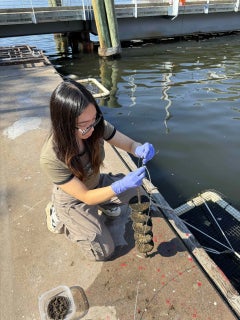
Getting to Know the Small but Mighty Organisms Living in the Baltimore Harbor
Christina Long •
The biodiversity of tiny, marine communities can reflect the health and function of ecosystems like the Baltimore Harbor, where I spent the summer studying microscopic life. Read more...
Bridging Science, Architecture, and Community in a Coastal Student Design Competition
Caldonia Carmello •
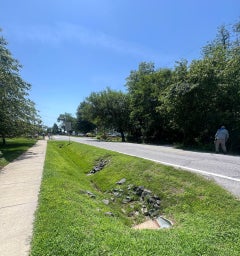
For a recent design competition, architecture, engineering, and science students teamed up to create designs to help the coastal community of Galesville, Maryland, adapt to a changing environment. Maryland Sea Grant helped students engage with the residents of Galesville. Read more...
My Year Building Adaptation and Resilience in the Climate Program Office
Casey Willson •
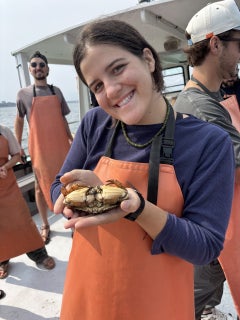
In NOAA’s Climate Program Office, the words adaptation and resilience are our bread and butter. Across a robust network of programs and partnerships, the office transitions cutting-edge research into real solutions that help communities understand, predict, and prepare for changing conditions. Read more...