Knauss legislative fellowships in Congress help build careers — and they're fun and educational. See our video and fact sheet for details.
My Experience on a Shark Research Cruise
“Fish on!” a scientist bellowed, alerting the rest of the research team to the fish caught on our line. I rushed to join the group of scientists already huddled at the ship’s railing, excitedly waiting to see what we’d pull up. My eyes grew wide as a massive shark emerged from the inky black depths of the Gulf of Mexico, caught with a hook in its mouth.
“It’s a big one. We need the cradle!” another scientist called out. Most nights, we caught small sharks that we could haul onto deck by hand. Occasionally, we were lucky enough to encounter much bigger specimens. That night, the team caught an 11-foot female tiger shark.
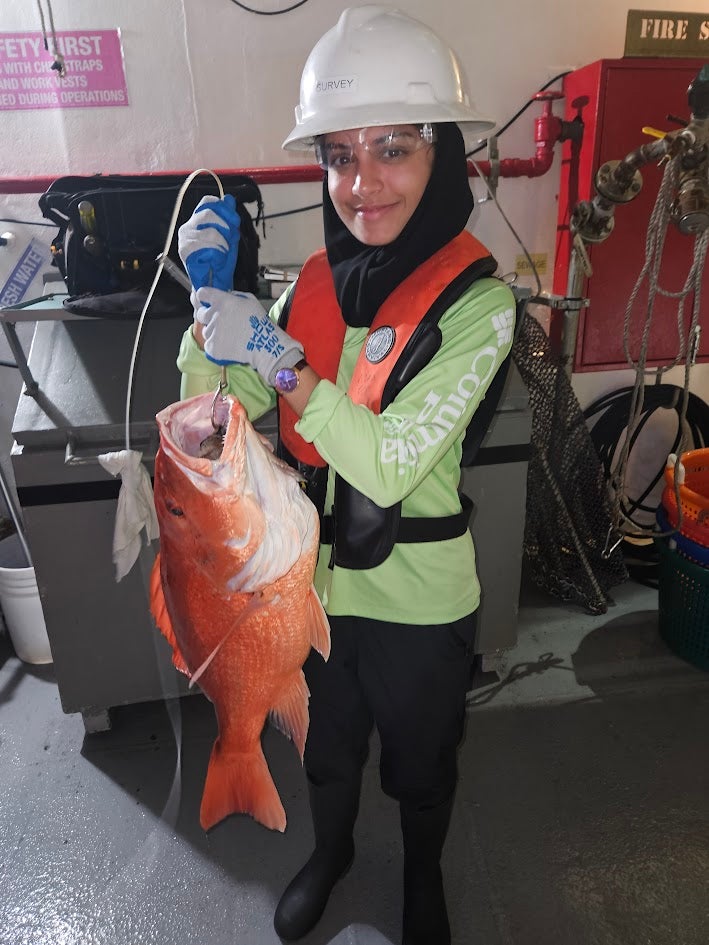
Breathtaking moments like these made my experience aboard the research vessel Oregon II memorable. In September 2025, I volunteered on the National Oceanic and Atmospheric Administration (NOAA) Southeast Fishery Science Center’s annual shark and red snapper bottom longline survey. I gained firsthand experience with research aimed at understanding the mysteries of sharks in our waters.
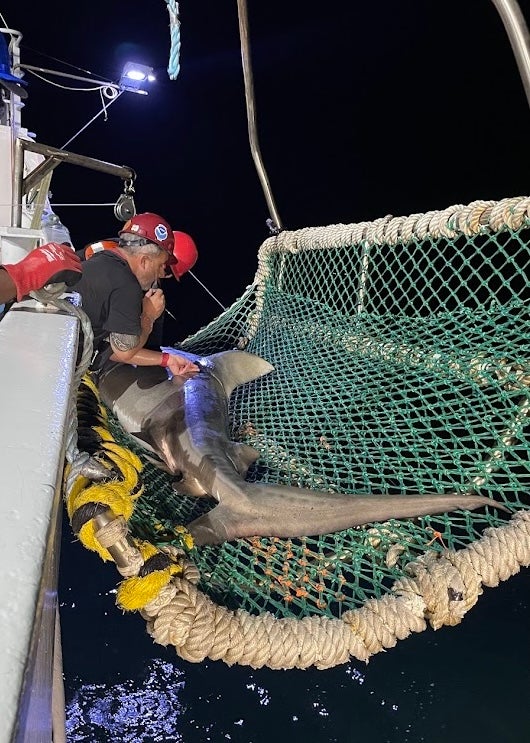
We had been at sea for six days when we caught the female tiger shark on our line. It’s too dangerous to bring a shark that size up on deck, so we deployed the “cradle.” The 10-foot-long shark cradle is made of strong ropes and aluminum tubing for the shark to lie on when lifted out of the ocean. It’s operated by a crane on deck.
We grabbed our hard hats and watched as the crew lowered the cradle into the water. Another person pulled the hooked shark into the net, and the cradle was slowly raised to the side of the boat. I grabbed the clipboard and filled in our data sheet as the team called out the species, sex, age, length, and estimated weight of the shark. Once we had the data we needed, we carefully released the giant shark back into the pitch-black ocean it calls home.
What shark species are out there? How many? Have their population numbers gone up or down in recent years? These are some of the questions the annual survey aims to answer—and has helped us answer since its start in 1995. Most of the sharks we caught during the research cruise were smaller species, often 3-4 feet long. During my time on board, we recorded sharpnose, blacktip, sandbar, scalloped hammerhead, bull, and tiger sharks.
The survey is designed to monitor trends in the abundance and distribution of coastal shark species and red snapper within US waters of the western North Atlantic Ocean. The information collected helps establish a long-term dataset to contribute to stock assessments for commercially managed fisheries.
Being out at sea and getting to handle sharks was much different than writing shark fishery regulations from my office cube at NOAA headquarters in Silver Spring, Maryland. I got to experience how data is collected for fisheries science and management, and to live and work with a tight-knit research team on a world-class research vessel for a week.
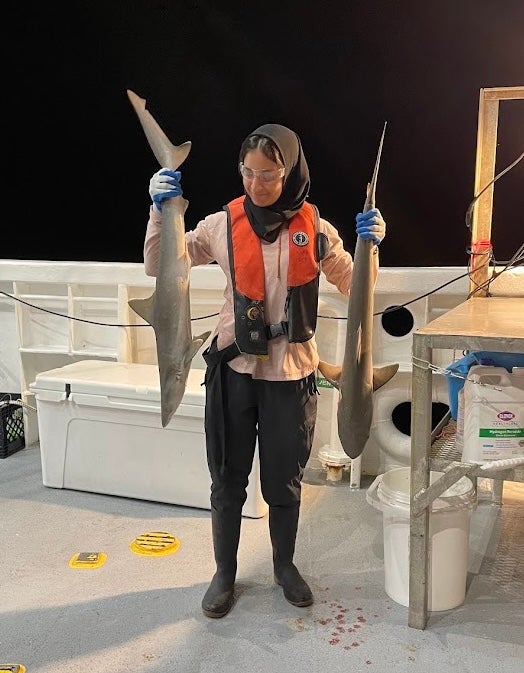
After getting my sea legs (which involved a few days of battling seasickness and a pesky cold), I was able to enjoy working with the team. I gained confidence in my ability to withstand rough conditions in the field so I could be a part of this exciting research. Our cruise was cut short by a week due to the government shutdown in October, but I am still grateful I had the opportunity to volunteer. I will cherish the memories and connections I made during my week getting up-close and personal with sharks as I continue to work on fishery management plans here on land.
See all posts to the Fellowship Experiences blog