Knauss legislative fellowships in Congress help build careers — and they're fun and educational. See our video and fact sheet for details.
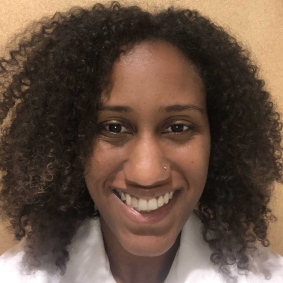
Amanda Lawrence
Fellowship Institution:
U.S. Fish and Wildlife ServiceStart Year:
2020Amanda Lawrence is a 2020 Knauss Fellow with the U.S. Fish & Wildlife Service in the National Wildlife Refuge System for the Coastal and Marine Program. She will be involved in supporting America’s coastal watersheds and their surrounding communities, as well as in coastal conservation and restoration projects and issues across our United States coastal habitats.
Amanda grew up in Maryland; right outside of Annapolis and a bike ride away from the Chesapeake Bay. She completed a dual degree program receiving B.S. degrees in both Environmental Marine Science and Biology from the University of Maryland Eastern Shore and Salisbury University, respectively. Currently she is completing an M.S. degree in the Marine Estuarine Environmental Sciences Graduate Program at the University of Maryland Center for Environmental Science. Her thesis involves understanding the size at which the male Jonah crab, a commercially important species, reaches maturity. She does this by studying male sex hormones, and hopes this research can be used to support the fishery.
During her graduate school career, Amanda was awarded the National Institute of Standards and Technology Fellowship. She was also a NOAA-Living Marine Resources Cooperative Science Center Fellow, and received the opportunity to intern with NOAA’s Northwest Fisheries Science Center in Mukilteo, WA, studying the effects of ocean acidification on Dungeness crab larval development. She loves being near the water in any capacity, be it researching, kayaking or diving.
Main Menu (levels 2-3)
Program Announcements
-
-
Maryland Sea Grant has program development funds for start-up efforts, graduate student research, or strategic support for emerging areas of research. Apply here.
News and Blogs
Video Gallery
Sea Grant Film Explores a Diminishing Smithville
Smithville is a community on Maryland’s Eastern Shore, on the edge of the Blackwater National Wildlife Refuge. A century ago, Smithville had more than 100 residents. Today, it has four, in two homes: an elderly couple, and one elderly woman and her son, who cares for her.
Featured Fellow
Nina Santos
Featured Research Project
Developing a habitat model for mysids, an important link in Chesapeake Bay food webs
Mysids are important mesozooplankton prey for many species of fish in Chesapeake Bay and are an important link in transferring energy from lower to upper trophic levels. Mysids also serve as biological vectors for benthic-pelagic coupling due to their diel vertical migration and omnivorous prey-switching behavior, which makes mysids important regulators of food web architecture. Despite their central role in coastal food webs, surprisingly little is known about mysid ecology and dynamics in Chesapeake Bay.