Knauss legislative fellowships in Congress help build careers — and they're fun and educational. See our video and fact sheet for details.
Chesapeake Scientists Build Connections Around Aquatic Viral Ecology
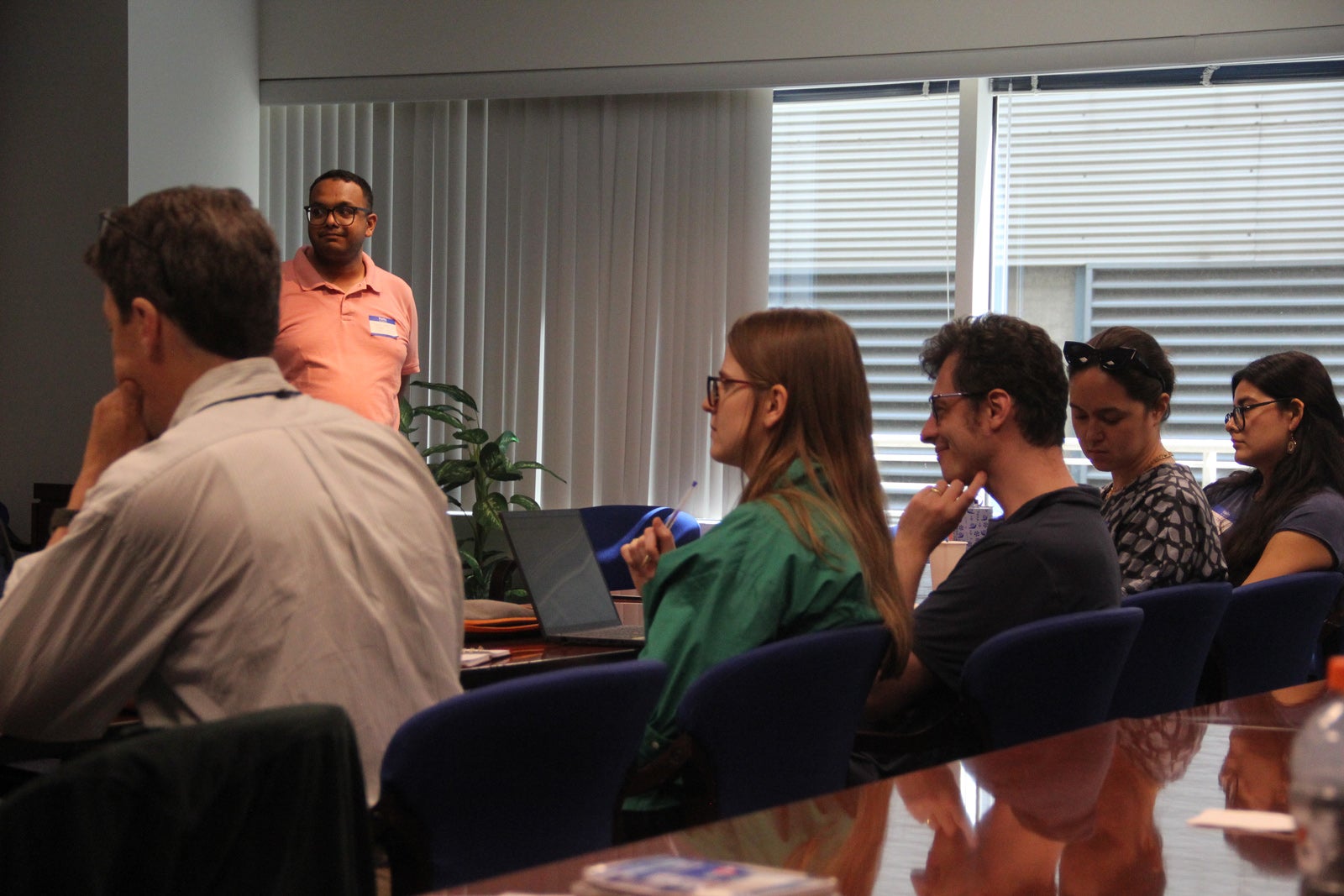
Some of the Chesapeake’s smallest inhabitants are driving big scientific questions. On April 24, 2026, researchers studying aquatic viruses gathered at the Institute of Marine and Environmental Technology for the second annual meeting of the Chesapeake Aquatic Viral Ecology network.
“[Aquatic] viruses infect organisms across the tree of life, from microscopic bacteria to the largest whales,” says Tapan Goel, postdoctoral associate at the University of Maryland and one of the meeting’s organizers. They are abundant in our lakes, rivers, oceans, and other water bodies around the world.
Viruses are often associated with illness, but associate research scientist and meeting co-organizer Stephen Beckett says we shouldn’t be alarmed by aquatic viruses. “Most of these viruses don’t infect humans—but the organisms they infect may impact human and environmental systems,” says Beckett. Viruses that infect marine microbes, for example, play an important role in cycling nutrients and mediating food webs. “By killing their hosts, they make the nutrients stored in the host available to other microbes, and they also help sequester carbon into the deeper reaches of the ocean,” says Goel.
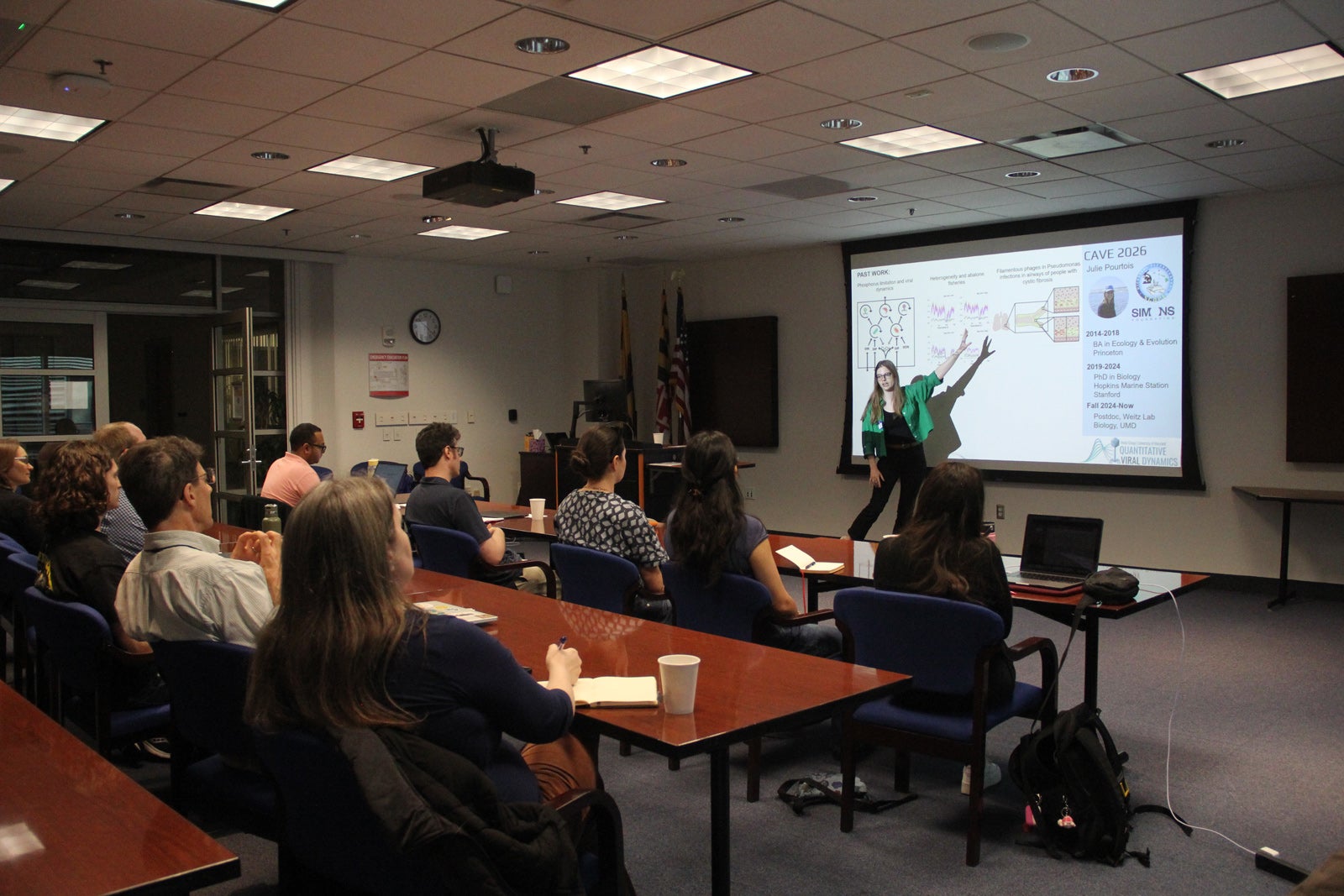
April’s meeting brought together more than 30 researchers from institutions across Maryland and Delaware. Throughout the morning, participants presented lightning talks on their latest research. Presentations spanned topics and disciplines, from viral dynamics in warming oceans, to applications for protein language models, and understanding variations in viral plasticity. Goel says he was struck by the variety of cutting-edge experimental, computational, and theoretical tools researchers are using to study aquatic viruses.
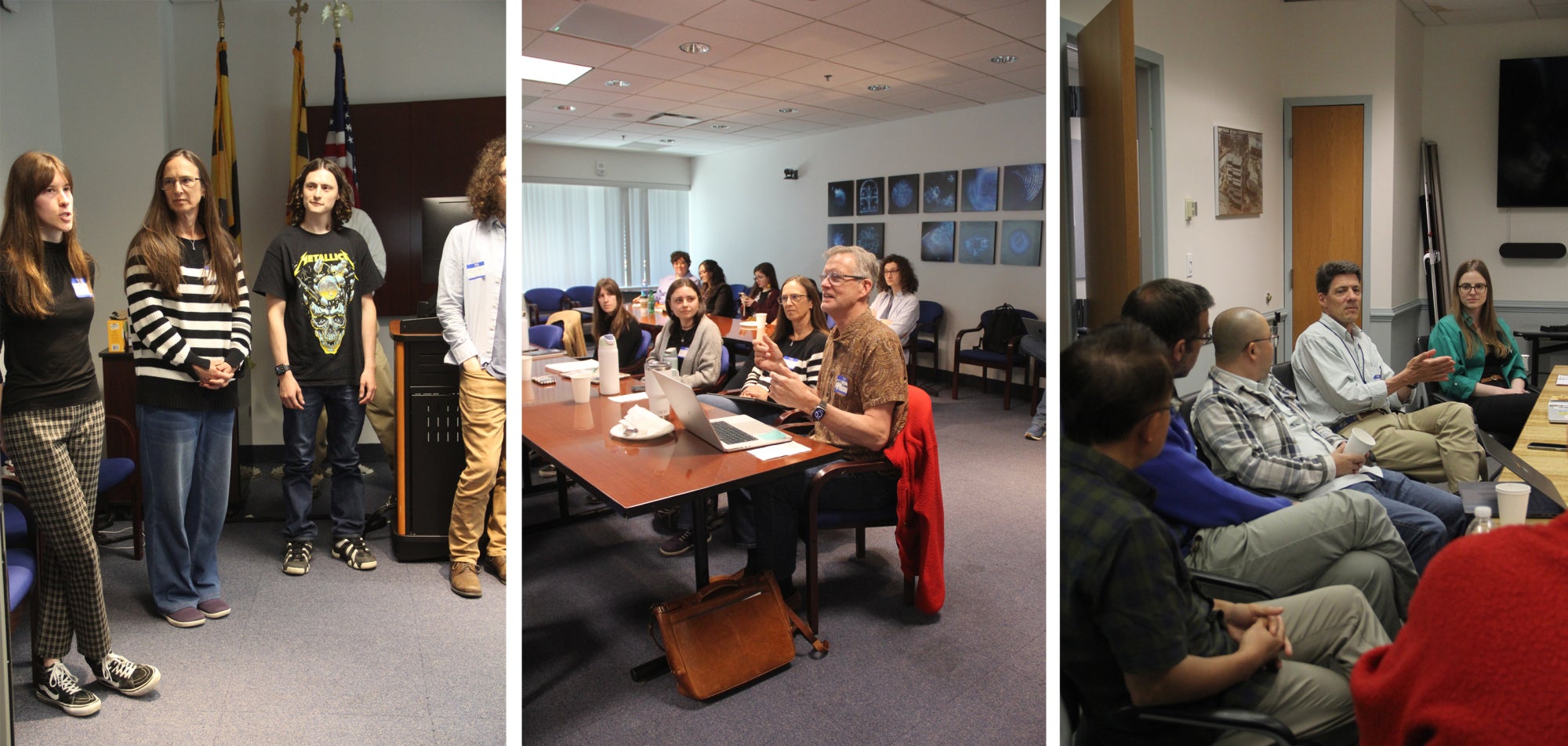
The meeting’s central goal was to bring people together. “We wanted to build a space for scientists studying viruses in the area to meet each other, share resources, and develop collaborations,” says Julie Pourtois, postdoctoral fellow at the University of Maryland and meeting co-organizer.
During afternoon breakout sessions, researchers shared some of the challenges they face, like finding sustainable funding. They also talked about scientific priorities and emerging areas of interest, like how viruses shape the Chesapeake ecosystem. While most people recognize the importance of studying viruses that cause disease, Pourtois says understanding how aquatic viruses influence nutrient cycling and other ecosystem processes could have important implications for the environmental and economic health of the Bay.
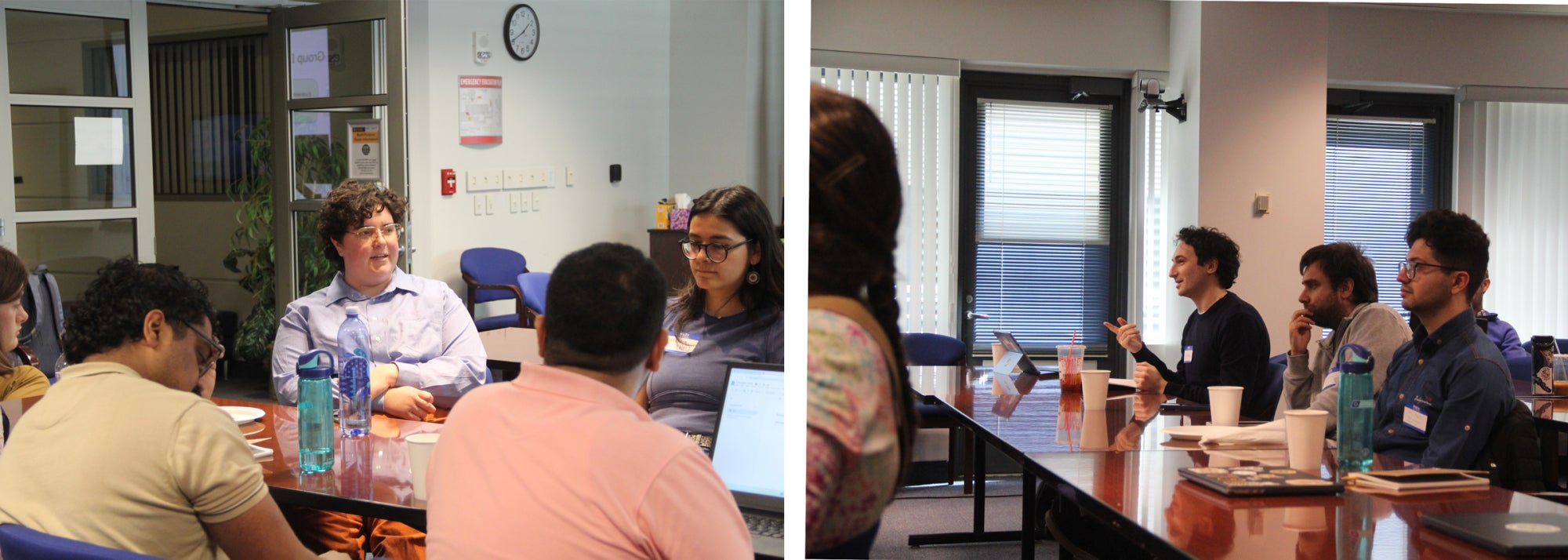
One breakout group discussed a need for centralized data collection. While some researchers sample aquatic viruses at the local level, a long-term, Bay-wide monitoring program would make it easier to incorporate viruses into scientific models. Another group considered creative ways to share information about aquatic viruses with new audiences, like K-12 students.
Over the last few decades scientists have learned that viruses are far more abundant in our waters than previously thought. “Marine estimates suggest you might expect to find around 50 million viruses in a teaspoon of seawater,” says Beckett. As scientists continue to uncover how viruses impact aquatic ecosystems, including the role they play in the Chesapeake Bay, regional scientific networks can help create spaces to share ideas and advance this field of study.
The Chesapeake Aquatic Viral Ecology network is new and growing. If you work in this area and would like to join the network, you can visit the group’s website at chesapeakeave.wordpress.com to sign up for their quarterly email newsletter and receive announcements about future meetings and events.
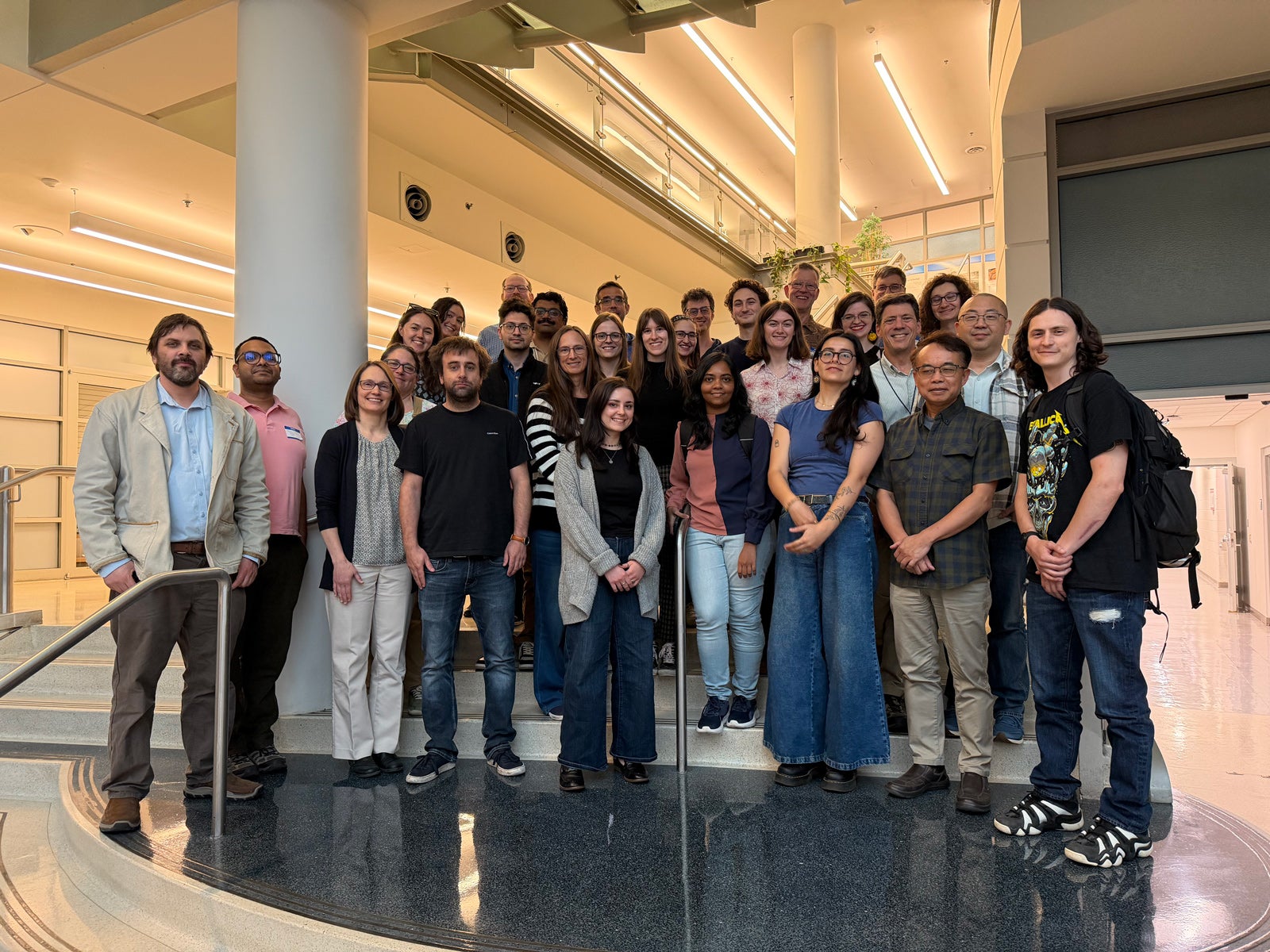
The second annual meeting of the Chesapeake Aquatic Viral Ecology network was funded in part by Maryland Sea Grant. Special thanks to the members of the organizing committee, Eric Schott, Stephen Beckett, Julie Pourtois, and Tapan Goel, and to the Institute of Marine and Environmental Technology for hosting the meeting.
See all posts from the On the Bay blog
Program Announcements
News and Blogs


ON THE BAY - BLOG ARCHIVE
ON THE BAY - BLOG TOPICS
Featured Fellow
Nina Santos
Nina Santos is a Ph.D. student at the Chesapeake Biological Laboratory at the University of Maryland Center for Environmental Science. For her dissertation, she is focused on small shrimp-like crustaceans called mysids – an understudied yet important part of many estuarine and coastal food webs.
Featured Research Project
Geochronology Study of Per- and Polyfluoroalkyl Substances Deposition and Ecosystem Response in the Chesapeake & Maryland Coastal Bays
Per- and polyfluoroalkyl substances (PFAS) are environmentally persistent contaminants linked to adverse health outcomes in humans and wildlife. In Maryland's Chesapeake Bay and Coastal Bays, PFAS accumulation in sediments and biota, as well as their ecological impacts, remain poorly understood. This project will reconstruct multidecadal PFAS deposition histories using sediment cores, apply microbial community profiling to assess benthic ecosystem responses, and translate findings into practical guidance for aquaculture and environmental management.