Knauss legislative fellowships in Congress help build careers — and they're fun and educational. See our video and fact sheet for details.
Maryland Sea Grant Funds New Research Projects
May 15, 2026
Maryland Sea Grant has been awarded approximately $1.5 million in federal funding to support seven research projects. These funds, plus $900,000 in non-federal matching funds, will support research on oyster hatchery crashes, tidal marsh restoration techniques, agriculture-marsh interactions, PFAS in sediment, hard clam reproduction, and softshell crab aquaculture. The projects were awarded through a competitive, peer-reviewed selection process.
Five of the projects are funded for two years at about $100,000 per year. One project (softshell clam aquaculture) is funded for two years at about $20,000 per year. During this period, a previously funded four-year project on urban community access will also continue to receive funding at about $125,000 per year.
Funding for these projects supports not only research but also scientific training for four graduate fellows from Maryland universities and outreach efforts to communities. The selected research projects are led by experts from Institute of Marine and Environmental Technology, Morgan State University, National Audubon Society, Salisbury University, The Nature Conservancy, Towson University, University of Maryland, University of Maryland Center for Environmental Science, University of Maryland Eastern Shore, and the US Fish and Wildlife Service.
The project topics are:
1. Preventing Larval Die-Offs in Crash Events at Oyster Hatcheries
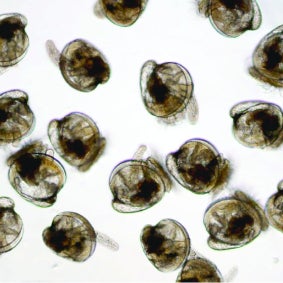
Oyster hatcheries are key players in oyster restoration and the aquaculture industry, producing larval oysters used to rebuild natural oyster reefs and supply growers with spat. But hatcheries are challenged by “crashes”—unpredictable larval oyster mortality events. Crashes are common and oyster spat supply shortages carry significant economic consequences. But causes of crashes are elusive, with several suspected triggers including the bacterial pathogen vibrio, harmful algae, and dinoflagellates that have been linked to fish kills and viruses.
This project is based on the premise that hatchery source water, not circulation systems, drives crash events. Its goal is to identify signals in source water that either predict or cause crashes. Leveraging sampling data gathered at the Horn Point Laboratory Oyster Hatchery and Morgan State University’s Patuxent Environmental Aquatic and Research Laboratory, researchers will measure water quality parameters, microbial composition, and viral populations and relate these to hatchery larval health. Data from both locations will help identify correlations, and machine learning will be used to identify whether microbial and environmental compositions can predict crashes and determine causes. Ultimately, the research will inform hatchery design, especially related to water filtration, help develop affordable methods to test for crash triggers, and provide hatchery managers information on how best to prevent costly crashes.
Investigators: Jacob Cram, Sairah Malkin, Clara Fuchsman, Stephanie Alexander, and Xiaoxu Guo, University of Maryland Center for Environmental Science; Amanda Knobloch, Morgan State Patuxent Environmental Aquatic and Research Laboratory
2. Advancing Techniques to Support Restoration of Saltwater Marshes
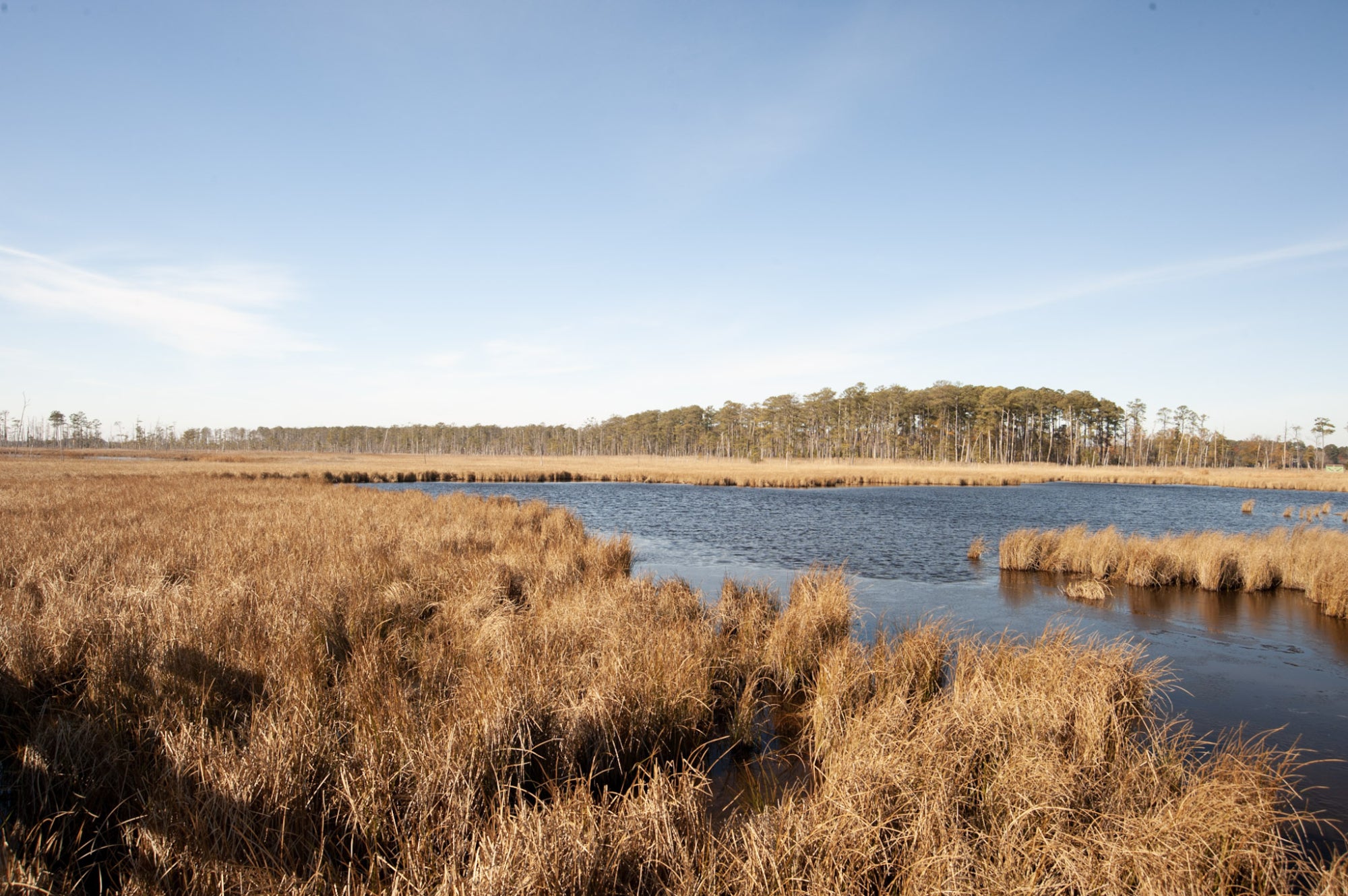
Maryland’s salt and brackish tidal marshes are among the most ecologically valuable landscapes in the state. Marshes provide nurseries for commercially valuable fish and habitat for a multitude of species, help mitigate storm surge and flooding, filter water, and sequester carbon. However, they are under increasing threat due to sea level rise, which exposes marshes to erosion and more flooding, and ultimately converts them to open water. Modeling predicts the loss of more than a third of the state’s high marshes by 2050 and all of them by 2100. One way to slow and potentially reverse this process is by creating “runnels”—shallow channels that can restore tidal hydrology and ultimately vegetation. This technique shows promise, but results have been mixed. Clear science and specific guidance on implementation is needed.
This project aims to close that knowledge gap. Researchers will use aerial imagery to assess how different runnel designs influence recovery, document recovery to date, and create a classification system for projects. Additional work will analyze changes to sediment dynamics and hydrology. The research will be used to develop a manual that summarizes the best science on restoration using runnels and provides a framework for site selection, design, risk mitigation, and best practices. The project builds on the Marshes for Tomorrow project, an initiative to identify at least 25,000 acres of high salt marsh in Maryland for conservation, and will also contribute to a project examining the effects of runnels on saltmarsh sparrow habitat.
Investigators: Alice Besterman, Towson University; Andrew Baldwin, University of Maryland; Henrietta Bellman and David Curson, National Audubon Society; Sophia Blanco Seufert, US Fish and Wildlife Service
3. Assessing the Farm-Marsh Boundary and Landowner Adaptations to Sea Level Rise
Maryland’s low-lying coastal regions are rapidly experiencing sea level rise. Projections suggest sea levels could rise by 1.4 feet by 2050, posing risk to agricultural lands near the Chesapeake Bay and Maryland’s Coastal Bays. In places affected by sea level rise, the area between marsh and farmland is a dynamic transition zone where a combination of factors, including sediment type, vegetation, land use, and more affect sea level rise impacts. Landowner responses to sea level rise on agricultural land play an important role in these impacts as well. Landowners dealing with effects of sea level rise such as flooding, erosion, and saltier soils may choose to invest in protective infrastructure, implement conservation practices, or exit farming altogether.
This research project will use remote sensing, data collection, modeling, and social science research to predict the impacts of sea level rise on agricultural lands and will identify effective adaptive strategies in coastal areas. Importantly, this project will be carried out with input from restoration practitioners who work with sea level rise adaptation on the Eastern Shore.
Investigators: William Nardin, University of Maryland Center for Environmental Science; Matthew Houser, The Nature Conservancy and University of Maryland Center for Environmental Science; Giulia Franchi, Salisbury University
4. Supporting Restoration of Hard Clams in Maryland’s Coastal Bays
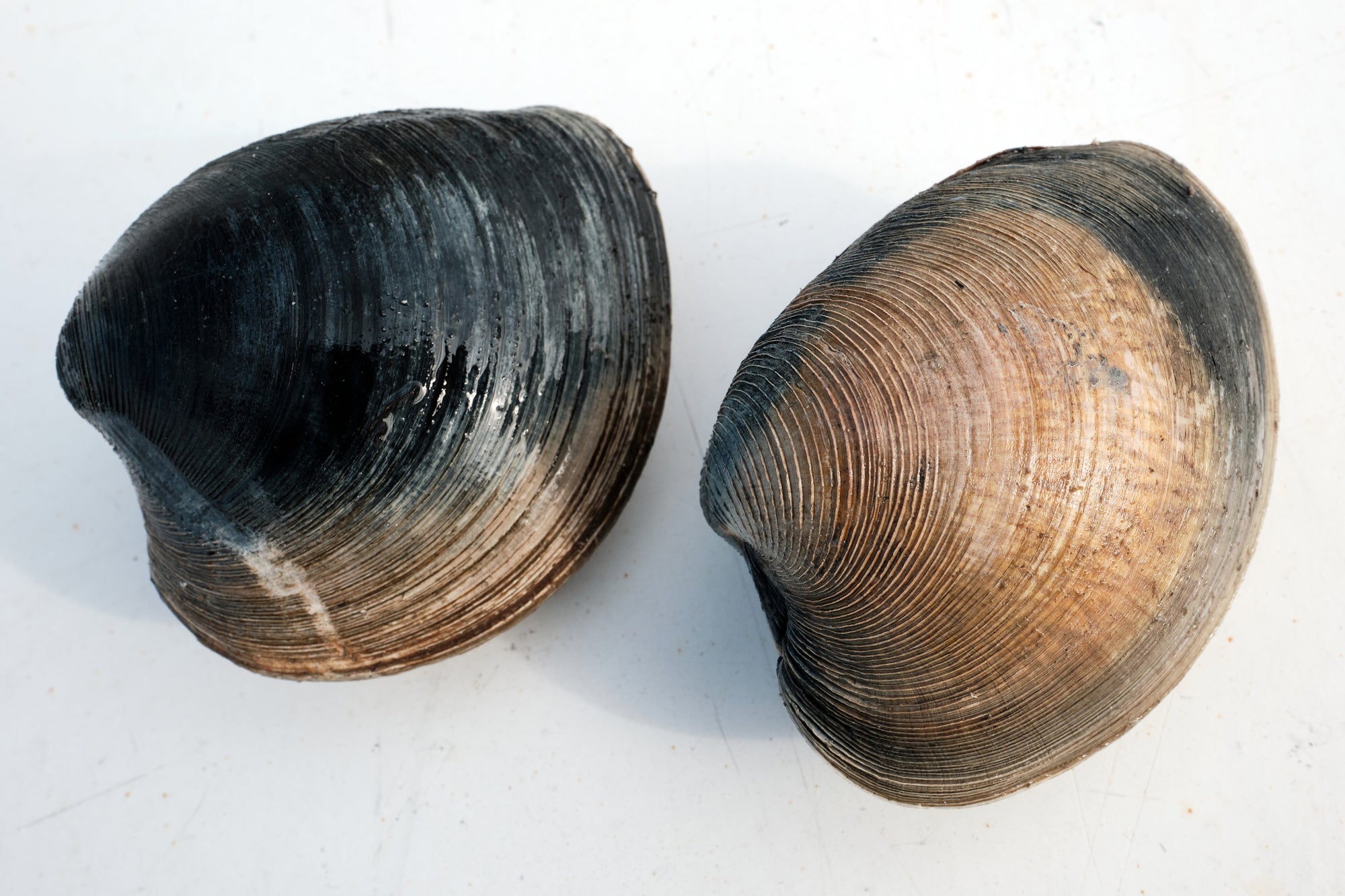
Hard clams (Mercenaria mercenaria) have traditionally been a valuable fishery in the Maryland Coastal Bays, as well as ecologically important filter feeders. But since a peak harvest in 1969 of 760,000 pounds, the population of hard clams in the Coastal Bays has fallen well below historical levels. Efforts to restore the bivalve will depend on a greater understanding of factors affecting clam larvae transport, settlement, and recruitment—particularly in the face of environmental stressors such as nutrient pollution, more frequent strong storms, and heatwaves.
This project will use multiple models to simulate recruitment dynamics in the Maryland Coastal Bays, capturing the specific behavior, habitat requirements, and environmental interactions of hard clam larvae. Field sampling coinciding with key recruitment stages will support restoration planning and population dynamics modeling, and experiments will mimic a variety of scenarios and conditions. Researchers will develop a matrix to identify where larvae originate and where they settle, and will create high-resolution maps outlining potential restoration zones. Ultimately, this project will provide the information needed for successful restoration and management of hard clams in Maryland’s Coastal Bays, helping to return the species to commercially and ecologically viable levels.
Investigators: Meng Xia and Stephen Tomasetti, University of Maryland Eastern Shore; Mitchell Tarnowski, Maryland Department of Natural Resources
5. Tracking PFAS in Sediments and Microbial Communities
Per- and polyfluoroalkyl substances (PFAS) are commonly used chemicals that resist degradation, are associated with risks to human, animal, and ecosystem health, and bioaccumulate in animals in the Chesapeake Bay and Maryland Coastal Bays. Although the Maryland Department of the Environment is testing water and fish tissue for PFAS, little attention has been paid to the presence and distribution of PFAS in the bays’ sediments, and how they may alter the microbial organisms and communities there. Disruption of these microbial communities by PFAS exposure could create cascading effects on the estuaries’ food web dynamics and affect aquaculture productivity and safety.
This project aims to close the critical gap in understanding the long-term accumulation of PFAS in estuarine sediments and their potential to change microbial communities. Researchers will examine sediment cores from sites in the Chesapeake and Maryland Coastal Bays. Sediment cores act as archives, allowing researchers to determine PFAS exposure levels over time. Researchers will also extract DNA from the cores to study the effects of PFAS on microbial communities. This combination will provide a decades-long view of both chemical accumulation in sediments and biological response. This study will be the first in the region, and among the first nationally, to reconstruct a multi-decade PFAS deposition record while also evaluating biological responses within the same sediment archives. Findings will be used to develop risk maps, sediment health indicators, and science-based guidance on aquaculture siting for shellfish growers, resource managers, and coastal planners.
Investigators: Eguono Omagamre, University of Maryland Eastern Shore; Jeffrey Cornwell and Cindy Palinkas, University of Maryland Center for Environmental Science
6. Exploring Soft Crab Aquaculture Techniques
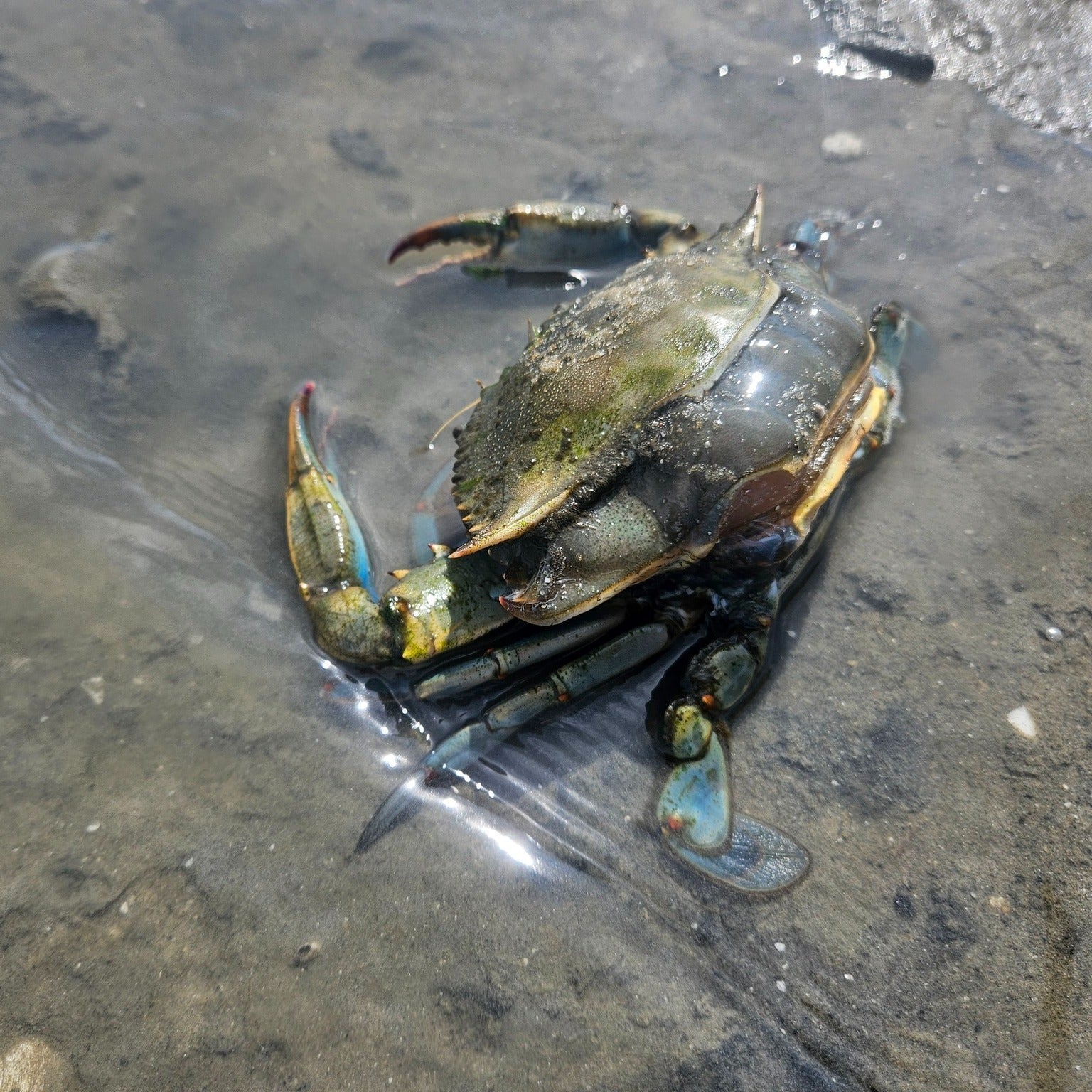
Blue crabs (Callinectes sapidus) are an iconic and cultural symbol of the Chesapeake Bay and a fundamental fishery resource. Considered a delicacy and more economically lucrative, soft crabs are recently molted blue crabs produced in short-term aquaculture. However, the practice typically has 25% crab mortality. Finding an affordable, reliable way to reduce soft crab mortality and cannibalism in soft crab aquaculture could boost this facet of Maryland’s crabbing industry.
This project will use low-maintenance, individualized cages—similar to how oysters are grown in floating cages—to grow juvenile crabs to “peeler” size. Earlier work cultured crabs to about 5 centimeters; this project will attempt to grow them to 7-8 centimeters. Additionally, researchers will work with Maryland watermen to take cage-grown crabs to the pre-molt (“peeler”) stage, gathering input to devise an effective system that meets real-world conditions. Throughout the project, researchers will continue conversations with watermen and the Maryland Department of Natural Resources regarding the implications and management of this form of aquaculture at scale.
Investigator: Eric Schott, University of Maryland Center for Environmental Science
Maryland Sea Grant is one of 34 Sea Grant programs supported by the National Oceanic and Atmospheric Administration in coastal and Great Lakes states that encourage the wise stewardship of our marine resources through research, education, outreach, and technology transfer.
Photo, top left: Oyster larvae at the Horn Point Laboratory Oyster Hatchery. Credit: University of Maryland Center for Environmental Science's Horn Point Laboratory
Program Announcements
CONTACT THE COMMUNICATIONS STAFF
Please share your ideas for articles, blog posts, and coverage. See our contact information and more about what we do.
News and Blogs


Related Products
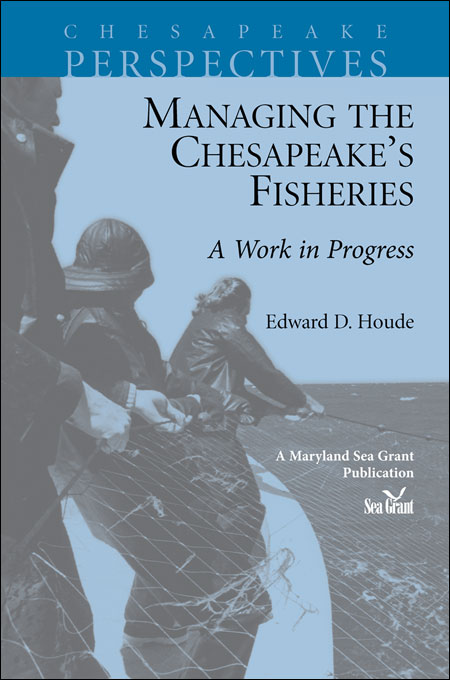
Managing the Chesapeake's Fisheries: A Work in Progress
This monograph is a major assessment of the state of key species in the Chesapeake Bay — the eastern oyster, blue crab, striped bass, and Atlantic menhaden — and of the prospects for shifting from single-species fisheries management to…