Knauss legislative fellowships in Congress help build careers — and they're fun and educational. See our video and fact sheet for details.
Shoreline Planting Brings Chesapeake Conservation and Climate Corps Together at the Wye
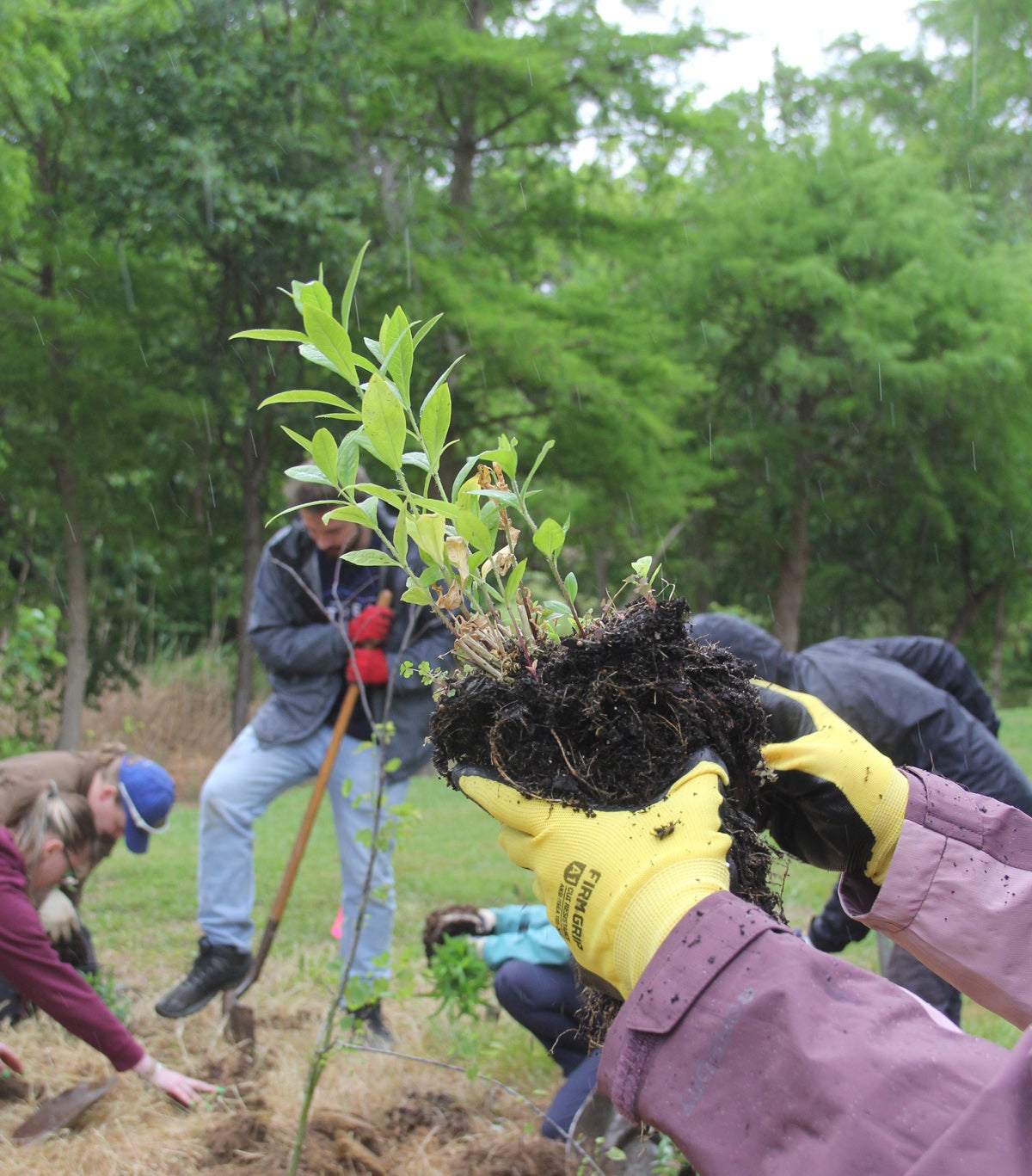
A steady drizzle fell over DeCoursey Cove on May 6, soaking into freshly turned soil. The weather didn’t stop a crew of Chesapeake Conservation and Climate Corps members from getting to work. By the afternoon, native plants filled newly dug garden beds at the Wye Research and Education Center. Mud clung to boots and rain jackets. Just as the sun finally emerged, volunteers traded their shovels for spoons and celebrated over bowls of ice cream.
Organized by Maryland Sea Grant Extension intern and Corps member Michael Wade, the “Shorelines and Sundaes” event blended community building with hands-on training in planning and installing buffer gardens. The Corps places young adults with nonprofit or government agencies to work on Chesapeake Bay watershed issues for a year. For many volunteers, the event was a chance to step outside their usual work settings and build new connections.
Volunteer Aidan Hughley was excited to get outdoors with his fellow Corps members. While digging holes and loosening root balls, he talked about his work removing invasive species and leading educational field trips with the Adkins Arboretum. Others discussed the projects they support in their host organizations, like working with the Maryland Department of the Environment’s Watershed Protection, Restoration, and Planning Program or developing climate action plans for municipalities.
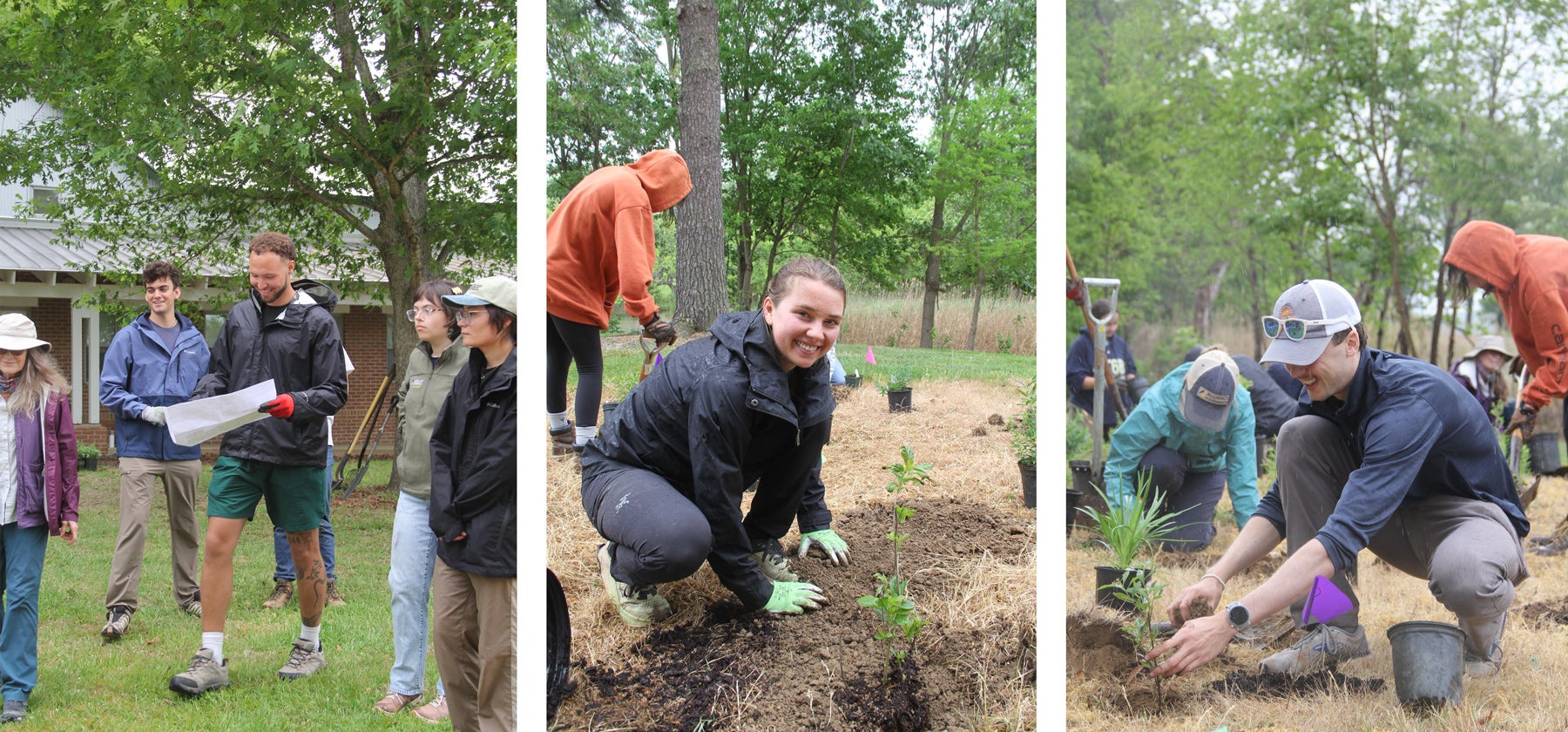
Some also noted the Corps has introduced them to environmental work they hadn’t considered. Sophia Gibby says her work in food waste collection services with the City of Takoma Park involves a lot of community outreach, which has been a new experience for her. Patton Harbourt says he’s enjoyed learning about stormwater and stream restoration while stationed with the Center for Watershed Protection in Fulton, Maryland.
The planting day also gave some volunteers a rare opportunity to work outdoors. “Since my position is really office based, I like taking advantage of site visits, getting outside, and getting my hands dirty,” says Julia Staranowski.
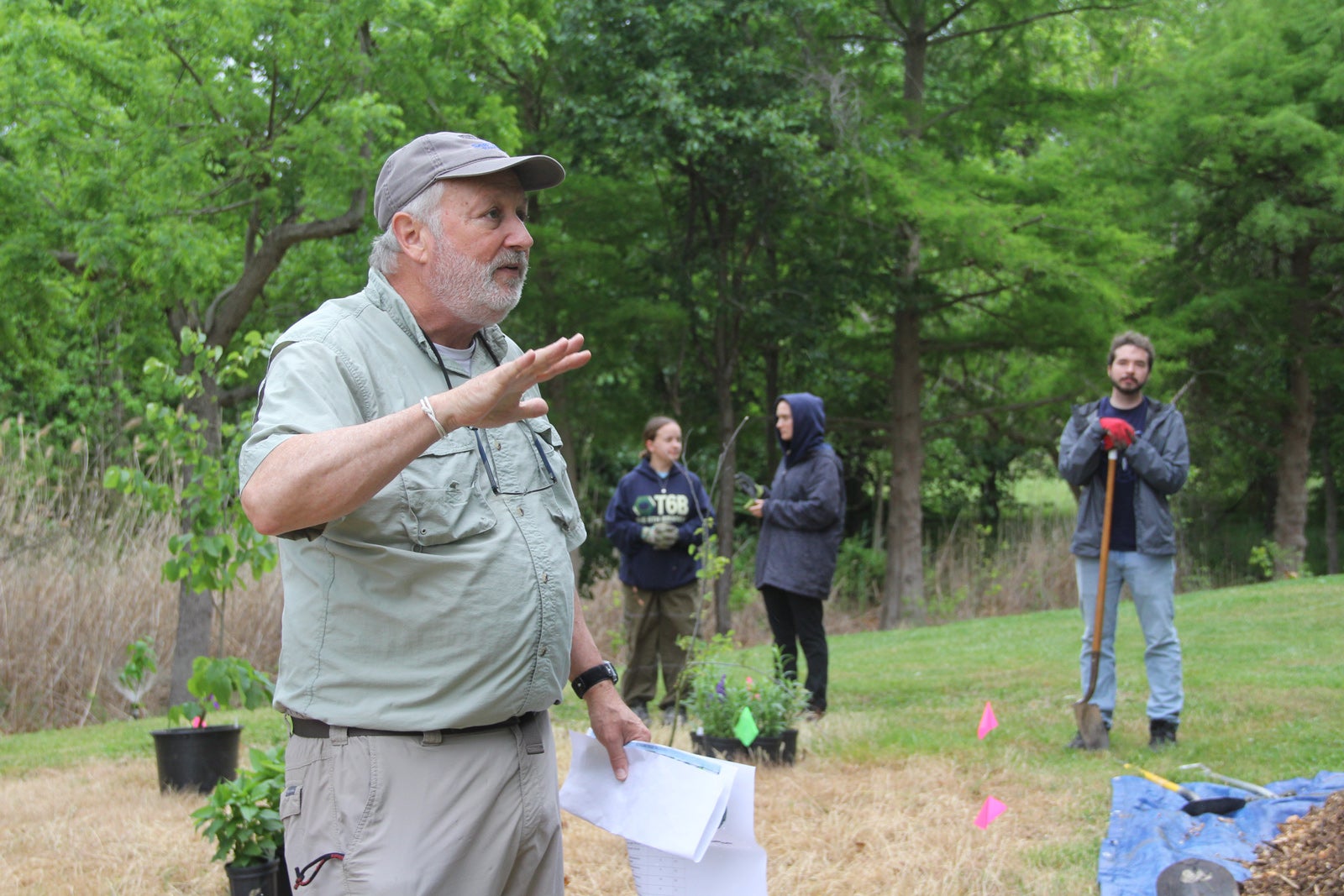
The volunteers installed a border garden and a butterfly garden using plans from the Maryland Department of Natural Resources' The Green Book for the Buffer. The gardens will help reduce erosion and nutrient runoff, acting as a buffer between land and water. “Our impacts up here eventually work their way outstream or downstream into the Chesapeake Bay, and we need to lead by example,” says Eric Buehl, a watershed extension specialist with Maryland Sea Grant Extension who helped plan and organize the planting event.
The gardens feature native trees, shrubs, and flowers, including eastern redbud (Cercis canadensis), butterfly flower (Asclepius tuberosa), joe-pye weed (Eupatorium dubious), lowbush blueberry (Vaccinium angustifolium), and sheep laurel (Kalmus angustifolia). “Unlike a typical best management practice or rain garden, which is really focused on stormwater runoff, these buffer gardens protect both against stormwater runoff but also saltwater intrusion and rising tides,” says Wade.
The project was made possible through the Chesapeake Conservation and Climate Corps mini-grant program, which supports member-led initiatives. Corps members can apply for mini-grants up to $1,250 for projects that advance the organization’s mission.
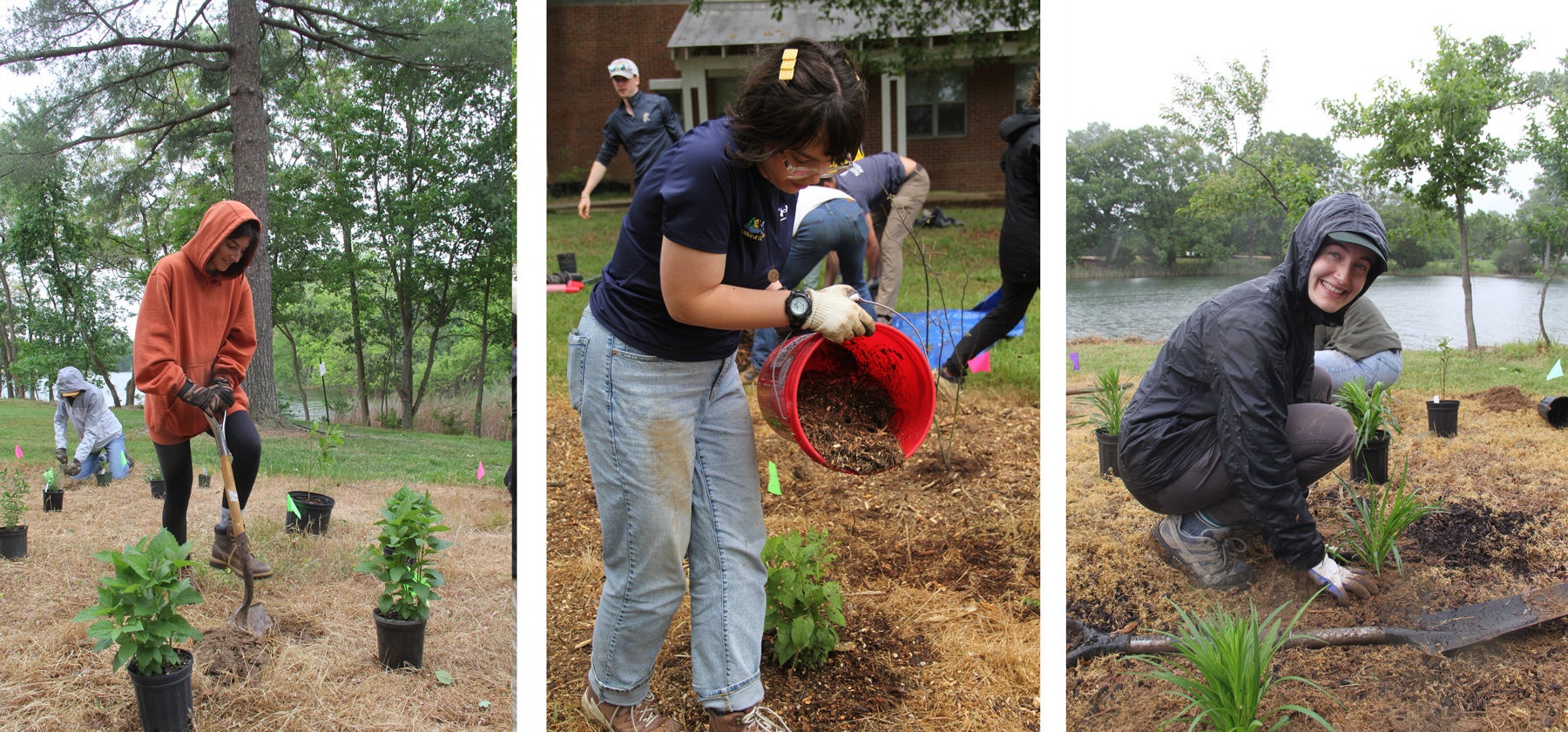
Wade applied for funds for the shoreline buffer planting project at the Wye, and the mini-grant covered the cost of the native plants. But it was the strong volunteer turnout that made the day a success.
Wade says he’s gained a lot of interpersonal and professional development as a Chesapeake Conservation and Climate Corps member. He works mainly with Baltimore County residents to reduce stormwater runoff and nutrient pollution in the Bay, connecting communities with research and information in the process. He says that experience echoes a broader benefit of the Corps.
“[The Corps] lets you connect with like-minded people and have some meaningful change, both inside and outside of the office.” That sentiment was reflected in the collective effort and conversation at the Wye on this rainy spring day, where newly planted gardens now buffer the shoreline.
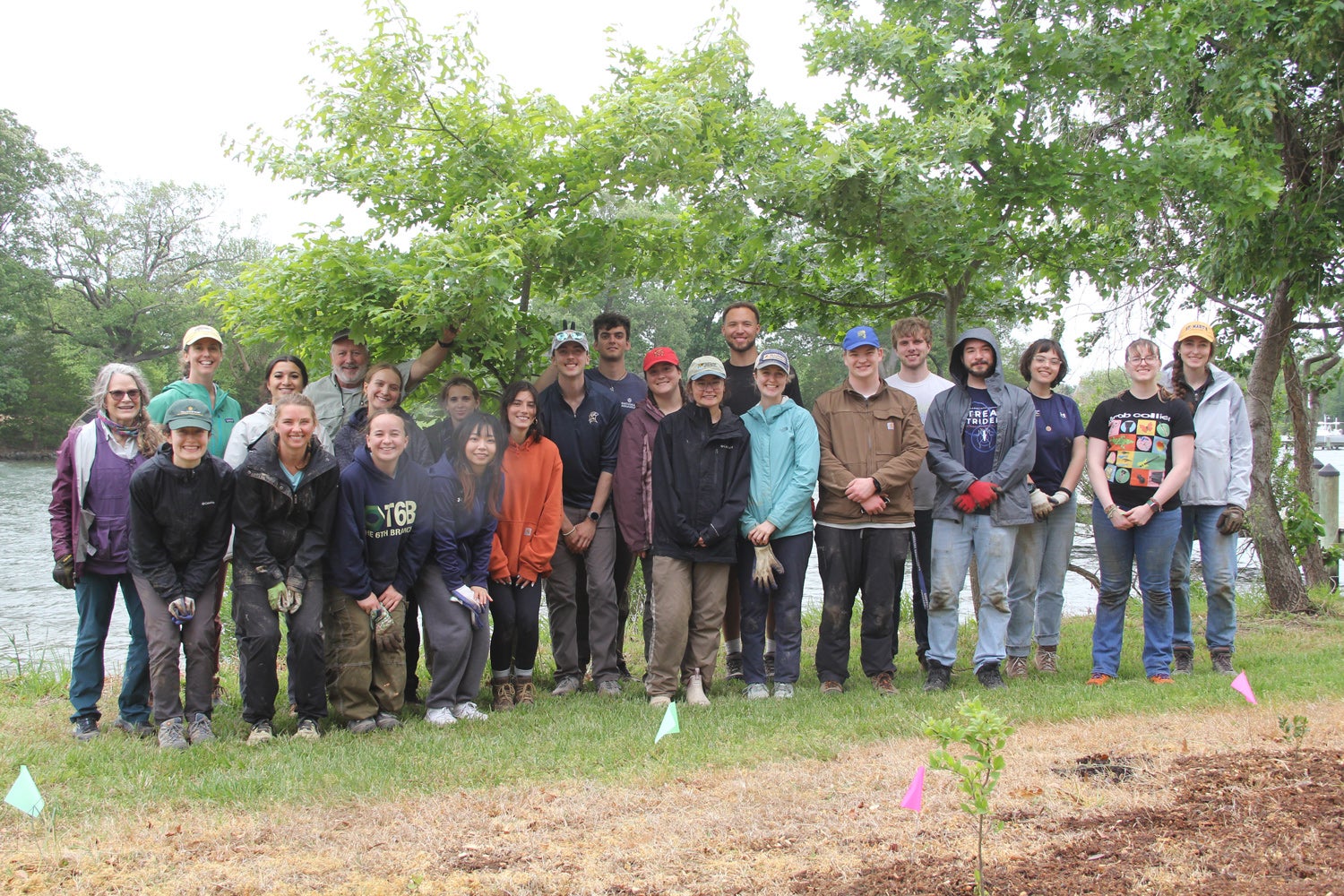
Special thanks to the entire Watershed Protection and Restoration Program team with Maryland Sea Grant Extension; University of Maryland Extension Specialist for Commercial Horticulture Andrew Ristvey; staff at the Wye Research and Education Center; and Chesapeake Conservation and Landscaping Council administrators for their help facilitating and organizing the Shorelines and Sundaes event.
See all posts from the On the Bay blog
Program Announcements
News and Blogs


ON THE BAY - BLOG ARCHIVE
ON THE BAY - BLOG TOPICS
Featured Fellow
Nina Santos
Nina Santos is a Ph.D. student at the Chesapeake Biological Laboratory at the University of Maryland Center for Environmental Science. For her dissertation, she is focused on small shrimp-like crustaceans called mysids – an understudied yet important part of many estuarine and coastal food webs.
Featured Research Project
Geochronology Study of Per- and Polyfluoroalkyl Substances Deposition and Ecosystem Response in the Chesapeake & Maryland Coastal Bays
Per- and polyfluoroalkyl substances (PFAS) are environmentally persistent contaminants linked to adverse health outcomes in humans and wildlife. In Maryland's Chesapeake Bay and Coastal Bays, PFAS accumulation in sediments and biota, as well as their ecological impacts, remain poorly understood. This project will reconstruct multidecadal PFAS deposition histories using sediment cores, apply microbial community profiling to assess benthic ecosystem responses, and translate findings into practical guidance for aquaculture and environmental management.