Knauss legislative fellowships in Congress help build careers — and they're fun and educational. See our video and fact sheet for details.
Aixa Alemán-Díaz
Fellowship Institution:
NOAA National Sea Grant OfficeStart Year:
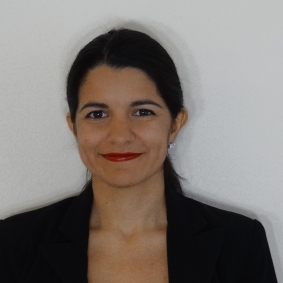
2018Aixa Alemán-Díaz joined the NOAA, Office of Oceanic & Atmospheric Research (OAR), National Sea Grant Office for her Knauss fellowship as the coastal ecosystems and resilience specialist. She obtained her Ph.D. in sociocultural anthropology at American University in Washington, DC. Her research compares the way in which the social background — place of residency, employment, education, and age — of residents, technical experts, and short-term visitors influences their social relationships with beaches and coastal bioluminescence in their everyday life. Like land, the coasts face pressures due to the multiple uses, or on-site activities, such as recreation, biodiversity conservation, scientific research, and public uses.
Prior to her doctoral degree, Aixa completed an M.A. in anthropology at Rutgers University and a bachelor's as a double major in psychology and anthropology at the University of Michigan-Ann Arbor. Aixa’s professional experiences reflect a commitment to foster discussions around research through her work in the academic, public, and non-profit sectors. As a person born and raised in the archipelago of Puerto Rico, she plans to continue to develop projects that are ethnographic and qualitative in nature in regard to those living and using the coasts of Puerto Rico and of similar areas elsewhere in the world.
Main Menu (levels 2-3)
Program Announcements
-
-
Maryland Sea Grant has program development funds for start-up efforts, graduate student research, or strategic support for emerging areas of research. Apply here.
News and Blogs
Video Gallery
Sea Grant Film Explores a Diminishing Smithville
Smithville is a community on Maryland’s Eastern Shore, on the edge of the Blackwater National Wildlife Refuge. A century ago, Smithville had more than 100 residents. Today, it has four, in two homes: an elderly couple, and one elderly woman and her son, who cares for her.
Featured Fellow
Nina Santos
Featured Research Project
Developing a habitat model for mysids, an important link in Chesapeake Bay food webs
Mysids are important mesozooplankton prey for many species of fish in Chesapeake Bay and are an important link in transferring energy from lower to upper trophic levels. Mysids also serve as biological vectors for benthic-pelagic coupling due to their diel vertical migration and omnivorous prey-switching behavior, which makes mysids important regulators of food web architecture. Despite their central role in coastal food webs, surprisingly little is known about mysid ecology and dynamics in Chesapeake Bay.