Knauss legislative fellowships in Congress help build careers — and they're fun and educational. See our video and fact sheet for details.
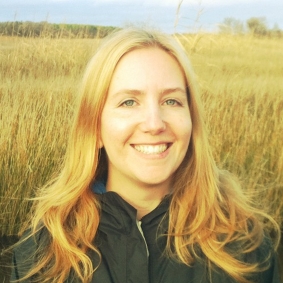
Metthea Yepsen
Fellowship Institution:
NOAA, Restoration Center, Office of Habitat ConservationStart Year:
2013Metthea Yepsen worked in NOAA’s Restoration Center in the Office of Habitat Conservation as a policy and science coordinator on the office’s Deepwater Horizon oil spill restoration efforts. She assisted in ensuring that science and adaptive management are integrated into restoration initiatives.
Yepsen received an M.S. degree in environmental science and technology from the University of Maryland with a focus on wetland ecology and restoration. For her thesis research, she worked on a U.S. Department of Agriculture project to evaluate the effectiveness of federal wetland conservation practices and restoration in agricultural areas. To measure ecosystem services provided by wetlands, she compared plant communities in natural, restored, and farmland sites in several Mid-Atlantic states, including Maryland.
Yepsen’s background is different from that of many Knauss Fellows. She completed a bachelor’s degree in the humanities, studying diplomatic history. Her career path changed when she joined AmeriCorps in Hawaii. There she performed conservation work in natural area reserves, attached sling loads to hovering helicopters, and climbed through sharp lava rock. Those experiences sparked an interest in a career in environmental science that led her to return to college to take post-baccalaureate science classes and then to study native and restored ecosystems in graduate school.
Following her fellowship, Yepsen accepted a position at the Nature Conservancy.
Main Menu (levels 2-3)
Program Announcements
-
-
Maryland Sea Grant has program development funds for start-up efforts, graduate student research, or strategic support for emerging areas of research. Apply here.
News and Blogs
Video Gallery
Sea Grant Film Explores a Diminishing Smithville
Smithville is a community on Maryland’s Eastern Shore, on the edge of the Blackwater National Wildlife Refuge. A century ago, Smithville had more than 100 residents. Today, it has four, in two homes: an elderly couple, and one elderly woman and her son, who cares for her.
Featured Fellow
Nina Santos
Featured Research Project
Geochronology Study of Per- and Polyfluoroalkyl Substances Deposition and Ecosystem Response in the Chesapeake & Maryland Coastal Bays
Per- and polyfluoroalkyl substances (PFAS) are environmentally persistent contaminants linked to adverse health outcomes in humans and wildlife. In Maryland's Chesapeake Bay and Coastal Bays, PFAS accumulation in sediments and biota, as well as their ecological impacts, remain poorly understood. This project will reconstruct multidecadal PFAS deposition histories using sediment cores, apply microbial community profiling to assess benthic ecosystem responses, and translate findings into practical guidance for aquaculture and environmental management.