Knauss legislative fellowships in Congress help build careers — and they're fun and educational. See our video and fact sheet for details.
Taking a Practical, Community-led Path to Identify Flooding Solutions
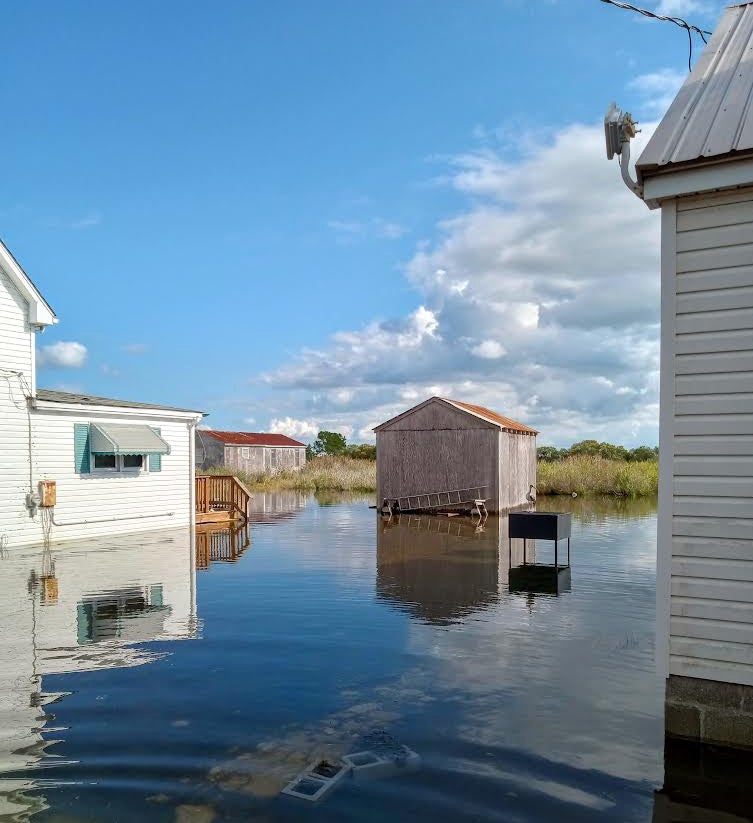
When Brian Derickson and his wife were looking for an affordable, safe place to raise their family fairly close to Washington, DC, they made what some would consider a radical choice—Smith Island, on the Chesapeake Bay.
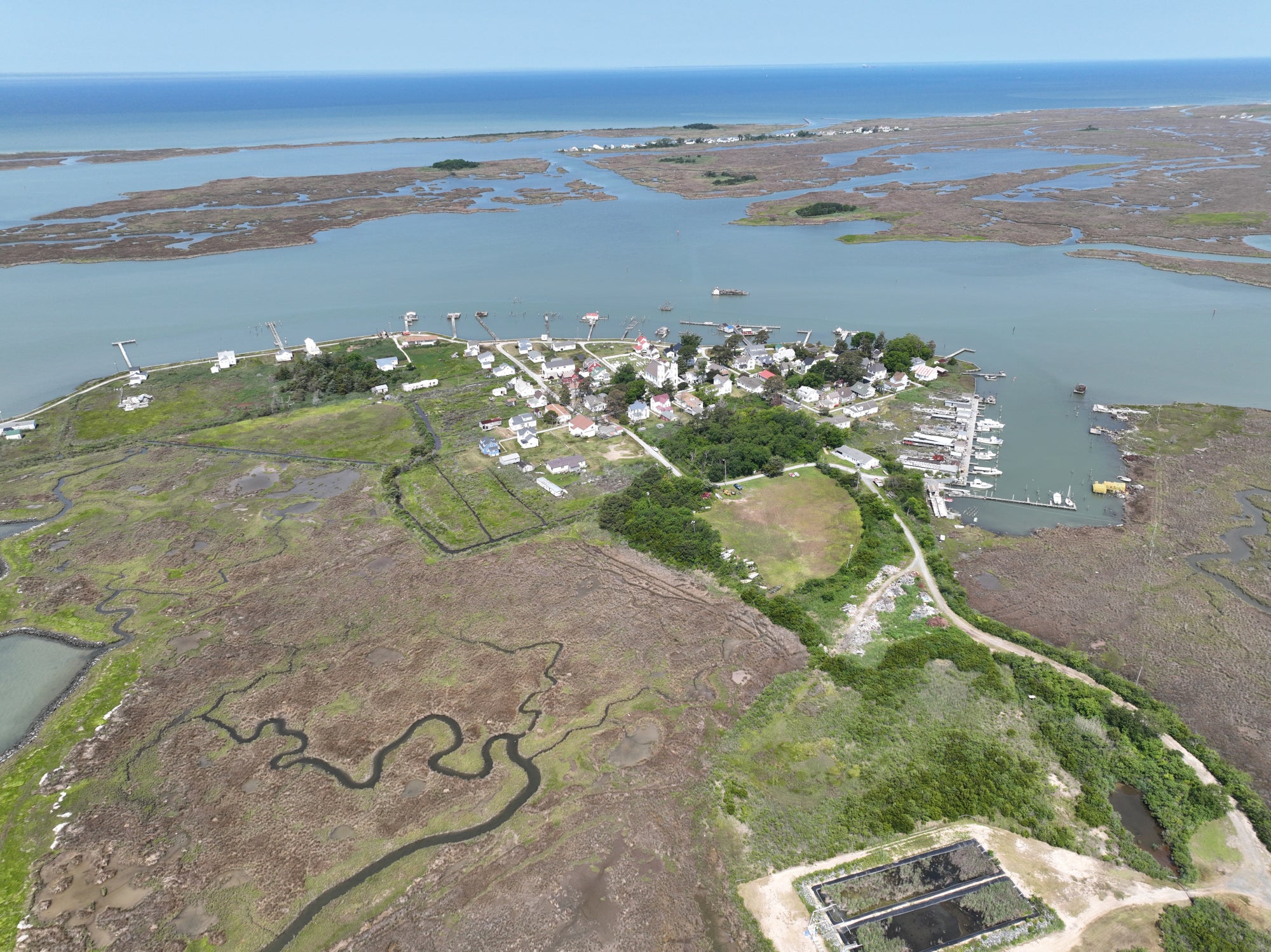
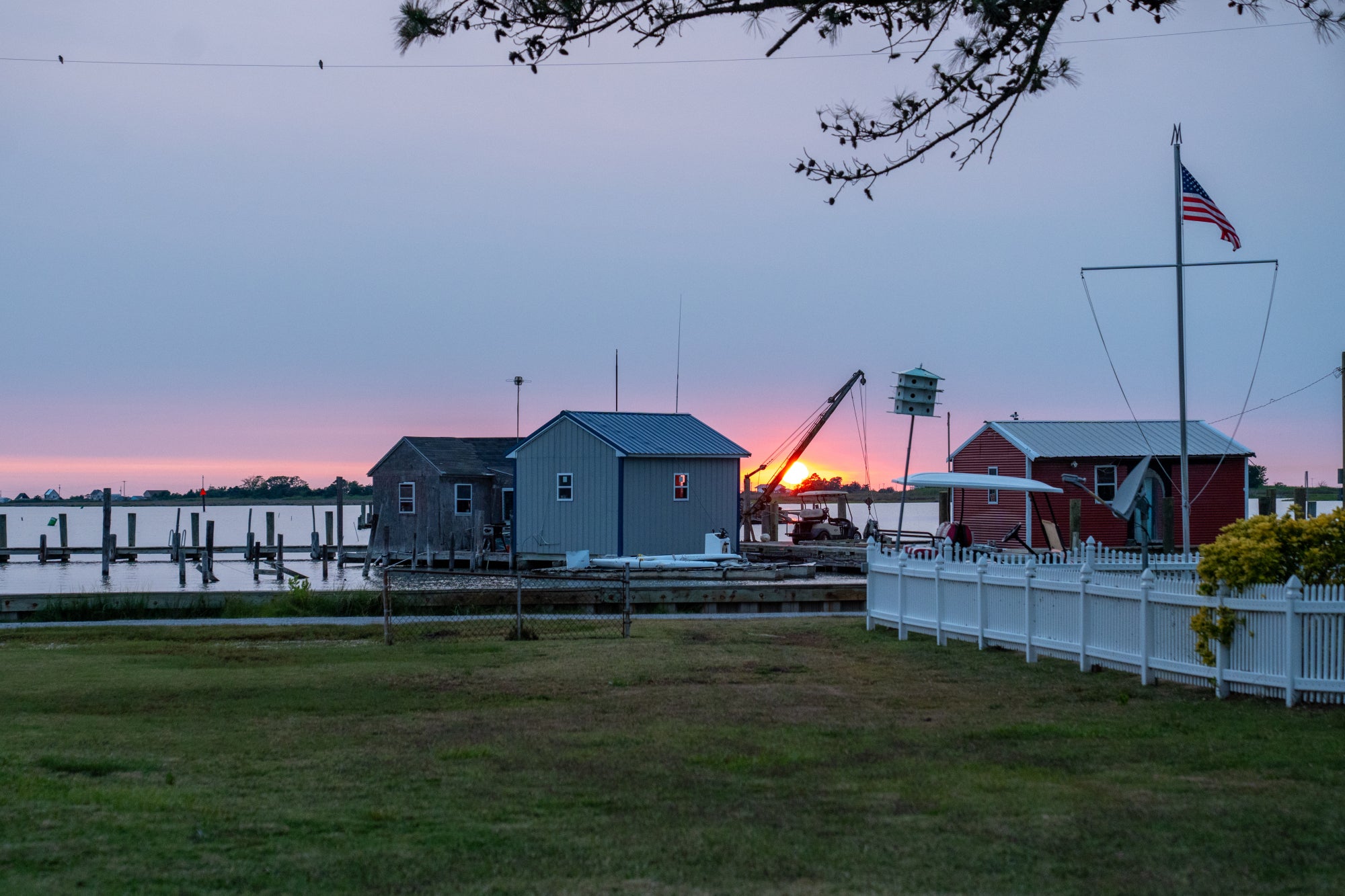
Comprising three villages perched on a cluster of islands 12 miles off Maryland’s lower Eastern Shore, Smith Island was settled some 400 years ago. A deeply rooted watermen’s community, the island and its economy has depended on crabbing, oystering, and fishing. More recently, as it’s become harder to sustain a living in this way and the island’s population has aged and diminished, it has been turning toward tourism as an economic alternative.
But one of the greatest existential threats to the low-lying community is the Bay itself. The effects of sea level rise, subsidence, routinely higher tides, and more severe storms lead to erosion, loss of marsh and crab habitat, and flooding of roads, homes, and infrastructure. In its 2015 Vision Plan the community noted, “Hard infrastructure is critical to the safety, success, and quality of life on Smith Island,” and “perhaps more than any other issue…requires significant levels of funding and cooperation between local residents and all levels of government.”
Derickson had heard “some things” about the island’s flooding issues, but after seeing it for themselves, “we weren’t worried about it.” What the island offered—an affordable place to buy a home, a safe, nurturing place for their kids to learn and grow, and relative proximity to Catholic University in Washington, DC, where he is finishing his PhD in philosophy while he serves in the U.S. Army Reserves —made it the best available option. They bought a house in Tylerton, the island’s southernmost village, and settled in.
It didn’t take long for Derickson to see, however, that tidal flooding was more persistent than he’d realized. Their home sits about a quarter mile from the water, but that always depends on the tide. “I guess it’s never abnormal—it’s the tide. But there are higher events a few times a year. It depends on the cycle—king tides, wind direction…You can’t be far from the water anywhere on the island.”
A person of action, he began to seek solutions. Researching leads through the Somerset County website, he eventually connected with Eric Buehl, Maryland Sea Grant Extension’s regional watershed specialist for the mid and upper Eastern Shore. Buehl had been working with Kayle Krieg, an Extension coastal climate specialist, in the area but had never been to Smith Island himself. With Derickson coordinating transportation (access to the island via the local ferry can be a challenge because of scheduling) Buehl and Krieg toured Tylerton with Derickson and several other residents in November 2024 to learn about and help define flooding and water ingress problems.
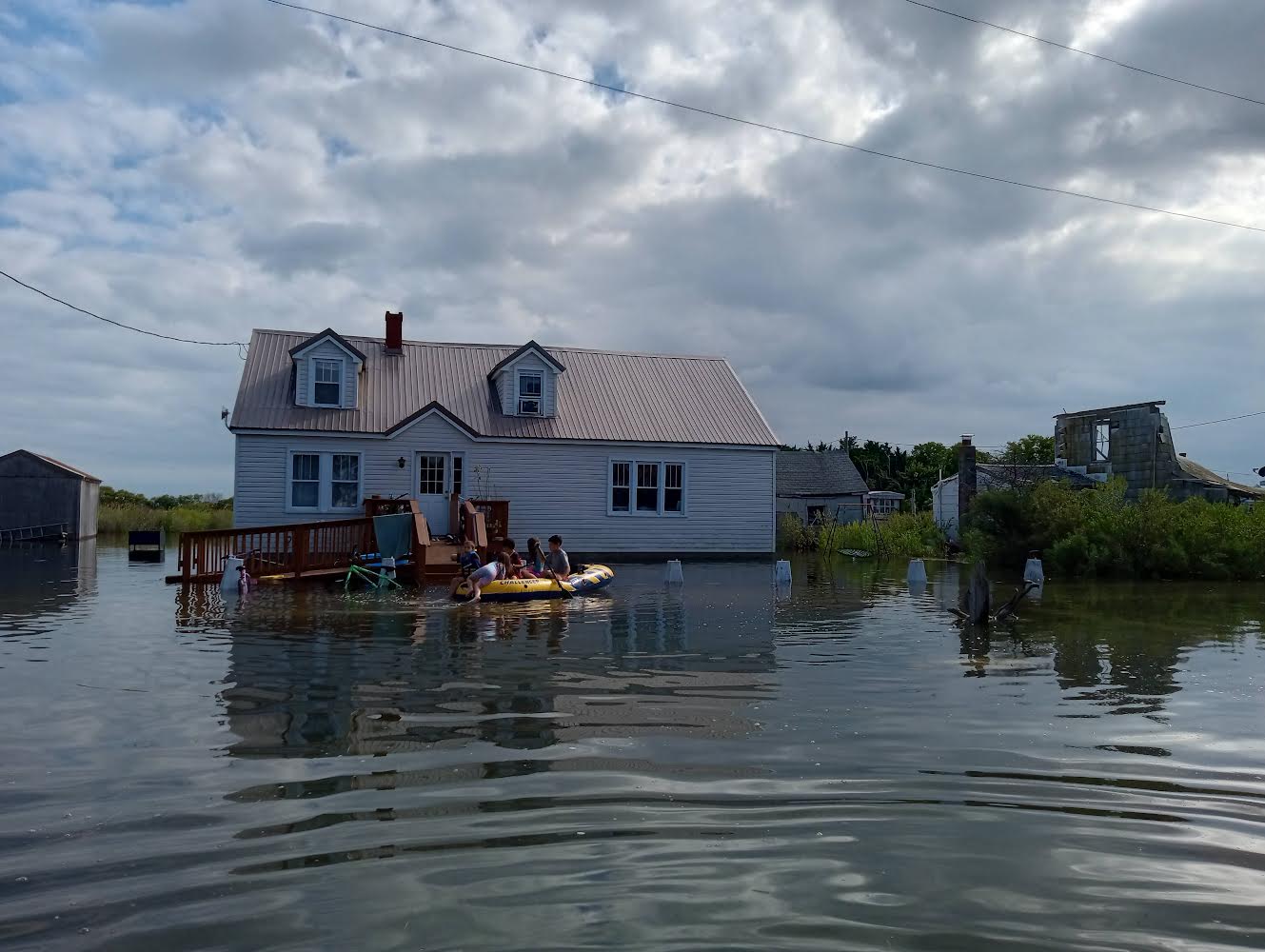
“I’m the first to admit, I was like a deer in the headlights, I’d never been here before,” Buehl says. The residents showed them where flooding was persistent under some of the homes, and pointed out tidal gates in the marsh that were failing. Derickson described a particularly high tide that lasted for days—“He sent us pictures of his kids on a raft in the front yard,” Buehl says. “We said we could try to assist them in getting grants, bringing in other parties who might be able to help with technical expertise. We warned them this wasn’t a real fast process.”
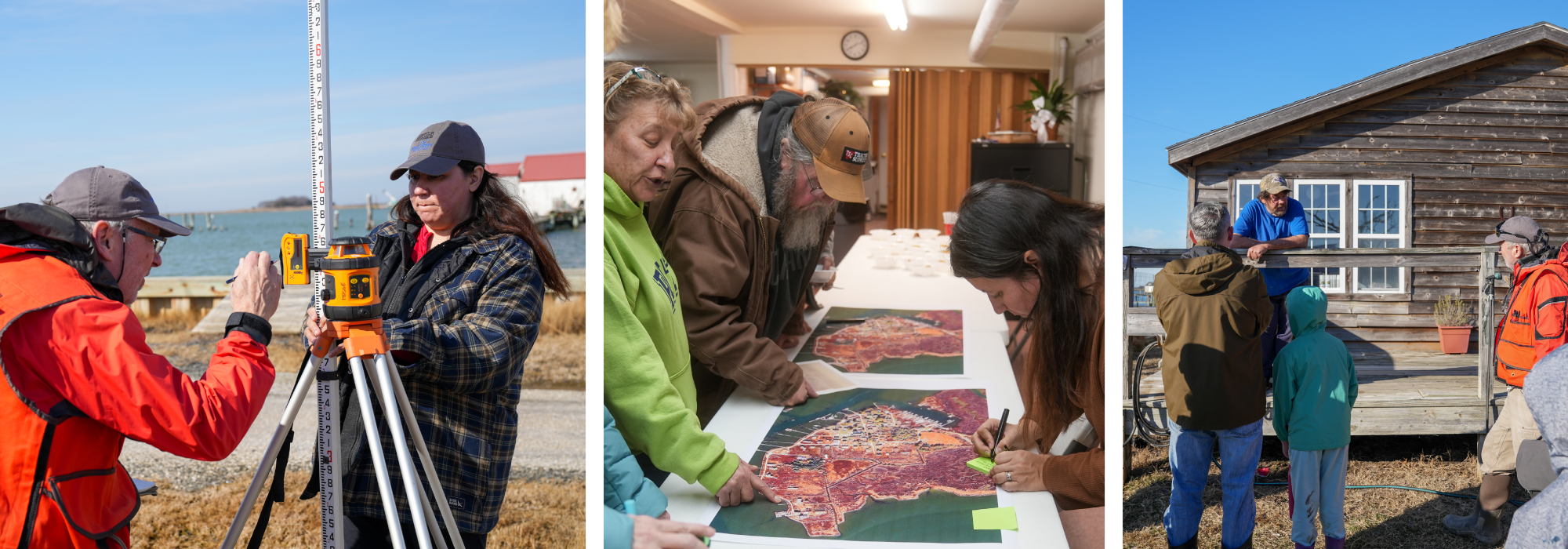
Buehl, Krieg, and several other Extension staff made a second visit in February 2025, where a somewhat spontaneous meeting with more than 20 residents became “like a listening session for us,” he says. That helped spur a more organized gathering in June, when six Extension specialists ran a bioblitz-style event, breaking groups into stormwater, climate resilience, marshes, and tree health categories. Residents then led each group through the community, documenting problem areas.
After the focused community exam, Extension specialists facilitated a discussion in which residents identified their top projects for priority focus. These included areas where water consistently pools around houses, poorly operating tide gates, a breached berm, and water impounding behind the town’s bulkhead. They also started brainstorming outcomes and ranking them in categories of “full glass”—best-case scenarios of getting funding for all of their goals—to “just a sip,” the minimum of what they hoped to achieve.
“Ideas ranged from nature-based infrastructure (i.e. native landscaping) to protect against rising seas to strategic placement of fill-dirt in low-lying areas where water has been pooling, as well as a number of other initiatives that build local capacity for adaptation,” wrote Ed Lewandowski, a community development specialist with Delaware Sea Grant who wrote a meeting summary of the June bioblitz. The event “not only helped to generate a rich array of ideas but also strengthened community cohesion and ownership of the resilience planning process introduced by Maryland Sea Grant/Extension. By centering the voices of those most affected, this approach laid a strong foundation for future action rooted in local insight and collective will.”
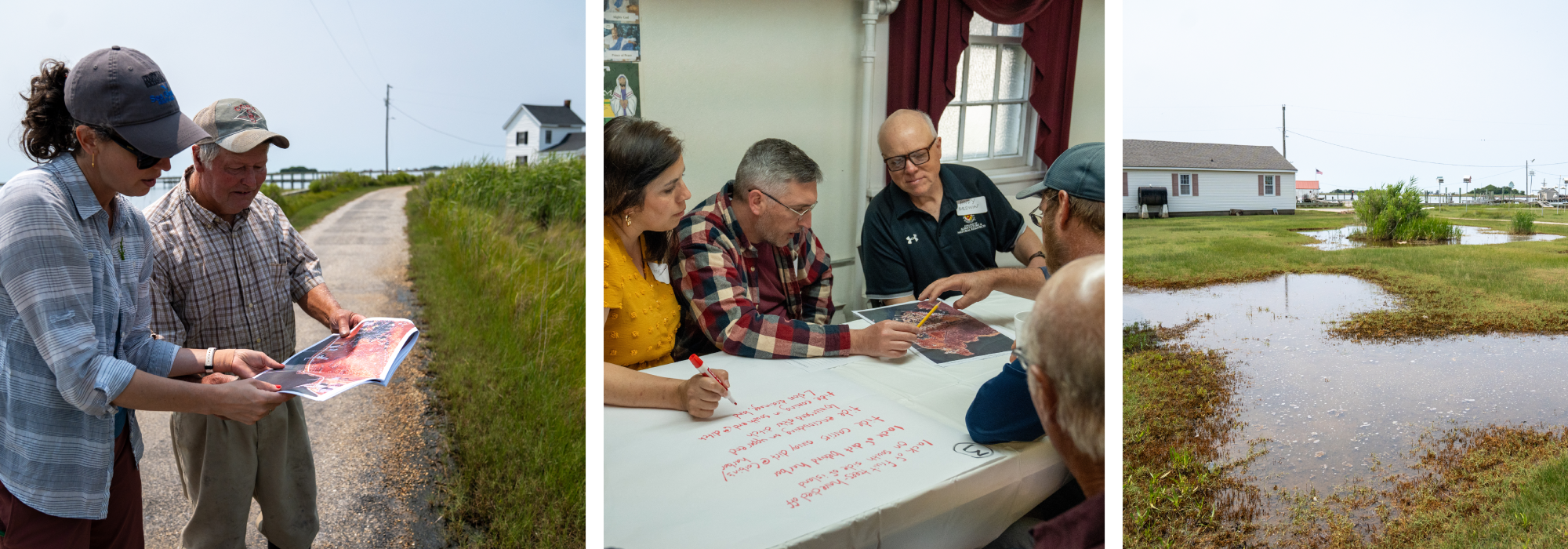
As a result of the meetings, Extension has helped the community apply for grant funding for an engineer who can assess targeted projects, including costs and timelines, from which residents can further prioritize projects and Extension can help focus restoration efforts. They should have word about the grant application to National Fish and Wildlife Foundation by late summer 2026.
Extension is also planning another visit this summer, bringing members of the Center for Watershed Protection and Maryland Department of Natural Resources to see the area and get feedback on potential project ideas and locations, as well as to discuss the potential for beneficial reuse of dredge material as well.
“We’re trying to bring some more people in with expertise to move the needle toward getting something funded,” Buehl says. “This is a marathon, not a sprint…My goal is to help get them through this process and they get some sort of relief through restoration.”
Though the process is “not linear,” Derickson acknowledges, both he and Buehl agree that the focus should be on practical solutions to clearly communicated problems. For Smith Island, Derickson says, this can be muddied when the community is used “as a political pawn. The narrative pushed is about victimhood—global warming, rising sea levels—but the reality is much simpler.”
“I could solve a lot of our problems with about eight cubic feet of dirt—fixing a berm and reducing flooding significantly. These problems are simple to fix, but it’s not convenient for larger narratives,” he says. “People shouldn’t catastrophize. These are everyday problems with simple solutions. There’s no reason we can’t fix them.”
Krieg agrees that while some issues are more complicated and time- and money-consuming to solve, immediate solutions to improve daily life are entirely feasible and equally important.
“What are some of the small things we can do to help them live with this water in the meantime?” she says. “What resources can we offer to help alleviate some of the burden, especially as some of them are getting older, so maybe walking along the bulkhead isn’t as easy for them…Would elevated walkways from their house to the higher paths and street be helpful to them, or not? Those are the sort of conversations we have with them. What do they need, what would work for them in reality, not just what we think is a good idea on paper.”
Finding a workable future for Tylerton and Smith Island, Derickson says, is a worthy effort in and of itself.
“The bigger goal is preserving that piece of America. We’ve lost a lot of individuality over time, especially since World War II. This community was hit by that—most children left,” he says. “It’s a shame to see something older than America itself disappear.”
Top photo: October 2024 flooding in Tylerton, courtesy of Brian Derickson.
See all posts from the On the Bay blog
Program Announcements
News and Blogs


ON THE BAY - BLOG ARCHIVE
ON THE BAY - BLOG TOPICS
Featured Fellow
Nina Santos
Nina Santos is a Ph.D. student at the Chesapeake Biological Laboratory at the University of Maryland Center for Environmental Science. For her dissertation, she is focused on small shrimp-like crustaceans called mysids – an understudied yet important part of many estuarine and coastal food webs.
Featured Research Project
Geochronology Study of Per- and Polyfluoroalkyl Substances Deposition and Ecosystem Response in the Chesapeake & Maryland Coastal Bays
Per- and polyfluoroalkyl substances (PFAS) are environmentally persistent contaminants linked to adverse health outcomes in humans and wildlife. In Maryland's Chesapeake Bay and Coastal Bays, PFAS accumulation in sediments and biota, as well as their ecological impacts, remain poorly understood. This project will reconstruct multidecadal PFAS deposition histories using sediment cores, apply microbial community profiling to assess benthic ecosystem responses, and translate findings into practical guidance for aquaculture and environmental management.