Knauss legislative fellowships in Congress help build careers — and they're fun and educational. See our video and fact sheet for details.
Maryland Law and Policy Fellowship
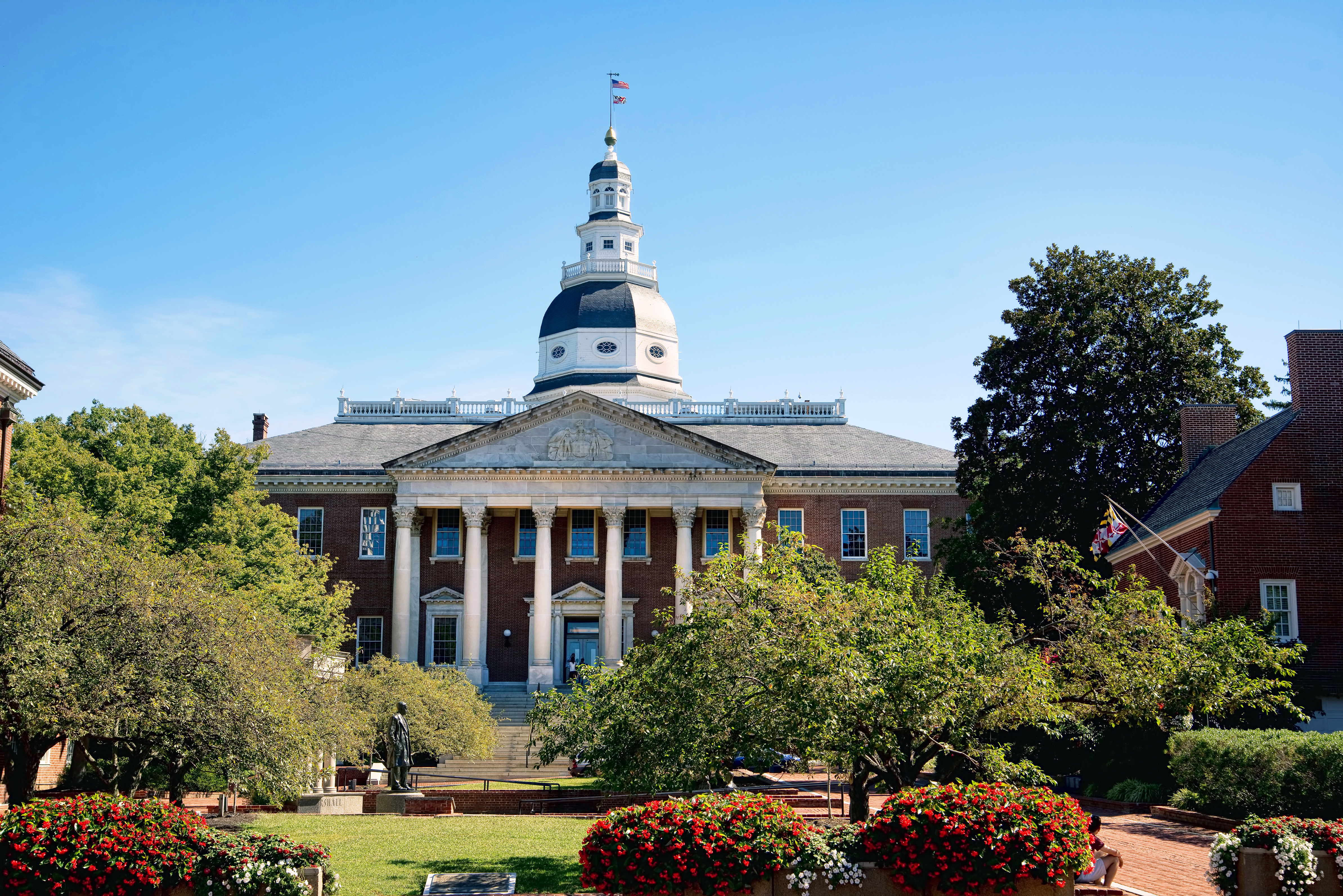
The law and policy fellowship, hosted by Maryland Sea Grant (MDSG) and the Agriculture Law Education Initiative (ALEI), provides the opportunity to work at the intersection of law, policy, and environmental research. Fellows work with legal experts and scientists to provide legal research, writing, and educational assistance related to coastal environmental issues in Maryland and the Chesapeake Bay. This work focuses on environmental law education, rather than advocacy or litigation.
Best consideration date: April 15, 2026
Apply here
Apply here
Fellowship Experience
Fellows conduct legal scholarship and provide education for government agencies, industries, and coastal communities, with an emphasis on reaching underserved populations. Projects may cover legal questions in environmental areas such as aquaculture, coastal resilience, and stormwater management.
Fellows will gain experience with a variety of legal, policy, and regulatory matters concerning environmental compliance and land use policy, including the impacts of sea level rise on coastal communities and governmental responses to changing landscapes.
This fellowship serves to increase the capacity of local, state, and federal government agencies, as well as non-governmental partners and coastal industries in Maryland. It promotes integrating a range of perspectives to solve problems, create more inclusive solutions, and strengthen the development of coastal laws and policies.
Fellows will have the opportunity to present their work, network with environmental legal groups, and travel to learn about other marine-focused legal education work in the region. They will also investigate funding sources for structuring a long-standing legal resource within Maryland Sea Grant.
Eligibility
If you are excited to gain professional experience, work with new audiences, build your network, and sharpen your legal research and problem-solving skills, we encourage you to apply.
- Must have earned a JD or equivalent LLM for foreign-trained attorneys in the last three years.
- Interest in exploring environmental legal research relevant to under-resourced coastal communities.
- Enthusiasm for pursuing a career in the areas of natural resource management, protection, or stewardship; or public policy or law of marine and coastal environments.
- Excellent research, writing, and oral communication skills.
- Ability to work independently as well as within a team environment.
- Bar admission is not a requirement. We are happy to accept applicants who plan to take a bar exam in any jurisdiction this summer or sometime during the fellowship.
- This position is hybrid with the expectation of regular, in-person work.
Sea Grant is committed to building research, extension, communication, and education programs that serve people with unique backgrounds, circumstances, needs, perspectives and ways of thinking. We encourage applicants of all ages, races, ethnicities, national origins, gender identities, sexual orientations, disabilities, cultures, religions, citizenship types, marital status, job classifications, veteran status, and income, and socioeconomic status types to apply for this opportunity.
Location
The is a hybrid position. Fellows are expected to live in the region and travel frequently for in-person meetings and activities in Maryland. Fellows will have office space at the Maryland Sea Grant (MDSG) office in College Park, Maryland, and the University of Maryland’s Wye Research Center in Queenstown, Maryland.
The law and policy fellow will be hired by MDSG. They will work under the direction of the Agriculture Law Education Initiative (ALEI) and agricultural faculty legal specialist Nicole Cook. ALEI provides legal expertise, while MDSG provides connections to coastal scientists and communities.
Funding
Fellows will be employees of the University of Maryland Center for Environmental Science-MDSG. This position is full-time for one year with a non-negotiable annualized salary of $56,000 plus fringe benefits, including healthcare options. This fellowship is eligible for a second-year renewal, contingent upon mutual agreement between the fellow and MDSG, and the availability of funding.
Employment as a law and policy fellow with MDSG may qualify for student loan forgiveness through the Public Service Loan Forgiveness Program or other loan repayment assistance programs. We encourage applicants to talk with their career services and financial aid offices for more information and guidance.
Timeline
We will begin reviewing applications after April 15, 2026. Interviews will begin in June 2026.
Fellowship period: One year from hire date (September 2026) with the possibility to continue for a second year, dependent on funding.
How to Apply
The application period for 2026 is now open. Applicants should prepare and submit the following documents in the Workday application portal:
- Resume (not to exceed 2 pages)
- Cover letter (not to exceed 1 page)
- Statement of personal, educational, and career goals (not to exceed 1,000 words)
The statement should emphasize the applicant’s abilities and the applicant’s expectation of the fellowship experiences in terms of career development. The statement should be clear on what intrigued the applicant to apply for this position, discuss experiences of translating difficult legal concepts to non-legal audiences and convey how the student’s experiences within and beyond academia (e.g., critical thinking skills, writing experiences, talking and working with people from different backgrounds and experiences, intuition, cultural experiences) may have prepared the applicant for this position. Strong writing and oral communication skills are important, and we encourage applicants to speak to these skills and/or highlight them in the Resume. - Clear copies of all undergraduate and graduate student transcripts (unofficial are acceptable)
- A list of three references and their contact information
Applications will not be considered until all required documents are received. If you have questions, please contact Maryland Sea Grant well before the application due date.
Selection Process
We seek to identify a fellow who most closely aligns with MDSG and ALEI’s mission to support research, education, and outreach to advance understanding and sustainability of aquaculture and Maryland’s Chesapeake and coastal bays and watersheds. The fellow is expected to bring strong legal knowledge and an interest in legal education to the science-driven activities of MDSG and ALEI.
All applications that meet the application requirements will be evaluated by a panel. The weighted importance of the different components of the application are listed below. The panel will consider the applicant’s interest in a legal career tied to the broad field of the environment and consistent with the mission of MDSG. Further, the panel will consider the applicant’s experience in policy, public education, legal and grant writing, relevant non-academic experiences, and a demonstrated ability to work with a diverse range of people. Qualified applicants will be selected to interview with the panel. Guidance on the interview process will be provided to applicants who advance to this second round of selection. Based on the application and the interview process, a final fellow will be selected.
Application evaluation criteria:
- Quality of career goals statement
- Cover letter
- Academic record
- Resume
About Maryland Sea Grant and the Agriculture Law Education Initiative
Maryland Sea Grant supports research, education, and outreach on environmental issues in the Chesapeake Bay, coastal bays, and their watersheds. The Agriculture Law Education Initiative comprises legal specialists and other extension specialists who help farmers understand and comply with state, federal, and local laws and regulations.
Past Fellows

Kerry McClaughry
Kerry McClaughry is the 2024-2026 Law and Policy Fellow. In her first year as a fellow, she worked with partners to spearhead the Chesapeake Rising project, where she organized a symposium and facilitated legal scholarship on pressing coastal issues. She works on projects related to critical area regulations, permitting hurdles for nature-based infrastructure like living shorelines and oyster reefs, and authoring law review articles on topics related to water law climate resiliency, and aquaculture regulations.
Read more
McClaughry earned her bachelor's degree in environmental science from Juniata College, where she minored in education. While an undergraduate, she spent an immersive semester at Raystown Lake Field Station studying aquatic ecology and limnology, looking at the effects of lake eutrophication on aquatic plant growth. McClaughry graduated from the University of Maryland Francis King Carey School of Law, where she earned a certificate in environmental law. While there, she served as co-president on the executive board of the Maryland Environmental Law Society and participated in the Environmental Law Clinic, with a focus on reducing nonpoint source pollution into the Chesapeake Bay through policy change. McClaughry presented her research at the 2024 Chesapeake Bay TMDL Symposium. She is excited to continue to work on projects focused on protecting the Chesapeake Bay and build on past fellows' work to expand the voices being heard on environmental policy issues. McClaughry works with a committee to encourage new legal literature on coastal community adaptation to climate change

Kai Hardy
Kai Hardy was the 2023-2024 Maryland Law and Policy Fellow. He provided legal education to diverse stakeholders throughout the Chesapeake Bay watershed in Maryland, including government agencies, industries, and coastal communities. Hardy focused on legal issues concerning aquaculture and coastal resilience, specifically the installation of “living shorelines” in Maryland’s critical areas. Hardy studied at the University of Illinois Urbana-Champaign and earned a bachelor's degree in natural resources and environmental sciences.
Read more
During his undergraduate studies, Hardy took several courses in environmental law and policy and gained field experience with wildlife. His field projects involved conducting surveys of forest and grassland birds in Illinois and Texas. Hardy attended Vermont Law School and earned a juris doctor in May 2023. While in law school, he took courses in environmental law, environmental justice, natural resources law, and water resources law. Hardy served as the environmental justice managing editor for the Vermont Journal of Environmental Law. In his free time, he enjoys hiking, playing basketball, reading, playing guitar, and watching movies.
 Ju-Ching Huang
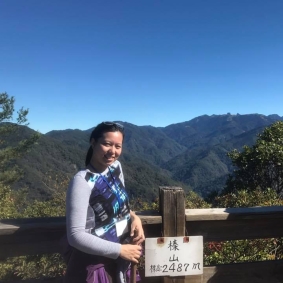
Ju-Ching Huang was the 2022-2023 Maryland Law and Policy Fellow. She is currently an SJD (equivalent to PhD) candidate at Georgetown University Law Center. She received her LLM in environmental law and policy from Stanford Law School. Her research explores the nexus between land-use decision-making and climate change governance. Huang has worked as a Taiwanese lawyer in a boutique law firm, legal counsel and planner for Taipei Urban Regeneration Center, and policy staffer of the Ministry of the Interior. At the Ministry, her work involved overseeing national land use from urban planning to coastal management, wetland, and national parks. She previously worked at Georgetown Climate Center and is currently a managing editor of Georgetown Environmental Law Review.
Read more
As an islander who grew up in Taiwan, her love for the land, coast, and ocean is the driving force behind her research and career path. She enjoys working in an interdisciplinary arena where law and science can complement each other in policy-making processes. Her recent research has been published in the Journal of Environmental Studies and Sciences.
 Elissa Torres-Soto
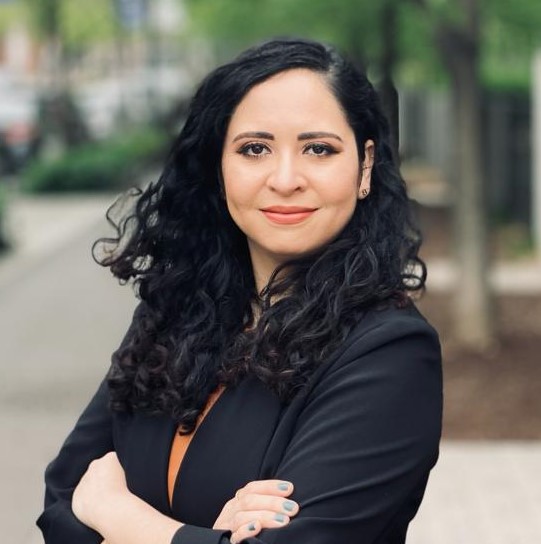
Elissa Torres-Soto graduated in 2020 with an LLM from Georgetown University Law Center’s Environmental and Energy program. With the supervision of Nicole Cook from the Agriculture Law Education Initiative, she published a legal journal article about the standing requirements to present a protest to a new commercial shellfish aquaculture lease in the State of Maryland. She developed a fact sheet and webinar training program on how to transfer a commercial shellfish aquaculture lease in Maryland. She also developed a guide for navigating the state and federal permitting processes for nature-based projects in Chesapeake Bay Critical Areas.
Read more
A native from Puerto Rico, Torres-Soto enjoys going to the beach, hiking, and being around nature. She obtained her juris doctor in 2018 and was admitted to the practice of law in Puerto Rico in 2019. Her career goals are to aid in the strengthening of public policy and administrative processes focused on environmental justice, climate resiliency, and clean water for all. Torres-Soto completed her fellowship in September 2021 and accepted a job as a staff attorney with the Washington, DC, based Environmental Law Institute.
Contact
For questions about the position and fellowship experience, contact:
Fredrika Moser, Director
Maryland Sea Grant College
(301) 405-7500
e-mail: moser@mdsg.umd.edu
For technical questions about the application process, contact:
Mike Allen, Associate Director for Research and Administration
Maryland Sea Grant College
(301) 405-7500
e-mail: mallen@mdsg.umd.edu
Program Announcements
News and Blogs


Featured Fellow
Nina Santos
Nina Santos is a Ph.D. student at the Chesapeake Biological Laboratory at the University of Maryland Center for Environmental Science. For her dissertation, she is focused on small shrimp-like crustaceans called mysids – an understudied yet important part of many estuarine and coastal food webs.
Featured Research Project
Developing a habitat model for mysids, an important link in Chesapeake Bay food webs
Mysids are important mesozooplankton prey for many species of fish in Chesapeake Bay and are an important link in transferring energy from lower to upper trophic levels. Mysids also serve as biological vectors for benthic-pelagic coupling due to their diel vertical migration and omnivorous prey-switching behavior, which makes mysids important regulators of food web architecture. Despite their central role in coastal food webs, surprisingly little is known about mysid ecology and dynamics in Chesapeake Bay.