Knauss legislative fellowships in Congress help build careers — and they're fun and educational. See our video and fact sheet for details.
Getting to Know the Small but Mighty Organisms Living in the Baltimore Harbor
Communities are made up of individuals that form a connected network, each with unique roles in a society. Ecosystems work very similarly. Whether it’s birds and bugs in a forest or microscopic organisms living underwater, each species helps shape the community. The biodiversity of tiny, marine communities can reflect the health and function of ecosystems like the Baltimore Harbor, where I spent the summer studying microscopic life.
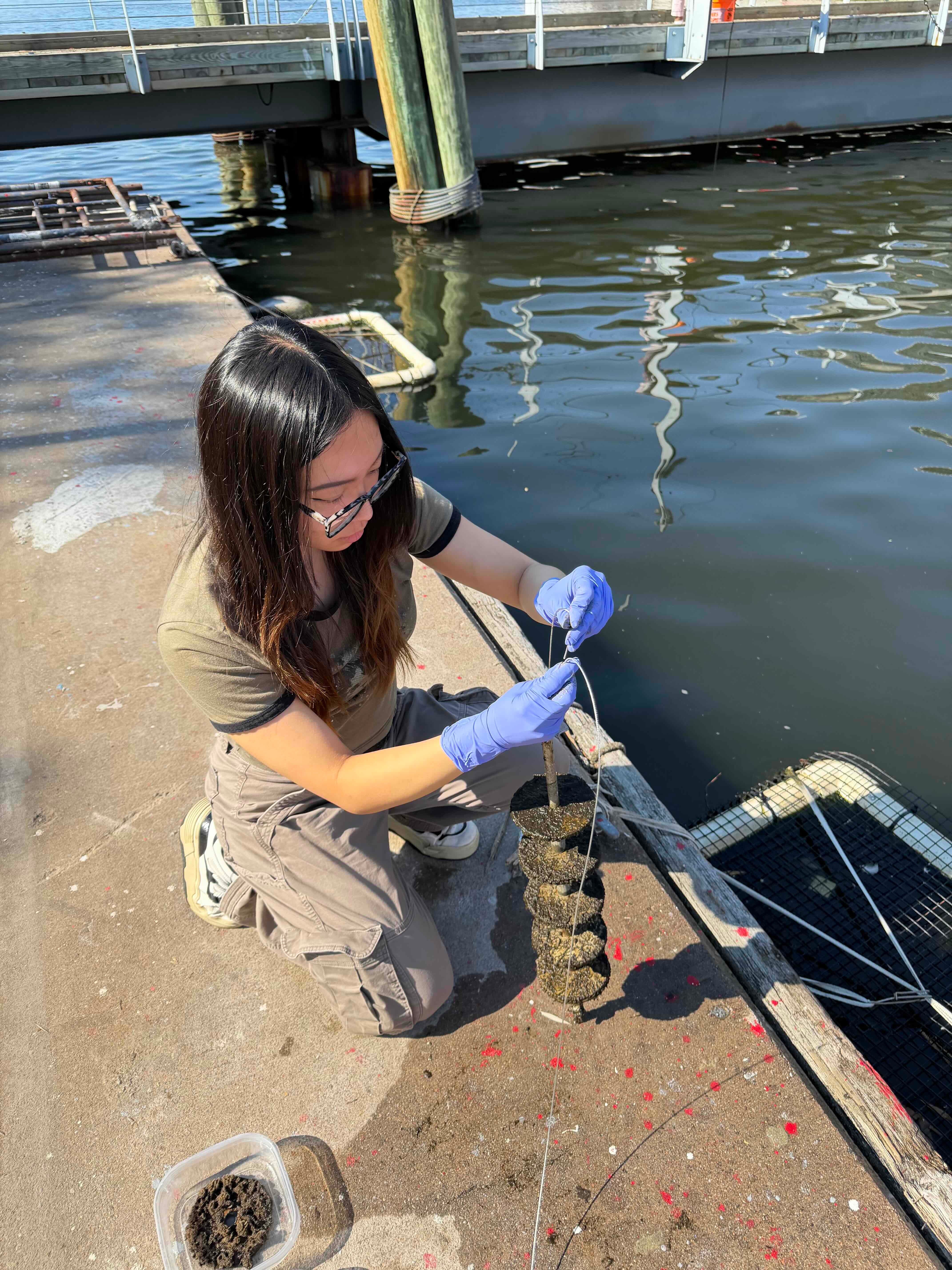
As the 2026 community engaged intern at Maryland Sea Grant, I had the opportunity to work with the assistant director for education, Adam Frederick, on a biofilm biodiversity project. A biofilm is a community of microorganisms or macroinvertebrates that grow on a surface. In our case, we studied the biodiversity of biofilms growing on discs submerged in the Baltimore Harbor. These biofilm discs are an intriguing tool to help us understand how organisms in these little communities interact and coexist.
On June 9, during the second week of my internship, we deployed new biofilm disc racks along a floating platform in the Baltimore Harbor. Each week, I collected one disc from a newly deployed rack and one disc from a rack deployed in January. Hopping onto the floating platform, I could smell the salty breeze and feel the warm sunshine on my skin as I exchanged discs. If lucky, I would see ducks relaxing lazily on the platform. After bringing the discs back to the lab and preserving them in aerated water collected from the field site, I searched for and counted inhabitants, like whip mud worms and stentors, under a microscope.
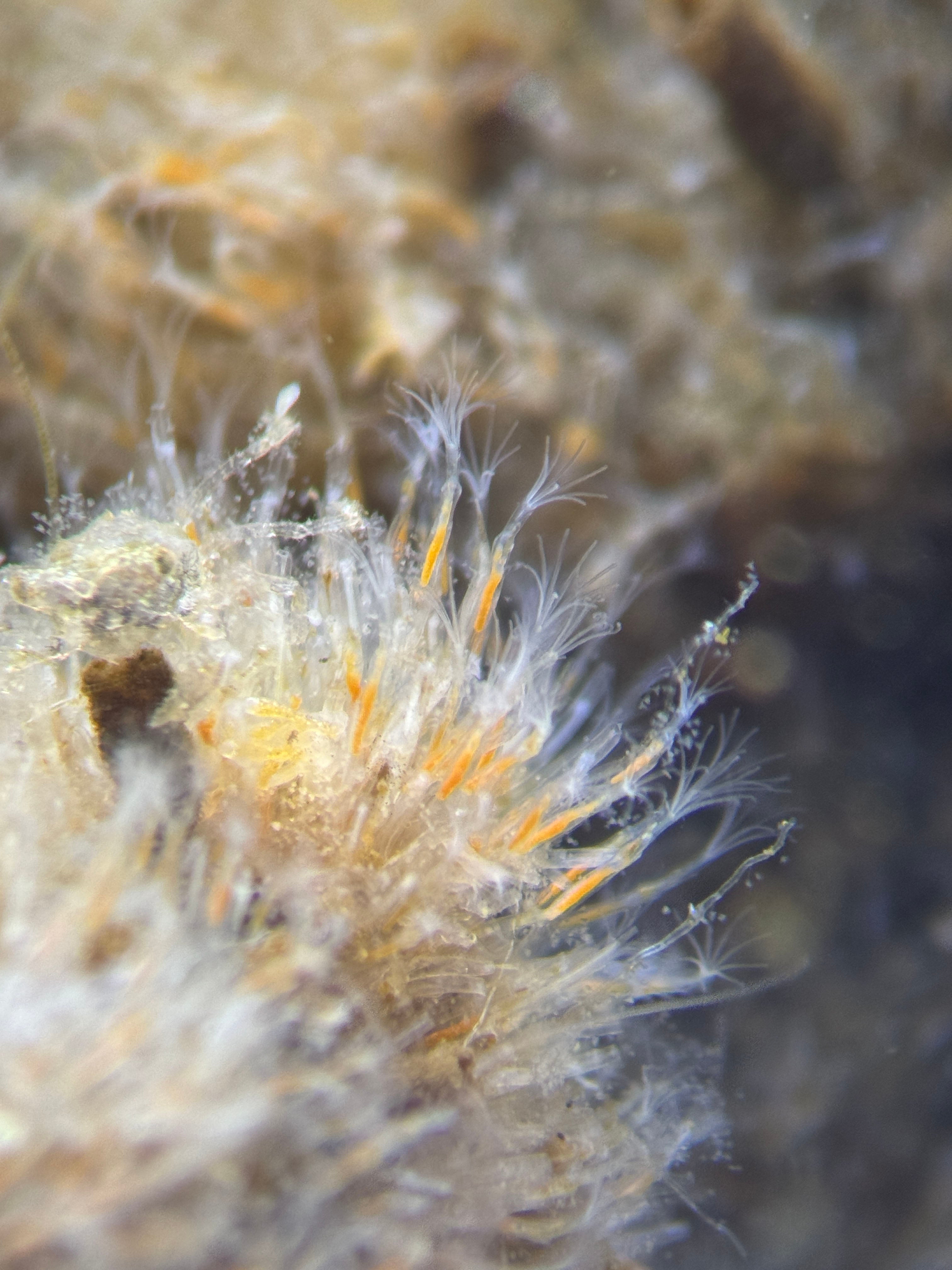
Over the summer, I took hundreds of photos and videos of fascinating creatures colonizing the discs. With incredible luck, on my very first collection of an older disc, I saw the critter I was most anticipating seeing: the dusky sea slug. This mollusk is one of the few sea slugs found in the Baltimore Harbor and measures just ¼ inch in length. I’m certain anyone within a 6-foot radius could hear my squeals of excitement at seeing the slug and other creatures in this miniature city.
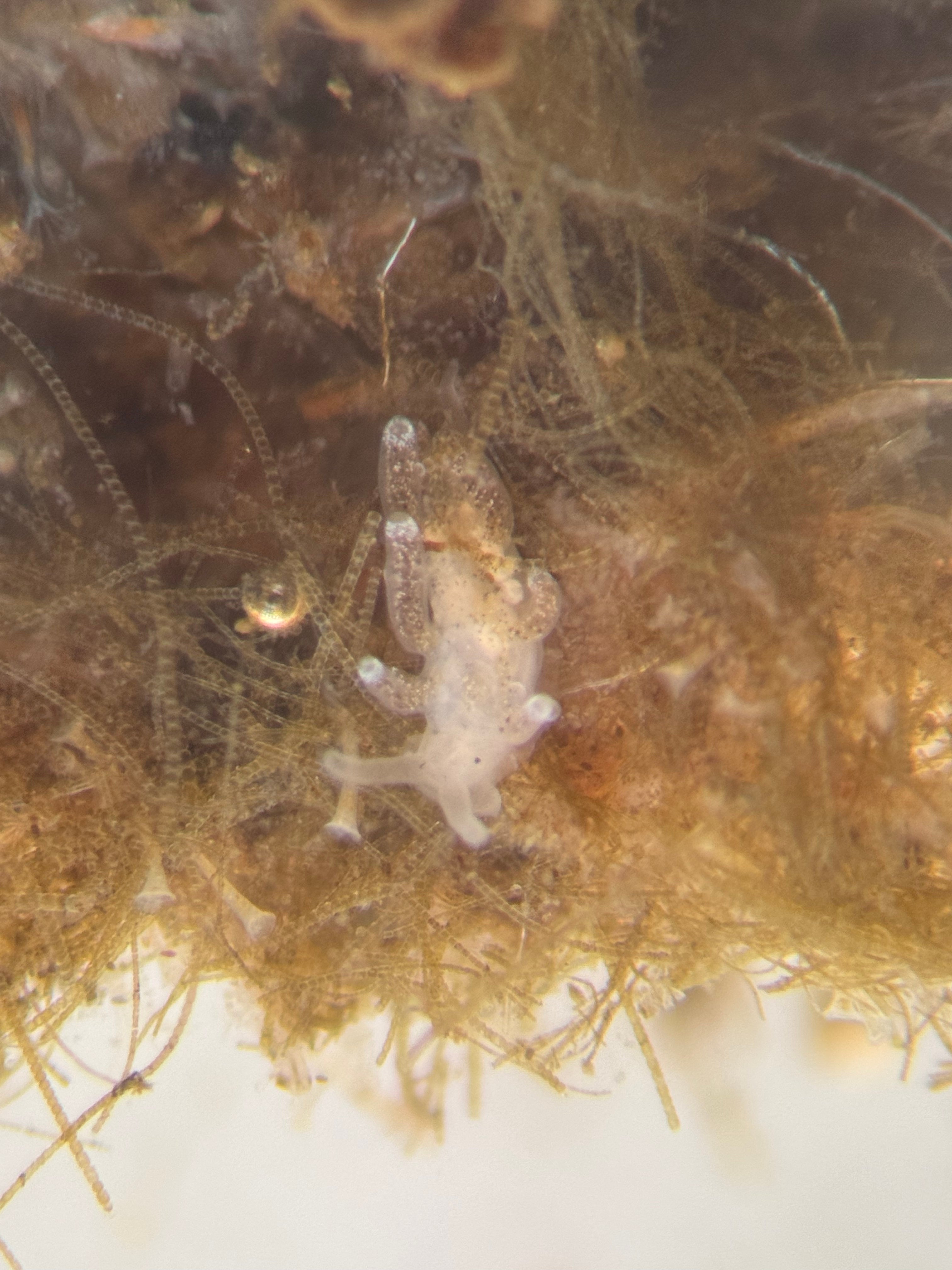
The presence of the slug made me wonder why it “moved in” so early. Dusky sea slugs usually appear around August, but it was only June. The environmental conditions of the Bay seemed typical, with no extreme weather or temperature shifts and normal salinity levels. So, the slugs’ early arrival remains a mystery. I also observed colonies of dandelion-like tube bryozoans, rapidly blinking barnacles, and mud crabs scurrying around the disc.
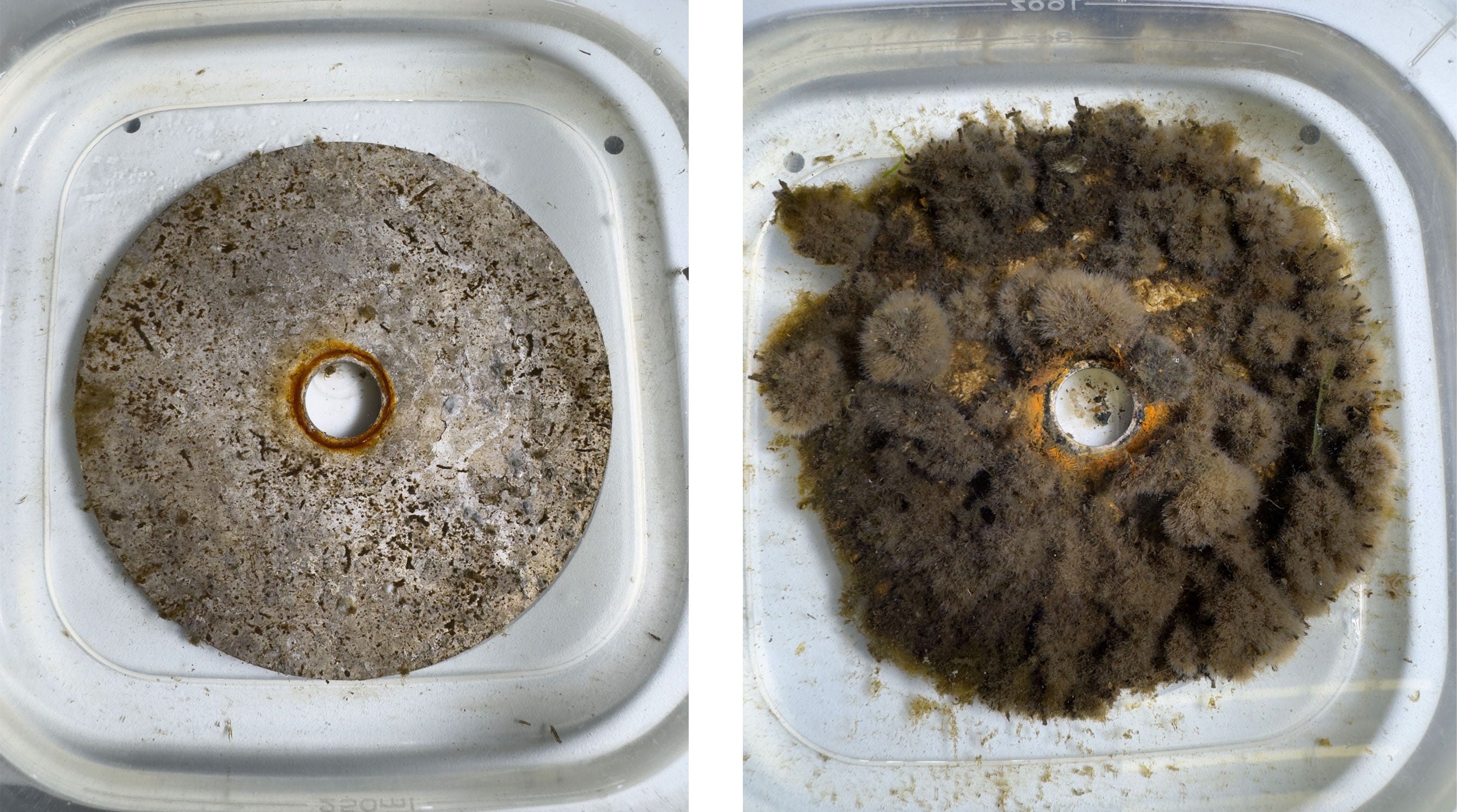
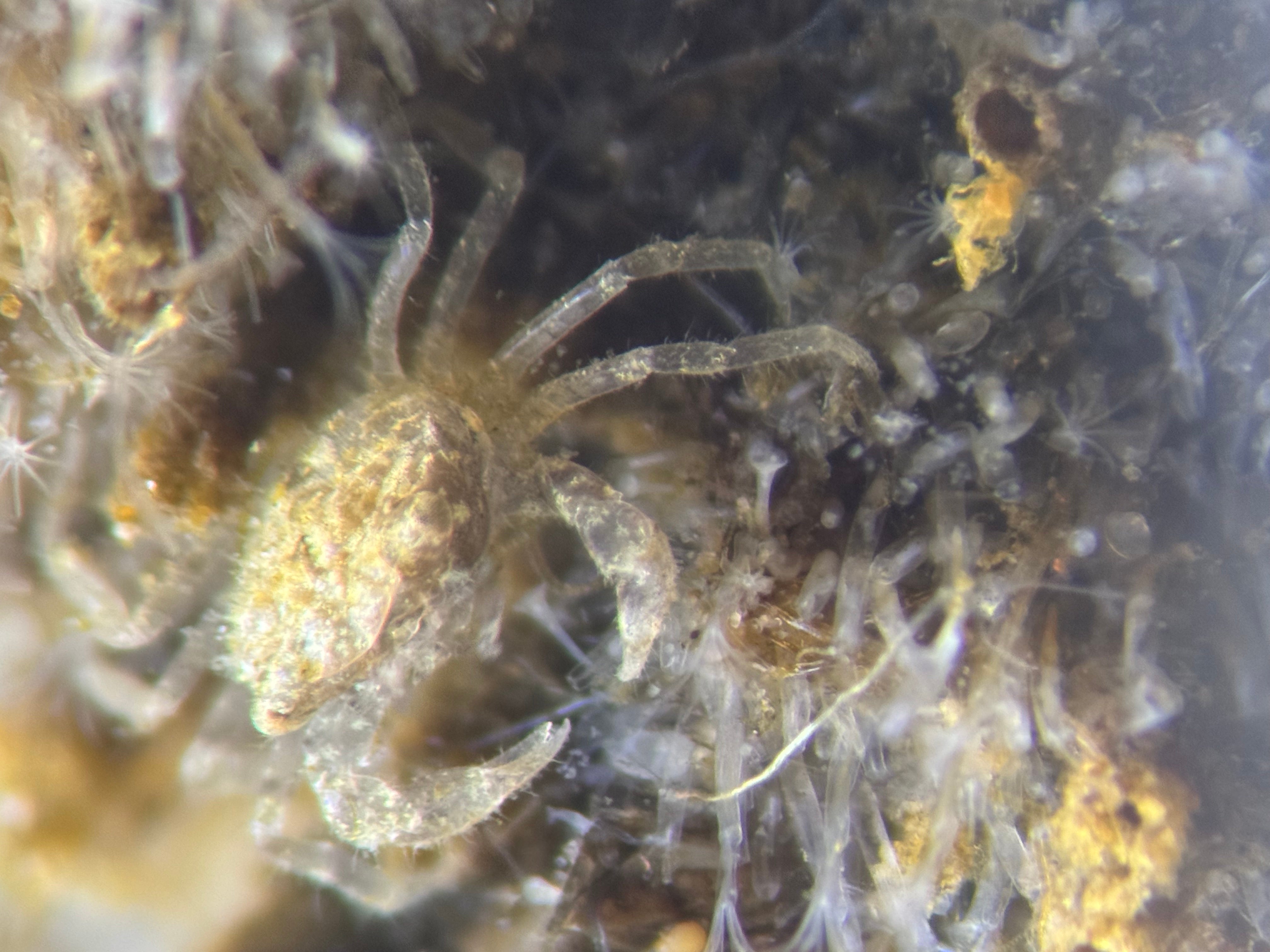
Once we exchanged discs later in June, more mud crabs moved in. The biofilm discs were now able to provide the resources mud crabs need, including food like worms and algae. As more mud crabs appeared, I saw fewer sea slugs.
Perhaps the mud crabs’ settlement is the reason the slugs left. The Baltimore Harbor has dominance-based biodiversity, where fiercer or more tolerant organisms outcompete others for resources. Or maybe the slugs’ departure was due to the changing climate as we transitioned deeper into the summer season. Observational inquiry is a fantastic way to learn more about our environment, even if we don’t always have the answers.
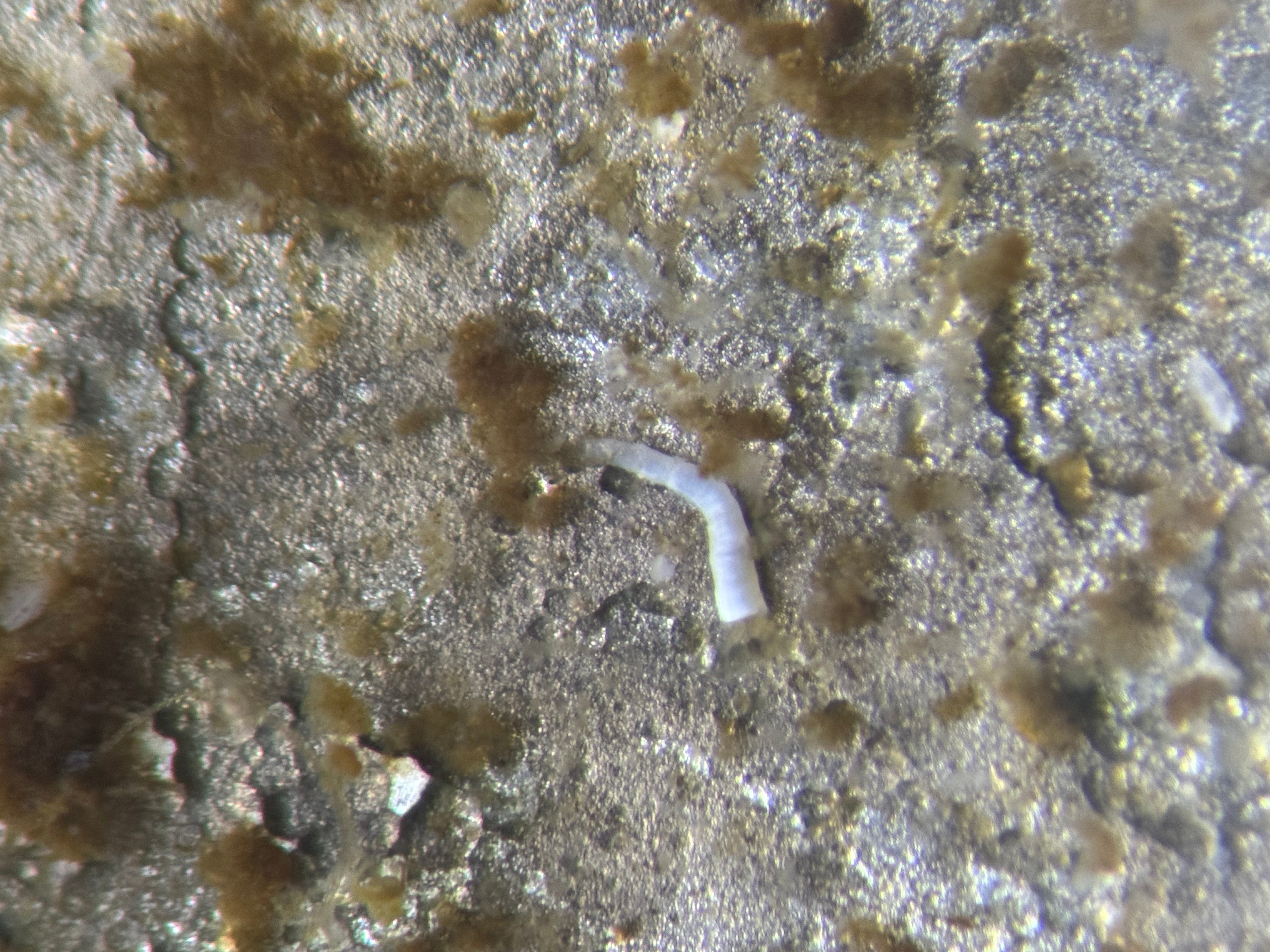
Another week passed, and on one of our newly deployed discs, I identified a limy tube worm. After confirming my classification (tube worms look a bit like chunks of plastic), I learned that its presence was great news. These worms do not consistently appear on the biofilm discs each year. Just like the sea slug, seeing this worm indicates environmental conditions are suitable for this organism to live in the Baltimore Harbor.
Throughout the summer, I watched the new discs develop layers of microscopic life and gradually resemble the discs deployed months earlier. Seeing these aquatic communities evolve strengthened my appreciation of diversity in such a small environment. By studying the visual and mathematical data from these biofilm discs, we can creatively explain the well-being of an aquatic ecosystem. This includes how environmental changes shape a biofilm and how organisms benefit from or are disadvantaged by those changes.
These biofilm communities are an amazing analogy to human communities. Just as healthy human communities depend on the contributions of many individuals, healthy ecosystems rely on countless miniscule organisms. Just as people need access to resources like food and a place to call home, so do these tiny organisms. This experience reminded me that it’s important to consider the smallest details in our world. Crucial hints about the health of our environment may be right before our eyes (or under a microscope!).
Learn more about Christina's project and observations in the Baltimore Harbor by reading her StoryMap, "The Pistachio Tide Isn't Edible: Lessons in Science Observation, Education, and Communication."
See all posts to the Fellowship Experiences blog