Knauss legislative fellowships in Congress help build careers — and they're fun and educational. See our video and fact sheet for details.
Bridging Science, Architecture, and Community in a Coastal Student Design Competition
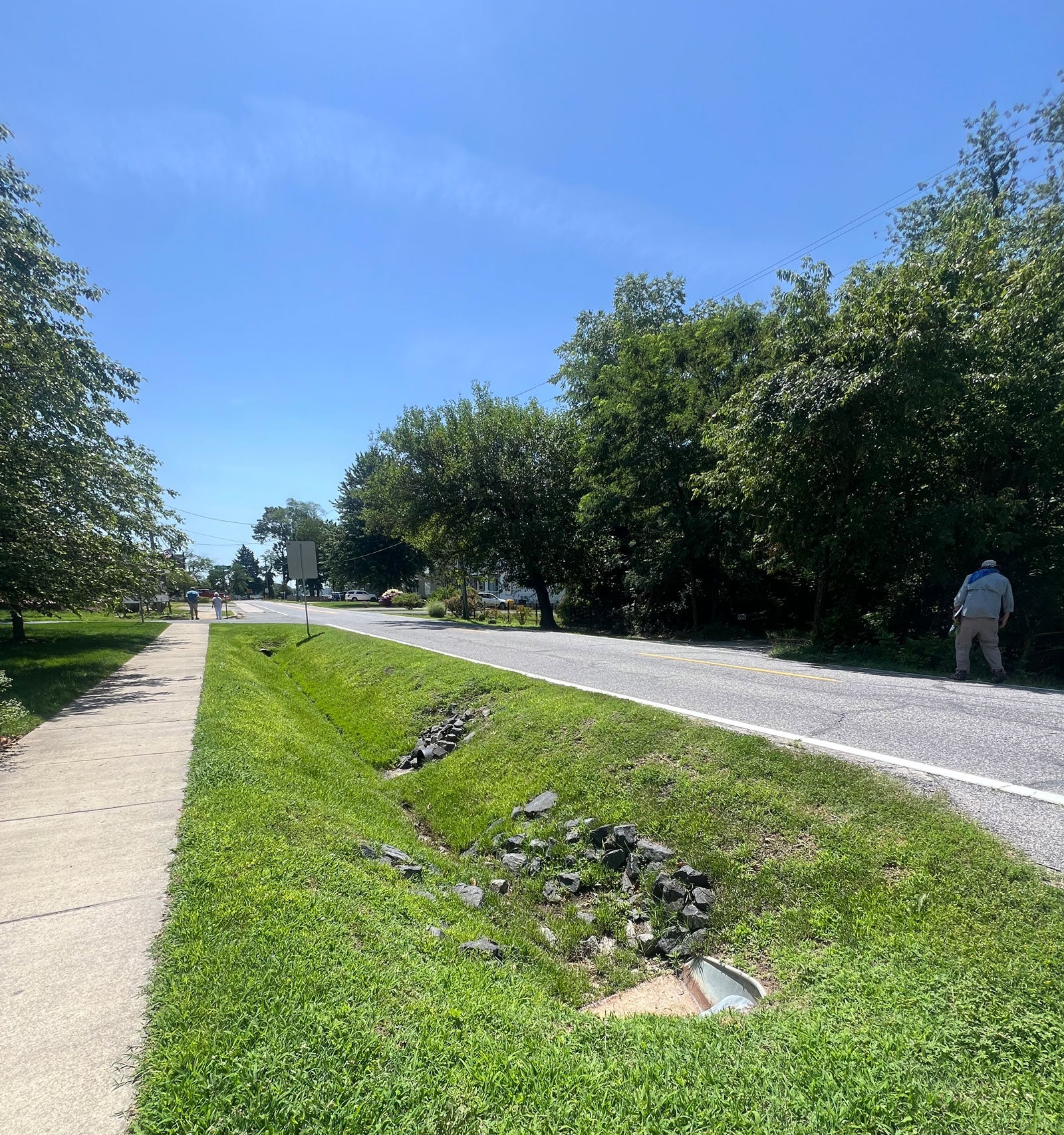
Not even the hottest day of the summer could keep these Galesville, Maryland, residents from proudly giving a tour of their town. Walking the streets of the small village with my Maryland Sea Grant colleagues and six members of the West River Improvement Association, I could tell how much Galesville’s history meant to our local guides. Founded by residents, the West River Improvement Association is a community nonprofit created to address emerging environmental concerns. This was the first of many visits our team would make to Galesville as part of a year-long effort to address pressing coastal challenges by bringing scientific, engineering, and architectural expertise to communities who need it.
We walked down Galesville Road to a pier flanked by two restaurants facing the sparkling Chesapeake Bay. This first stop of our tour focused on areas of Galesville that experience frequent and severe flooding. Each location was threaded into a rich story of heritage and stewardship of the land. The community was working hard to implement solutions to failing stormwater infrastructure and rising sea levels, but they felt their work was far from over.

Galesville’s struggles mirror those faced by coastal towns across the US. Could a new approach to coastal resilience help? Over the past several years, Maryland Sea Grant has been working to build relationships between the architectural and scientific communities to address complex environmental issues. From landscape designers to oyster biologists, many people are already working on ways to build resilience in coastal communities; however, they are not always connected or aware of one another. To tackle complex challenges like flooding, we need to collaborate across disciplines to craft new ideas.
With those needs in mind, the Coastal Estuarine Research Federation (CERF) hosts a biennial Student Design Competition. The competition invites architecture, engineering, and science students to team up and create designs that help coastal communities adapt to changing environments. Galesville was selected as the subject of the 2025 competition, and Maryland Sea Grant stepped in to facilitate engagement between students and Galesville residents.
We focused on centering community values in the information and materials we shared with students to help guide and inspire their designs. In addition to the West River Improvement Association, we also engaged the Galesville Community Center Organization, which is based at the village’s historic Rosenwald School. We hosted a community meeting at the Galesville Community Center, convening these nonprofits and community members to better understand their priorities for future projects. We shared notes from this meeting with students, along with a recent watershed study on priority areas for flood management and a visioning document the community created about their cultural and environmental values.

After months of emails, virtual meetings, and site visits, it was time for the five student teams to present their designs at the 2025 Coastal Estuarine Research Federation Conference in Richmond, Virginia! With travel support, several Galesville community members were able to attend and see the student’s visions in person. The students shared creative ideas, from installing oyster reefs and marsh grasses along shorelines to improving roadside drainage basins and highlighting local heritage through signage and walking tours. After hearing from the students, a panel of interdisciplinary judges awarded top honors to three design teams.
Galesville community members were inspired by the students’ ideas, even taking the team posters home to share with neighbors. Since the competition, the West River Improvement Association and Galesville Community Center Organization have hosted meetings to discuss future design and adaptation possibilities. With guidance from Eric Buehl, one of Maryland Sea Grant Extension’s watershed restoration specialists, the community obtained grant funding to begin the master planning process for stormwater and flooding management.

The partnership between these student designers and the Galesville community is an exciting case study. It shows how involving students in real-world coastal adaptation can be a valuable learning experience, while also giving communities a fresh perspective on their home. This project has been an inspirational reminder of the impact we can have when we come together to tackle the cross-cutting challenges the Chesapeake Bay and its coastal communities face.
See all posts to the Fellowship Experiences blog