Knauss legislative fellowships in Congress help build careers — and they're fun and educational. See our video and fact sheet for details.
On the Hunt for Crab Viruses
The art of cultivating soft crabs, one of Maryland’s signature delicacies, seems to be all about timing. As part of their life cycle, blue crabs (Callinectes sapidus) shed their hard shells to grow larger ones, and for a brief period, their shells are soft. Watermen carefully watch these “peelers” to bring them to market at just that optimal moment. To supplement local catch, they also routinely bring in soft and soon-to-molt hard crabs from other states.
But this transition from hard to soft shell is also when blue crabs are at their most vulnerable, and in this short-term aquaculture, it’s common for 25% of them to die. About a decade ago, researchers learned that timing is just one factor at play; they found that the naturally occurring virus CsRV1, when combined with other stressors such as abrupt changes in water temperature, can lead to 80% of that mortality.
“We’re never going to manage the virus away, because it occurs naturally,” says Eric Schott, research professor at the Institute of Marine and Environmental Technology (IMET), who led the research on the CsRV1 connection to soft crab mortality. “The discovery of the virus just underscored how important it is to maintain the environment in the shedding systems carefully.”
Along with extensive conversations with watermen about how they cultivate soft shell crabs, the discovery also prompted more questions: Could blue crabs from other regions carry viruses that are not currently present in Maryland crabs? Could those viruses be introduced by commercial transport and potentially infect the species and threaten the industry?
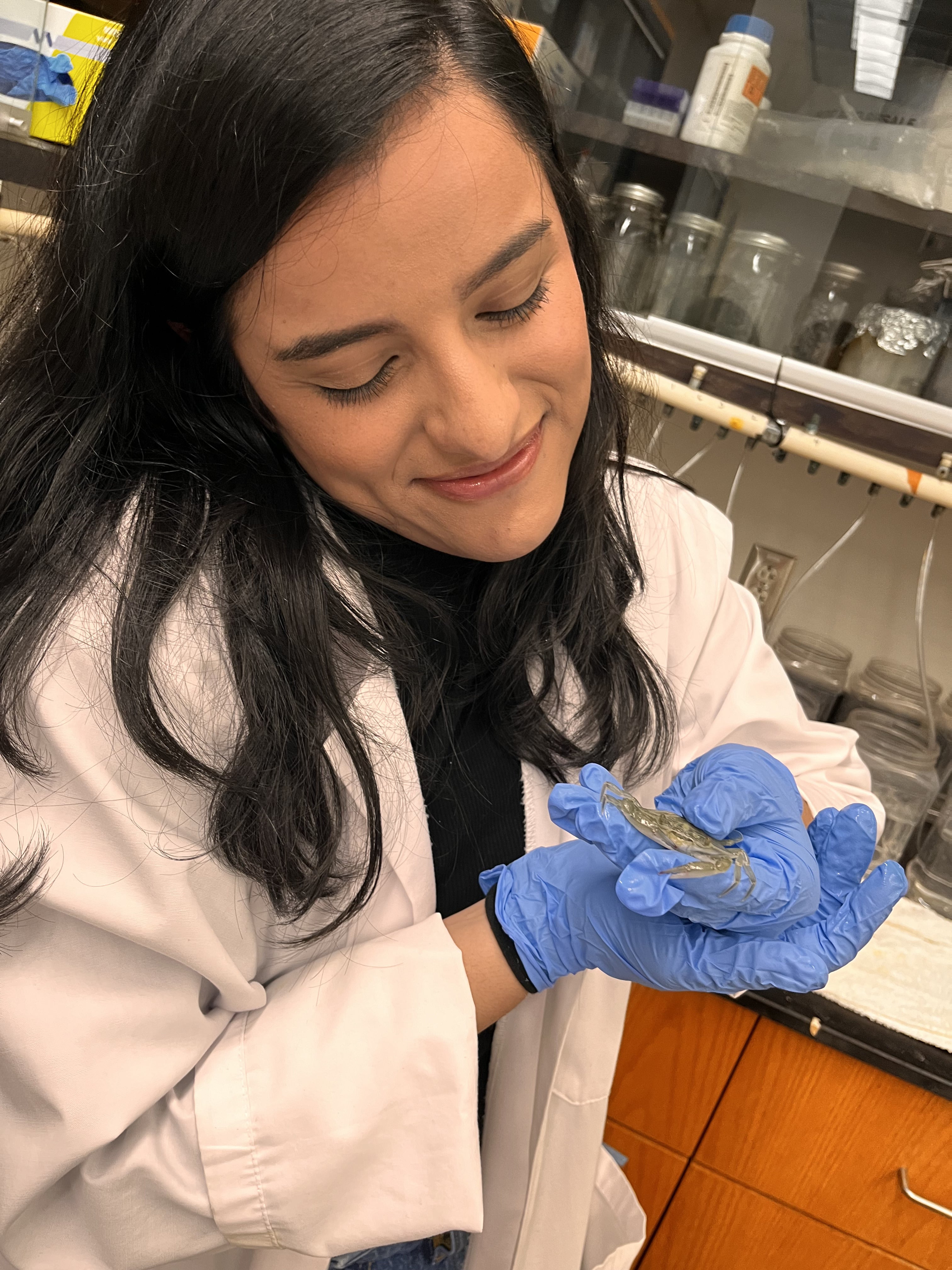
To help find answers, Schott and a team of researchers, including Jennifer Herrera, a University of Maryland Center for Environmental Science (UMCES) graduate student, have completed a first-ever genomic analysis of virus diversity and abundance in blue crabs. This analysis is providing new tools and data to study the potential risks associated with transporting crabs from outside of Maryland waters.
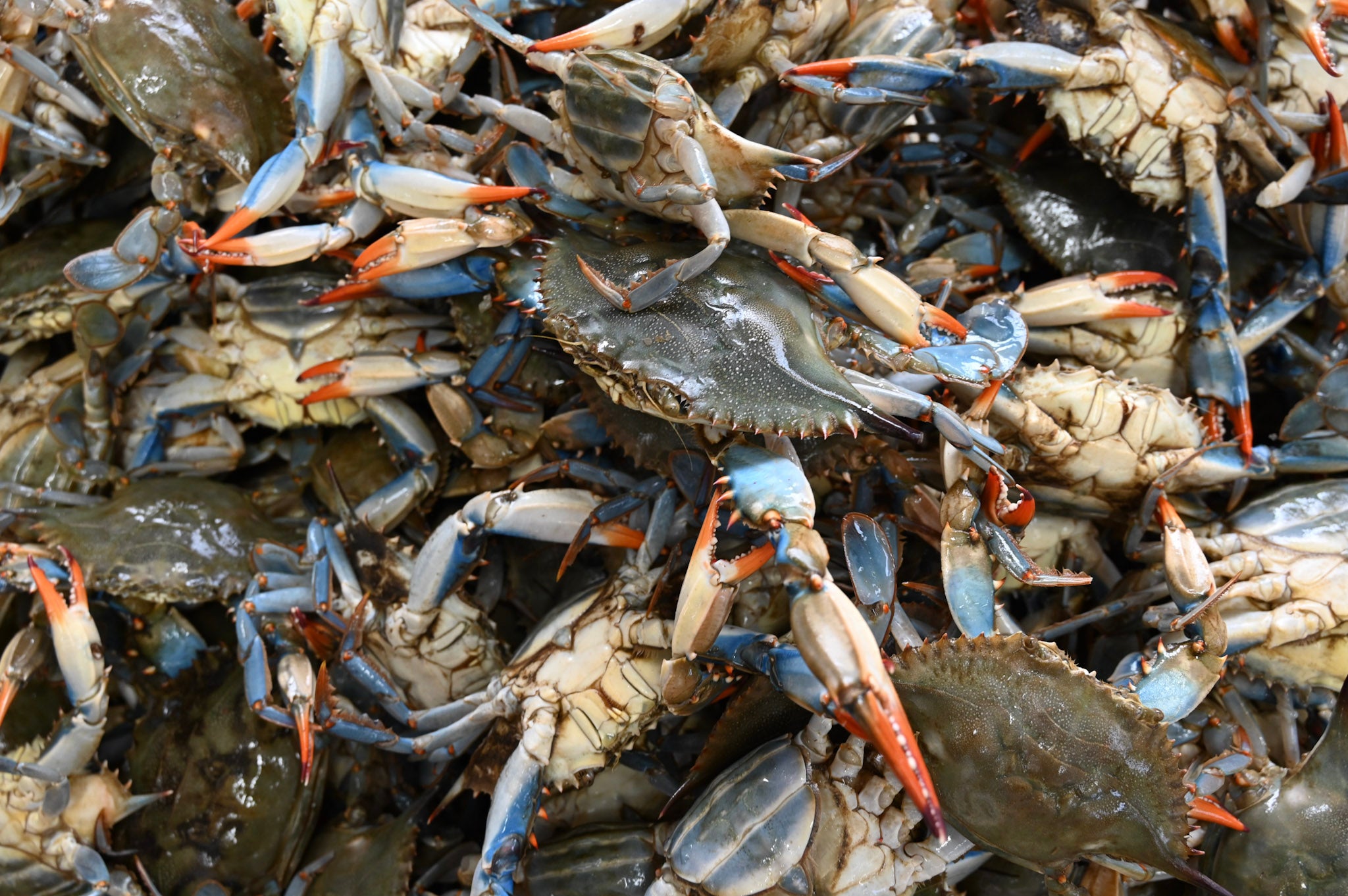
“In workshops and conversations with seafood industry participants and watermen, we learned that millions of crabs cross state lines for soft crab production,” Schott says. “That information helped focus this project specifically. We got knowledge from the fishing industry that we didn’t know we needed. They…helped us understand where to prioritize our research.”
During the three-year Maryland Sea Grant-funded project, researchers collected commercially transported blue crabs from six Atlantic and Gulf Coast states.
“The idea was to get them from industry pathways, so we could get things that would likely show up here,” Schott says.
With guidance from Schott and Herrera’s co-advisor, IMET associate research professor Tsvetan Bachvaroff, Herrera and an assistant extracted RNA for genomic sequencing, looking for sequences that appeared to belong to viruses. From over 100 million sequencing reads, they identified the genomes of 28 novel viruses, some found in crabs from all or most of the states, others found only from a single state. Florida crabs showed the highest diversity and abundance of viruses, with Maryland next in overall viral abundance.
This research resulted in the largest assemblage of virus genomes in the blue crab identified to date and provides a baseline from which to conduct further study of the virome (a collection of viruses associated with a particular organism or ecosystem).
One virus genome (for now called MR7) was heavily present in Florida and nowhere else. Identifying the genome proves the virus exists, but researchers still don’t know what it looks like, how it behaves, or whether it sickens crabs. With the participation of a high school student (Irene Scott) and an undergraduate intern (Braxton Kess), Herrera and Schott developed a PCR test to target the virus; the first use of the test will be to identify live crabs with the MR7 virus and investigate whether they show any signs of illness.
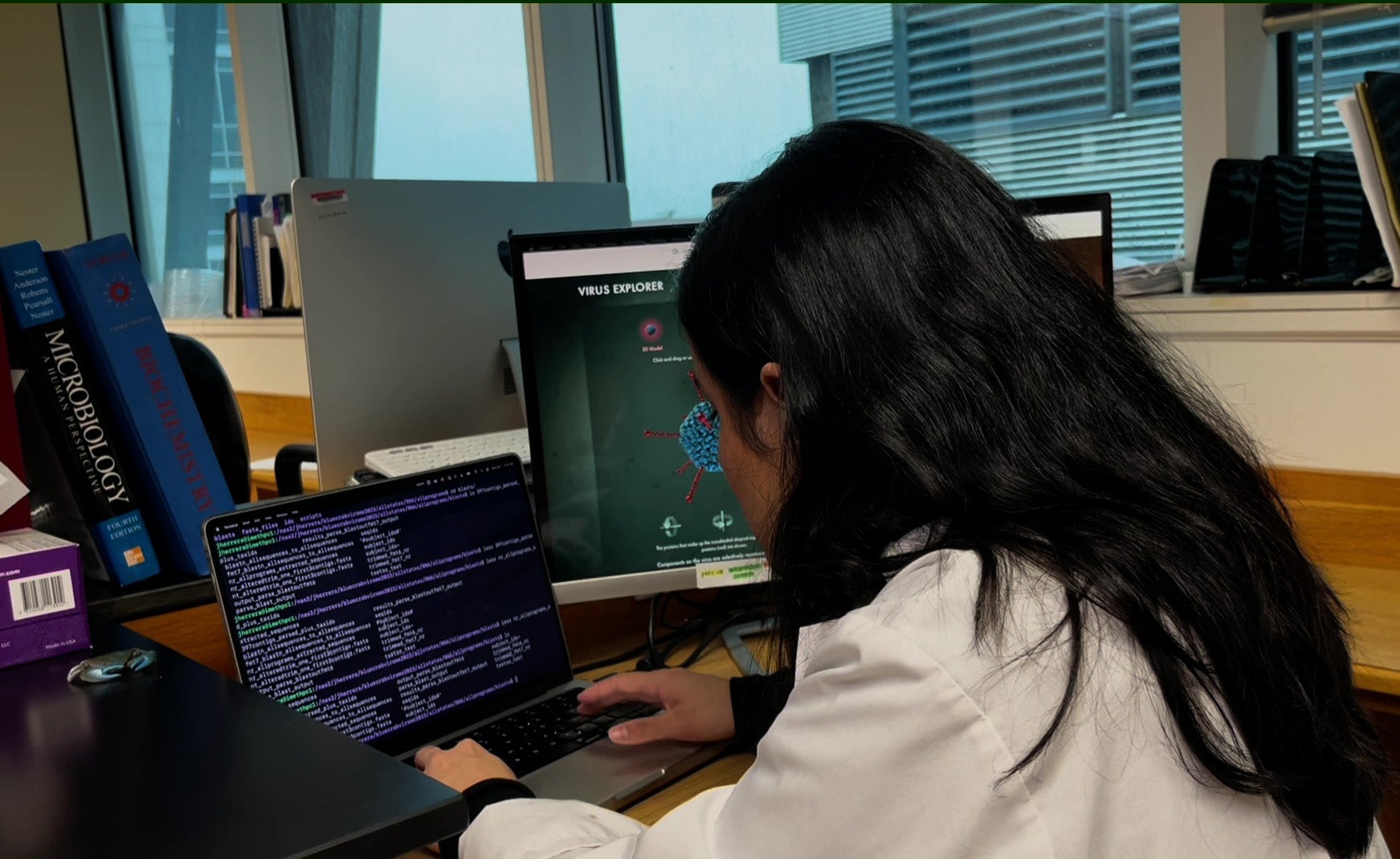
“We’re really relying on genetic similarity to give us a hint that these novel viruses exist, but you have to verify,” Schott says. “Now we have the means to do that.”
Ultimately, the MR7 test could be a tool to monitor crabs for a potential new pathogen. This test and others to be developed can help managers conduct infection trials to assess whether these viruses are a threat to Maryland’s blue crabs as an ecological and economic resource.
Herrera wrote and successfully defended her master’s thesis based on her work and is now a PhD student at Stony Brook University, studying the host-parasite-environment dynamics in the bay scallop, Argopecten irradians. Schott noted that the project benefited from leveraged funding from the NOAA Living Marine Resources Cooperative Science Center, which supported Herrera’s stipend and funding for three years. The high school student is now off to college, with the experience in crab disease ecology as part of her preparation for a career in STEM. The undergrad intern is applying to the master’s program in science at Coppin State University.
So, one graduate student project has fostered at least four science careers.
Schott is incorporating the crab virome research in a graduate course for the University of Maryland’s Marine-Estuarine Environmental Sciences program, and together with Herrera and Bachvaroff is submitting a paper on the work to Frontiers in Marine Science.
Top left image courtesy of Jennifer Herrera.
See all posts from the On the Bay blog
Program Announcements
News and Blogs


ON THE BAY - BLOG ARCHIVE
ON THE BAY - BLOG TOPICS
Featured Fellow
Nina Santos
Nina Santos is a Ph.D. student at the Chesapeake Biological Laboratory at the University of Maryland Center for Environmental Science. For her dissertation, she is focused on small shrimp-like crustaceans called mysids – an understudied yet important part of many estuarine and coastal food webs.
Featured Research Project
Geochronology Study of Per- and Polyfluoroalkyl Substances Deposition and Ecosystem Response in the Chesapeake & Maryland Coastal Bays
Per- and polyfluoroalkyl substances (PFAS) are environmentally persistent contaminants linked to adverse health outcomes in humans and wildlife. In Maryland's Chesapeake Bay and Coastal Bays, PFAS accumulation in sediments and biota, as well as their ecological impacts, remain poorly understood. This project will reconstruct multidecadal PFAS deposition histories using sediment cores, apply microbial community profiling to assess benthic ecosystem responses, and translate findings into practical guidance for aquaculture and environmental management.