Knauss legislative fellowships in Congress help build careers — and they're fun and educational. See our video and fact sheet for details.
How Baltimore Residents Are Using Rain Barrels to Manage Stormwater
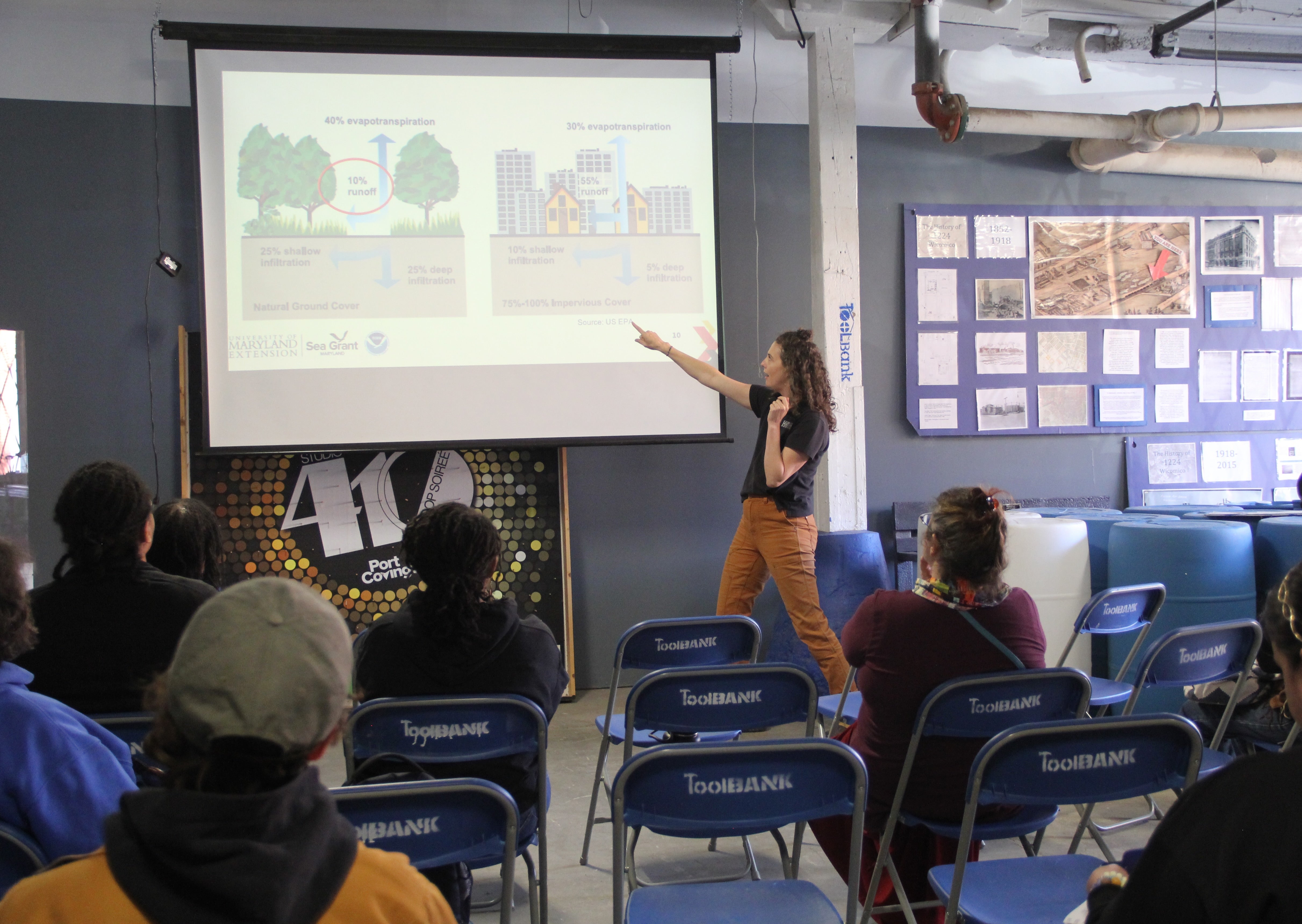
It was 5:30 p.m. on a Thursday in May as eight Baltimore City residents filed into the Baltimore Community ToolBank on Wicomico Street. The ToolBank is a lending library and gathering space for nonprofits, schools, civic organizations, and other community groups. Hammer drills, hacksaws, rakes, and wrenches crowd the towering shelves of tools in the rear of the warehouse, and two resident cats patrol the aisles.
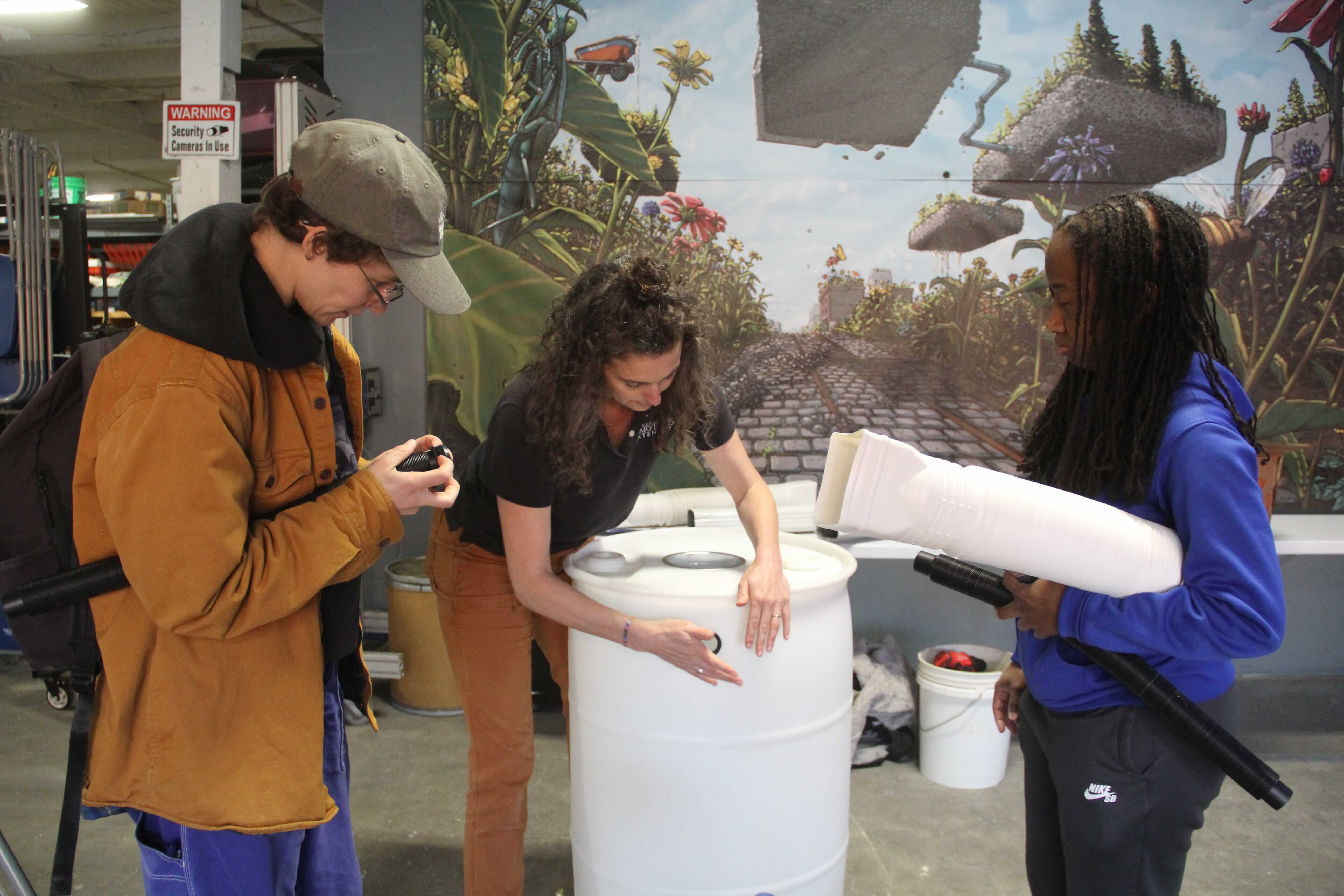
Elliot Weidow, executive director of the ToolBank, says the warehouse itself is “the biggest tool we have.” The ToolBank regularly holds community events, including tonight’s rain barrel workshop. Hosted by the Baltimore City Department of Public Works’ GROW Center and led by Maryland Sea Grant Extension specialist Claire Cambardella, the workshop combined stormwater education with rain barrel construction.
Rain barrels are tools for diverting stormwater runoff by capturing and storing rainfall. As stormwater passes over the ground, it picks up pollutants and transports them into waterways. “Stormwater is tricky because it’s this whole mix of different types of pollutants,” says Cambardella. Pollutants include sediment, nitrogen, and phosphorus, which are heavily regulated in the Chesapeake Bay watershed as the region works to achieve water quality standards.
Rain barrels connect to gutter downspouts and typically hold 50-60 gallons of rainwater. “The rain barrel itself is really a drop in the bucket,” says Cambardella. But she says it’s a simple and often cost-effective way for a single person to make a positive impact in managing stormwater.
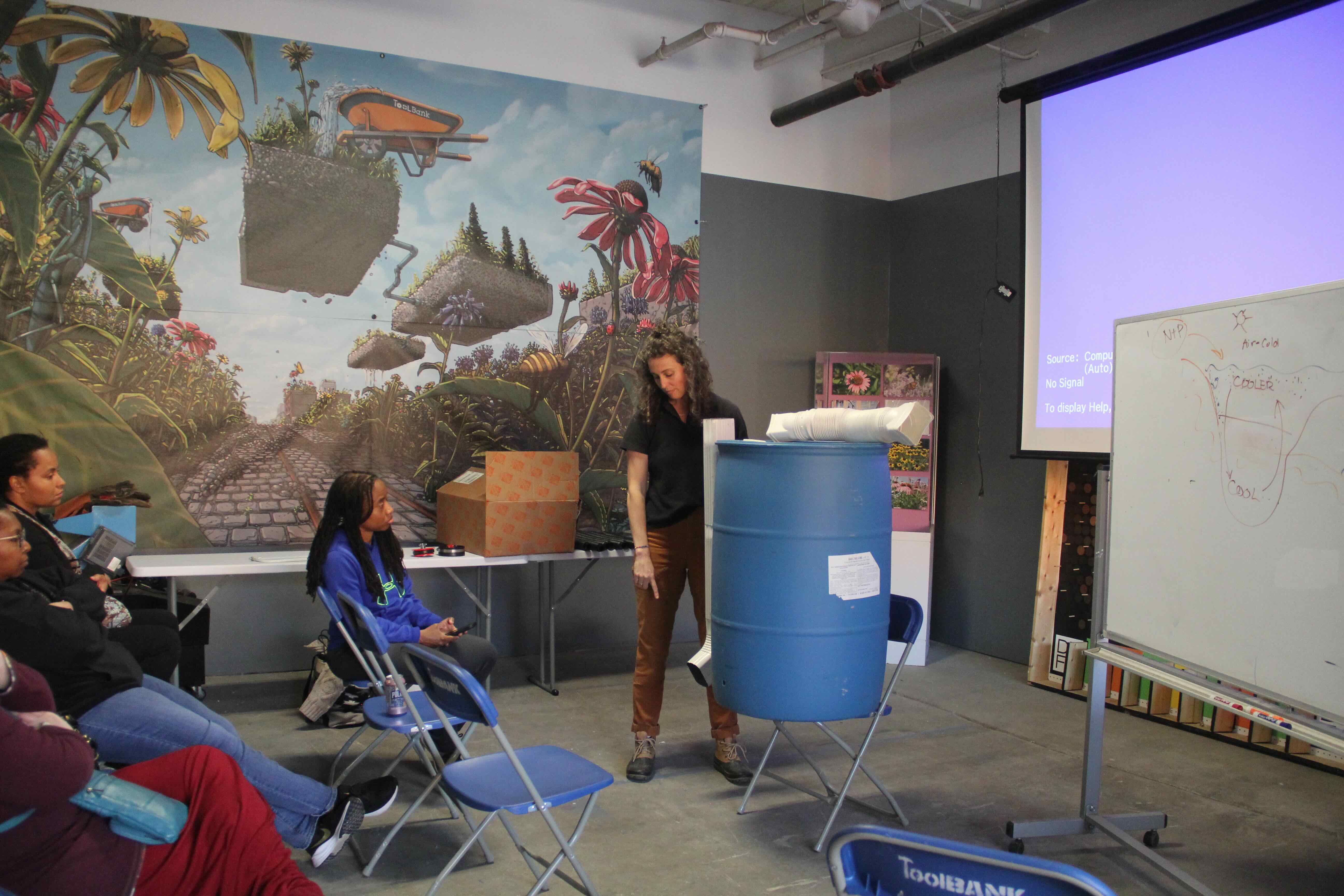
During the workshop, Cambardella talked about the water cycle and why urban spaces often see a greater volume of stormwater runoff. Cities have more impervious surfaces, like roads, sidewalks, and rooftops, which means more water flows over land rather than sinking into the ground. In areas with fewer plants, evaporation and transpiration processes, where plants take up water from the soil and release it as water vapor through their leaves, tend to decrease. Some participants were surprised to learn that storm drains in Baltimore City, as in many places, carry untreated stormwater directly into local waterways.
The discussion helped participants connect local stormwater issues to actions they could take at home. For many attendees, those connections reinforced the reasons they had signed up for the workshop in the first place. Some shared their interest in helping to reduce pollution entering the Bay. Others were interested in collecting rainwater to use in their gardens and saving money on their water bills. Baltimore City offers a one-time $25 stormwater fee credit for residents who install a 50-gallon rain barrel on their property. Harvested rainwater can harbor bacteria, so Cambardella explained that it’s best to water directly into the soil in the morning and to avoid using water from rain barrels on root crops.
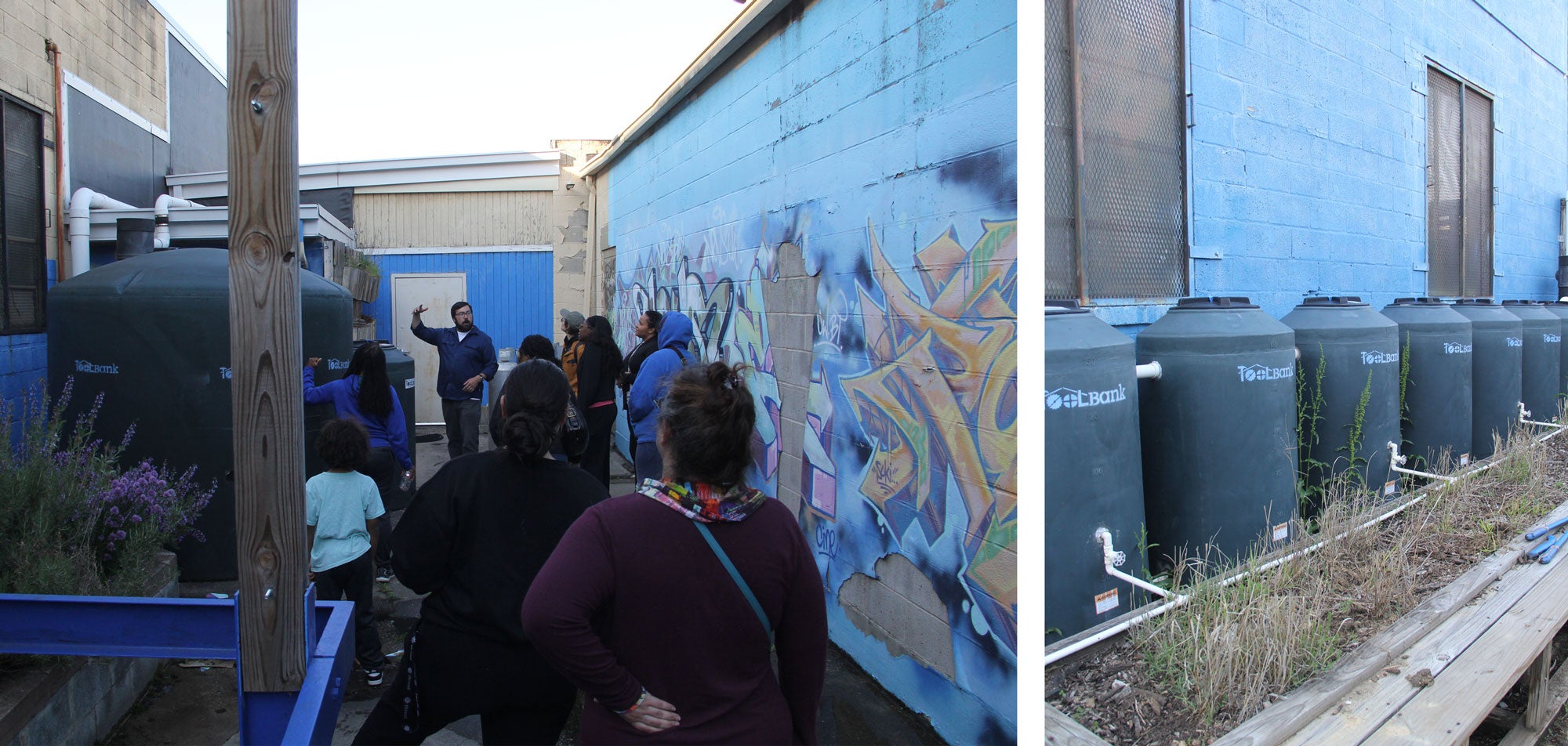
After learning about the benefits of rain barrels, participants had the chance to see stormwater management in action. The group toured the ToolBank, including the large “stormwater factory” active behind the warehouse. Weidow says they use the 3,000-gallon system to wash about 1,500 tools each year. After seeing what’s possible at a larger scale, it was time for participants to assemble smaller systems for their own homes.
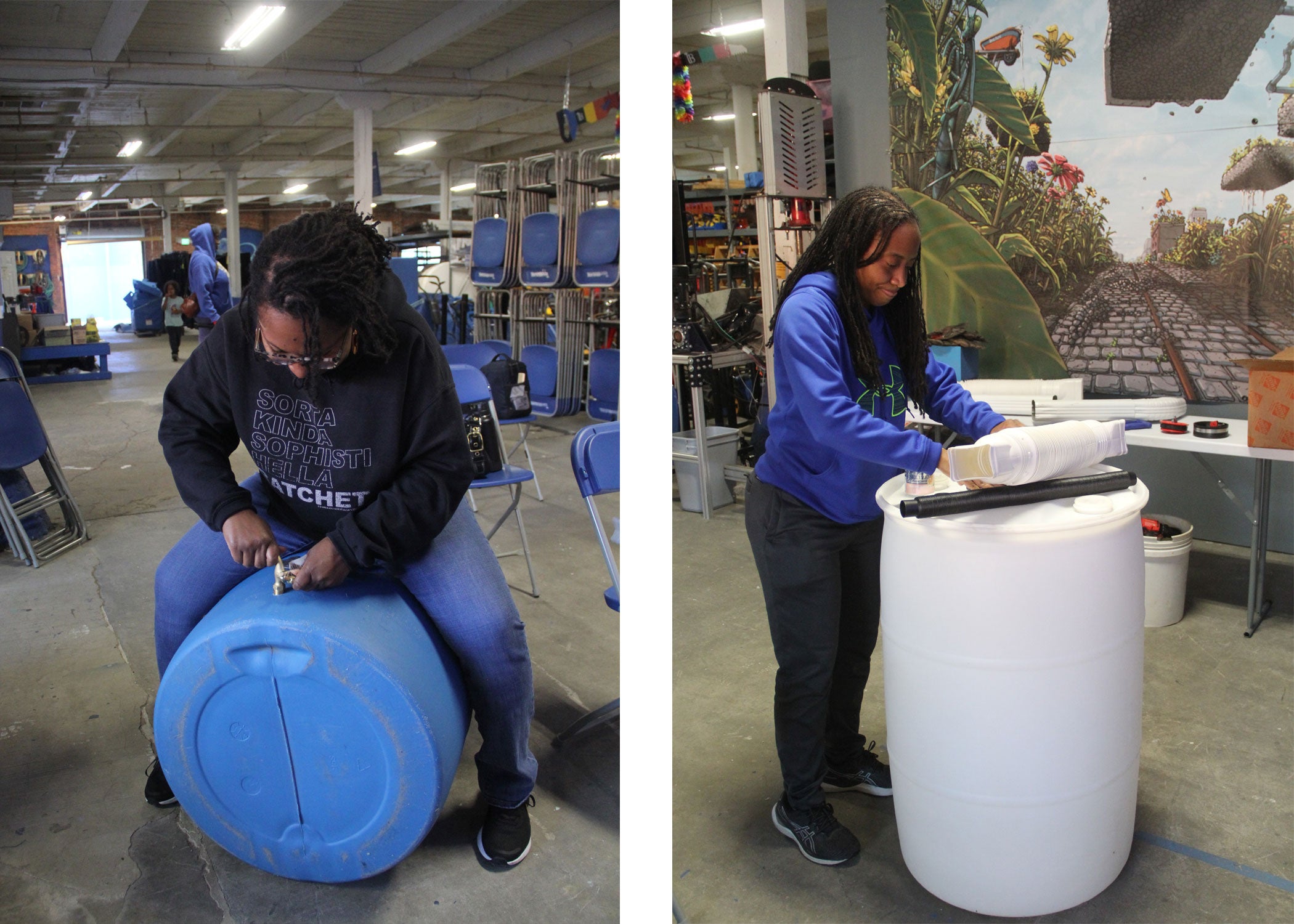
The barrels were upcycled from the Ashburton Filtration Plant, a Baltimore water treatment plant. The GROW Center provided the other materials, including downspout connectors and overflow hoses, and the ToolBank supplied the tools. The group worked together to drill holes in the barrels. Then, attendees twisted spigots and hoses into place as they discussed where they planned to install their rain barrels at home.
While rain barrels were the focus of the workshop, Cambardella emphasized that they are often one part of a broader approach to stormwater management at home. “A lot of people call rain barrels the gateway stormwater practice,” says Cambardella. She says conservation landscaping is another effective approach. Conservation landscaping involves replacing lawn or turf grass with native perennial plants, shrubs, and trees. It helps water soak into the ground, increases evapotranspiration, and supports pollinators and wildlife. “All these things are good for stormwater benefits, and they can be really beautiful as well,” says Cambardella.
As the workshop wrapped up, each participant left with a free rain barrel ready to install at home; each barrel another drop in the bucket to reduce runoff, conserve water, and raise awareness about the journey stormwater takes through our cities and into the Chesapeake Bay.
The Baltimore City Department of Public Works holds rain barrel workshops about three times a year. Find out more on the Baltimore GROW Center’s website. Interested in learning more about rain barrels? Check out this new resource on rainwater harvesting from Maryland Sea Grant Extension.
See all posts from the On the Bay blog
Program Announcements
News and Blogs


ON THE BAY - BLOG ARCHIVE
ON THE BAY - BLOG TOPICS
Featured Fellow
Nina Santos
Nina Santos is a Ph.D. student at the Chesapeake Biological Laboratory at the University of Maryland Center for Environmental Science. For her dissertation, she is focused on small shrimp-like crustaceans called mysids – an understudied yet important part of many estuarine and coastal food webs.
Featured Research Project
Geochronology Study of Per- and Polyfluoroalkyl Substances Deposition and Ecosystem Response in the Chesapeake & Maryland Coastal Bays
Per- and polyfluoroalkyl substances (PFAS) are environmentally persistent contaminants linked to adverse health outcomes in humans and wildlife. In Maryland's Chesapeake Bay and Coastal Bays, PFAS accumulation in sediments and biota, as well as their ecological impacts, remain poorly understood. This project will reconstruct multidecadal PFAS deposition histories using sediment cores, apply microbial community profiling to assess benthic ecosystem responses, and translate findings into practical guidance for aquaculture and environmental management.