Knauss legislative fellowships in Congress help build careers — and they're fun and educational. See our video and fact sheet for details.
The Highs and Lows of My Early Career
Since graduating with my bachelor’s degree from Coastal Carolina University in 2017, my career has taken on changes, twists, and turns. I have faced more challenges than expected but have also realized I am more resilient than I once thought. I hope the story of my career path so far will be helpful to today’s recent grads, who may face similar circumstances.
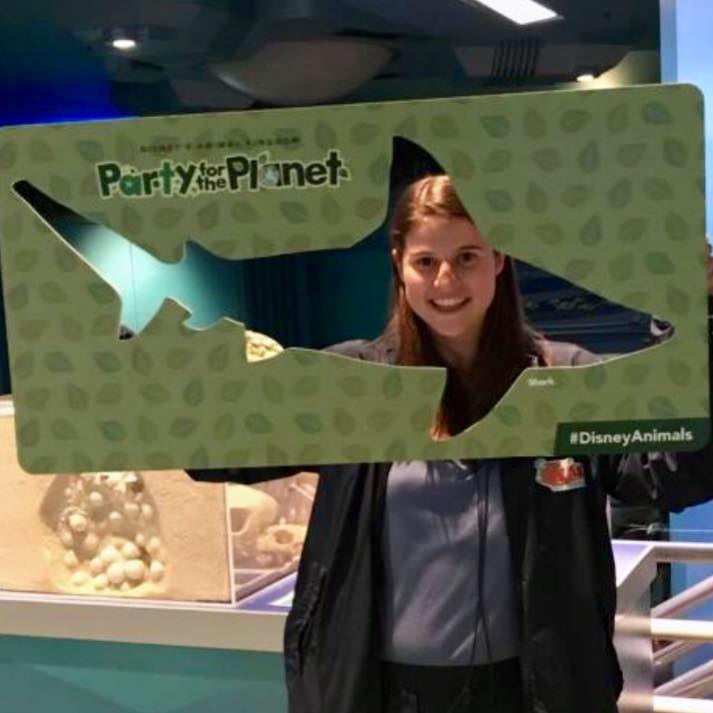
When I graduated, I found there were very few jobs available to someone with a freshly granted bachelor's degree in marine science. Federal funding cuts had affected opportunities for many college graduates pursuing the sciences. I was lucky enough to be accepted to a six-month professional internship program at Walt Disney World, where I worked as a marine conservation educator at The Seas with Nemo and Friends. Following the internship, I was hired onto the team part-time. I realized, though, that informal environmental education was not the path for me. As much as I enjoyed talking with the public and educating people about conservation matters, I missed the fieldwork that allowed me to experience the environment through a scientist’s perspective. Although it was the hardest decision to leave the friends I made, I decided to end my time there and move back to my hometown in Maryland.
In 2018, I was accepted to the Chesapeake Conservation Corps (now known as the Chesapeake Conservation and Climate Corps) where I worked with Arundel Rivers Federation for one year. I learned a great deal about the Chesapeake Bay watershed and the different organizations working together to restore and protect it. But unfortunately, this was another set term that ended in 2019. I left with experience in watershed restoration, water quality, and community outreach, but nowhere to apply it all. Job opportunities were still tough to find.
I ended up at a stormwater consulting company right before the COVID-19 pandemic. In short, this role was not for me. It was difficult to watch a plot of land filled with trees and wildlife get clear-cut to install pipes and build houses and stores. And I disliked observing some of these projects pollute local streams. Although my role was to advise the land developers and construction companies how to build with minimal stormwater pollution, I learned that my advisement was only advice. My suggestions were not often heeded, because stormwater management and pollution prevention cost money, and sometimes more than the fines these companies would receive. I was lucky to be employed during the COVID-19 pandemic, but over time this position felt at-odds with the environmental beliefs I stood for. I quit the job and decided to go back to school to study nutrient pollution and harmful algal blooms, which are often a symptom of a system struggling with nutrient pollution.
There was a lull while I found a school and an advisor for my graduate education. I moved in with my parents and felt quite defeated. I worked for the local liquor store for six months during this search, and actually, I loved it. I made minimum wage and was living off savings. But as I took some time to recover from burnout and negative work experiences, I felt better than I had in a long time. I eventually found the right school for my master’s degree education.
In 2022, Judy O’Neil, a scientist studying algae in the Chesapeake Bay, invited me to be her student. I moved to Delmar, Maryland, to attend graduate school at the University of Maryland Center for Environmental Science’s Horn Point Laboratory in Cambridge. Quickly, I learned that this was the place for me. This community was and still is so committed to environmental research and restoring the Chesapeake Bay. My research felt aligned with my own values. I worked on a harmful algal bloom on a submerged aquatic vegetation bed in the head of the Chesapeake Bay, which you can read about in my previous blog posts.
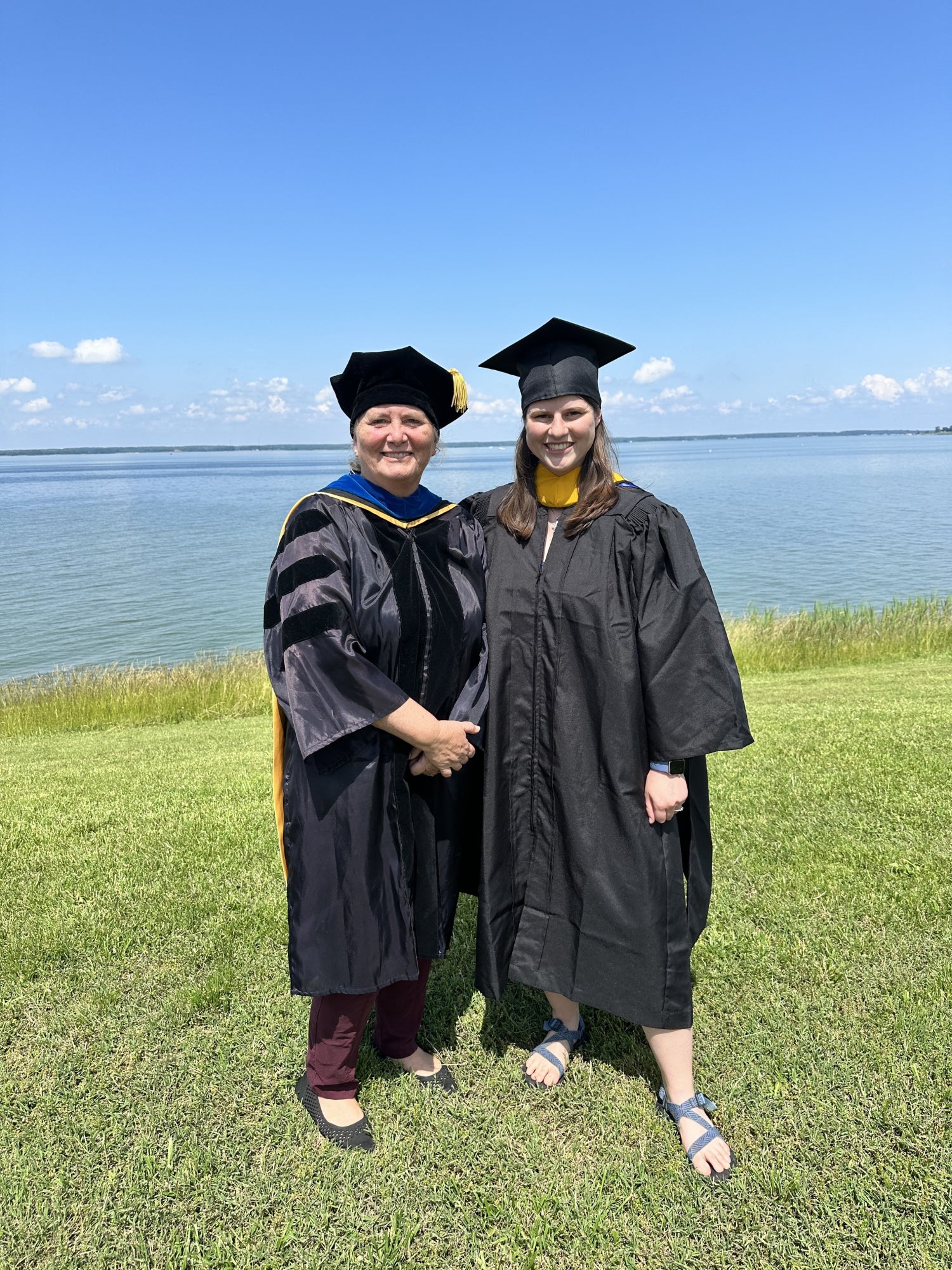
Those two and a half years spent studying at Horn Point Laboratory were some of my best years to date. Eventually, I successfully defended, finished my thesis, and graduated. I moved back across the Bay to the western shore of Maryland and felt homesick for many months. Although I missed the Eastern Shore, I was accepted into the 2025 Sea Grant Knauss Fellowship with Maryland Sea Grant, and it was time to move on to the postgraduate part of my career.
I am so honored to have been selected as a Knauss fellow. This fellowship has provided a productive transition from graduate school to my postgraduate career. I am working at the US Environmental Protection Agency (EPA) in the Office of Wetlands, Oceans, and Watersheds in the Health and Ecological Division. I work with the biological criteria team, harmful algal bloom team, and the nutrient pollution team. However, 2025 has brought many challenges.
I began my Knauss fellowship February 1, 2025. Immediately, just as things were changing for me, things were changing for my team, the EPA, and the country. Within a few months of starting my position, I was already saying goodbye to colleagues who were either let go as part of the new administration’s “reduction in force” efforts or took an early retirement offer. Travel opportunities for many EPA teams were frozen, and regular teleworking hours were removed. While I was learning how the EPA and federal government operate, it was all changing at a dramatic rate.
It was (and still is) difficult to keep up and understand all the moving parts. Luckily, I had a great team and mentors who worked with me and made sure I was not left behind. However, my work was continuously evolving in response to executive orders and personnel changes. Additionally, it was announced that the entire EPA was reorganizing, and the division I worked in was to be merged into other divisions. This was yet another event that halted a lot of my work and created questions around personnel, directives, and even desk location.
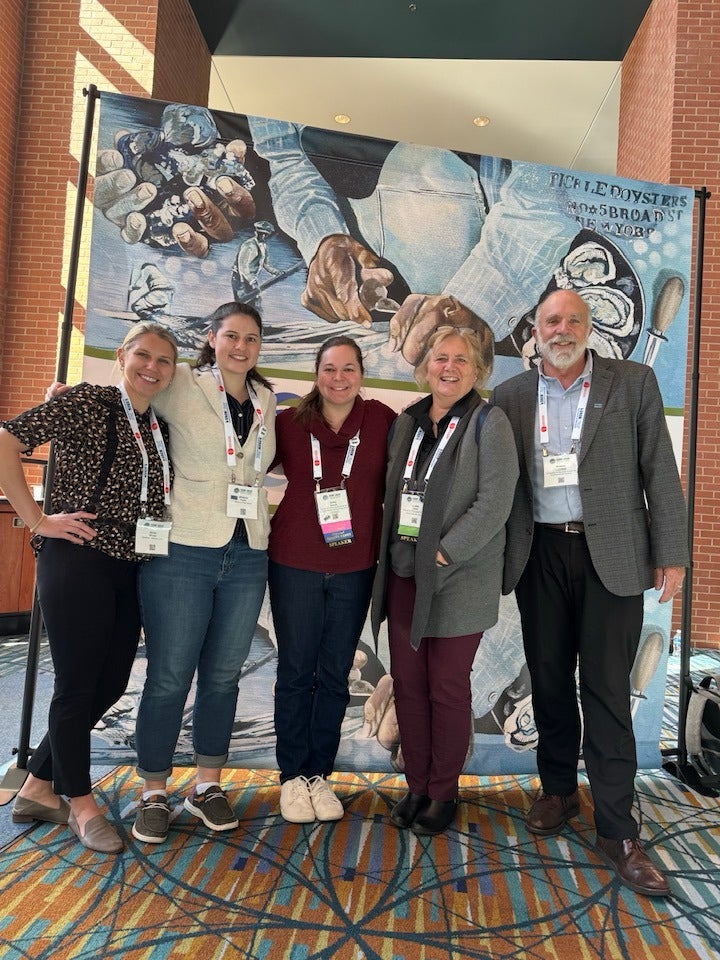
Right when we were about to reorganize, the government began the longest shutdown in US history, lasting 43 days. I spent this time working with no contact with my team or mentors. Luckily, as a Knauss fellow, I was not affected by the shutdown and was able to continue my work. During this time, I attended the Coastal and Estuarine Research Federation (CERF) Biennial Conference and the Society of Environmental Toxicology and Chemistry Annual Meeting. Although I have attended many conferences, this was the first time I had given a talk at one. I was able to continue building my résumé and networking at these meetings, even though the shutdown was still in effect.
Eventually, the shutdown ended and we returned to work as normal. Our reorganization took effect, and my team and work duties changed. Some of my projects were halted, such as planning the Nutrient Scientific Technical Exchange Partnership & Support (N-STEPS) seminar series. But I was also given new tasks, such as chairing my team’s CERF conference session, “Nutrients and HAB Interactions: Comparing Imported and ISitu Phenomena."
I also completed a beginner’s guide to incorporating omics methods—such as genomics (study of an organism’s DNA), transcriptomics (study of an organism’s RNA), and proteomics (study of an organism’s proteins)— into biological criteria assessment methods. Writing this guide was challenging. It involved explaining omics, a complex scientific method, in a way that was accessible to biological criteria experts who are new to omics. Simultaneously, I was learning about the field of biological criteria.
Although this has been a difficult year for me and my colleagues, it was incredibly educational for my professional development. I can now take a lot of disruption in stride. I have learned to continue to be productive, even in times of uncertainty and anxiety. I have even gained self-sufficiency skills, as I went more than a month without guidance from my direct higher-ups. I would also like to thank my mentors, Jacques Oliver and Galen Kaufman, as well as Mike Allen and everyone at Maryland Sea Grant for their leadership and for continuing to support me, even while navigating their own challenges.

As I prepare for my next transition, I hope it will lead me to another outstanding office where I can continue to grow in my career and collaborate with exceptional colleagues.
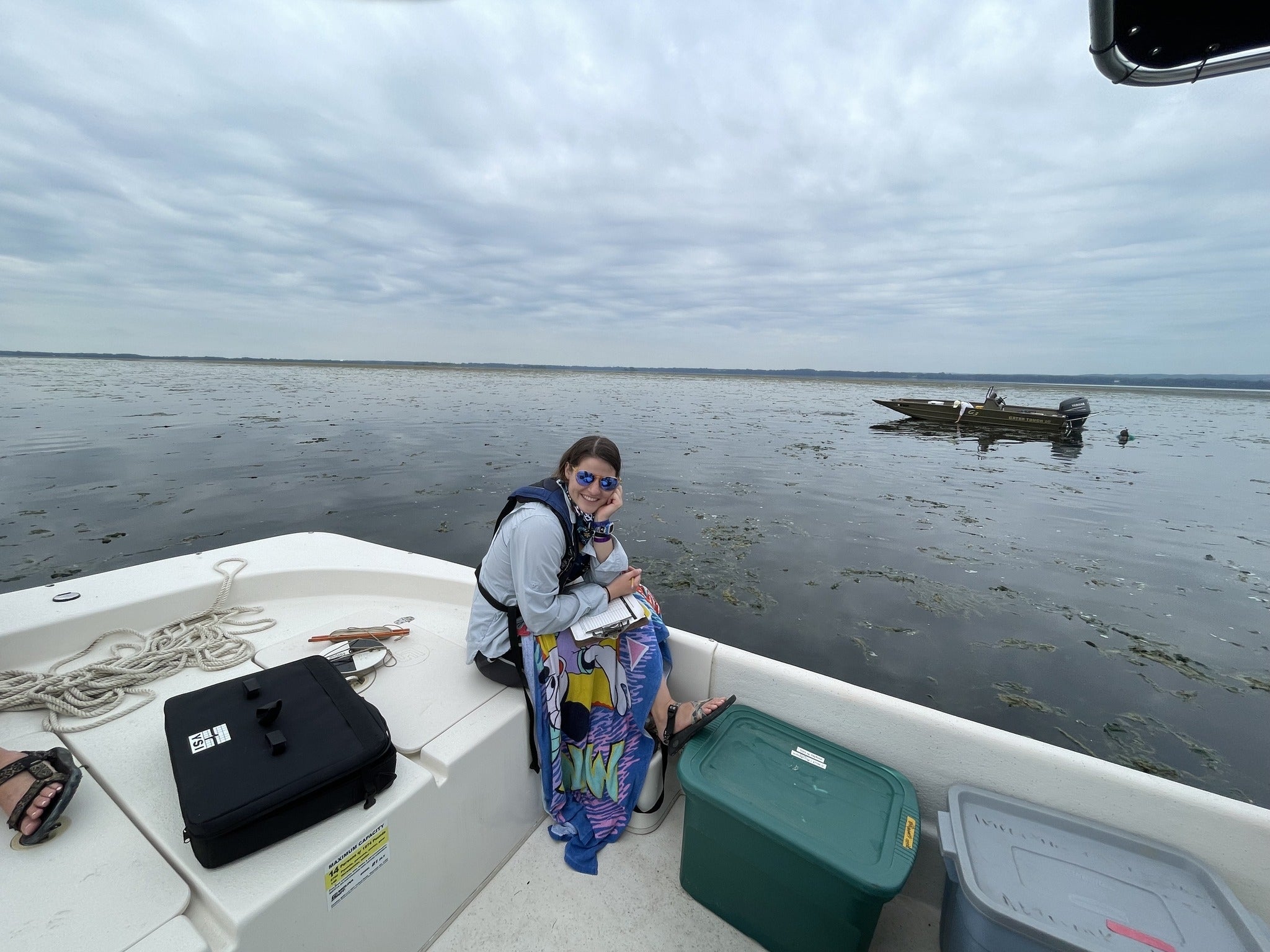
Top left photo: Shayna Keller in the field. Photo courtesy of Shayna Keller.
See all posts to the Fellowship Experiences blog